Bio-Layer Interferometry (BLI) Detection Service

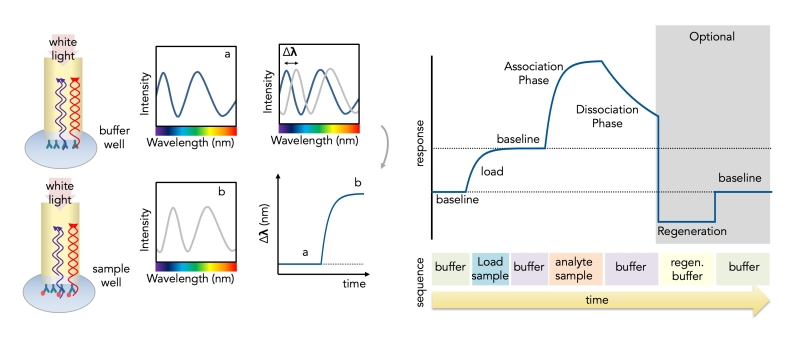
Bio-layer Interferometry (BLI) is a label-free optical technique for real-time monitoring of biomolecular interactions, enabling rapid evaluation of molecular binding capacity and acquisition of affinity and kinetic parameters. Ligands are immobilized on the biosensor surface in BLI assays. Real-time signal shifts generated during analyte association and dissociation are recorded to calculate critical metrics including kon, koff and KD. It delivers robust data to support antibody screening, affinity characterization, binding kinetic analysis and competitive binding studies. Featuring flexible operation and high throughput, this technology accommodates diverse interaction systems such as protein-protein, antibody-antigen, protein-peptide and protein-nucleic acid binding, substantially boosting screening efficiency and accelerating decision-making in research and development.
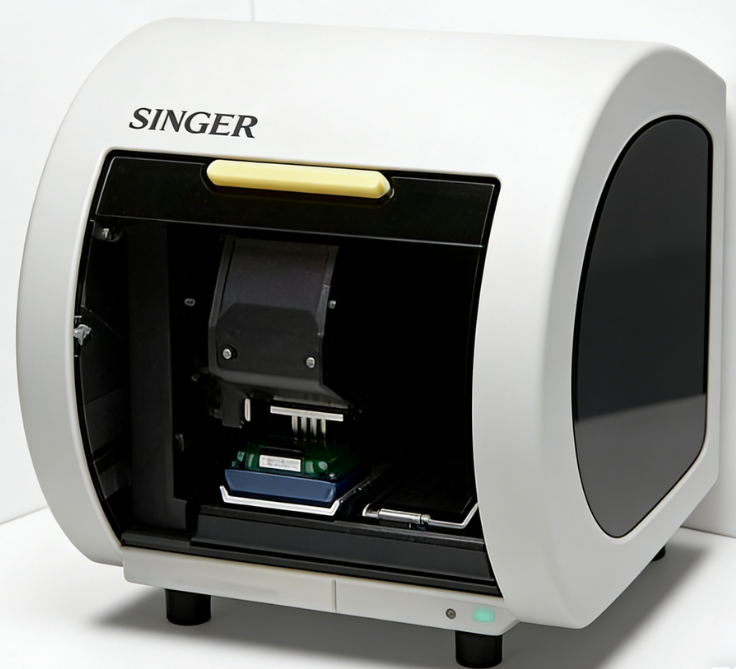
Detection Features

  • Label-free detection

    • No sample modification required • Preserve native biomolecular activity • Reduce false positive risks

  • Real-time monitoring

    • Simultaneous curve output • Real-time visualization of binding process • Instant result evaluation

  • Full kinetic parameter acquisition

    • Obtain kon and koff kinetic constants • Calculate equilibrium dissociation constant KD • Distinguish strong and weak binding interactions

  • High-throughput screening

    • Multi-channel parallel detection • Batch sample testing • Improved screening throughput

  • High tolerance to crude complex samples

    • Compatible with complex matrices • Minimal sample pre-treatment • Robust anti-interference performance

  • Intuitive data output

    • Distinct signal shifts • Well-defined fitting models • Easy-to-interpret reports

Service Advantage

Click to Customize
  • Octet® BLI

    The Octet® BLI System delivers a flow-free, rapid, high-throughput and reliable approach for analyzing protein-protein and protein-small molecule interactions. The Octet® BLI platform enables direct detection of target proteins or drug molecules, even within complex mixtures and unpurified samples such as cell culture supernatants and lysates.

  • Library of 30,000+ proteins

    Our protein library features broad target coverage of human and multi-species protein targets, including cytokines, receptors, enzymes, transcription factors and key nodes in signaling pathways. This large-scale protein resource greatly improves target accessibility for early-stage projects and accelerates drug discovery and mechanistic research.

  • High efficiency for high-throughput detection

    The BLI system supports parallel detection in 96-well and even 384-well plates for high-throughput screening (HTS), enabling simultaneous analysis of multiple samples or serial concentration gradients. It delivers prominent efficiency advantages in antibody screening, variant comparison and primary screening of candidate molecules.

  • Extremely low sample consumption

    BLI only requires trace amounts of samples at the microliter level for a single test with flexible concentration requirements. It is ideal for projects with limited sample volumes in early-stage research, such as rare protein studies and antibody screening, substantially cutting experimental costs.

More related services

Click to Customize

Frequently Asked Questions

  • Can BLI measure small-molecule binding? Will the signal be too weak?

    BLI can be applied to certain protein-small molecule binding assays. However, small molecules feature low molecular weights and only generate limited signal shifts upon binding, which imposes stricter requirements on experimental design. We routinely evaluate parameters including the immobilized target protein load, anticipated affinity range of compounds, and background noise of the buffer system. Detectability can be improved by increasing analyte concentration gradients, optimizing sensor selection, and minimizing non-specific adsorption. For projects with extremely weak signals, we also recommend complementary validation via orthogonal techniques such as MST or SPR.

  • Why does the binding curve look ideal, yet the fitted KD value is unstable?

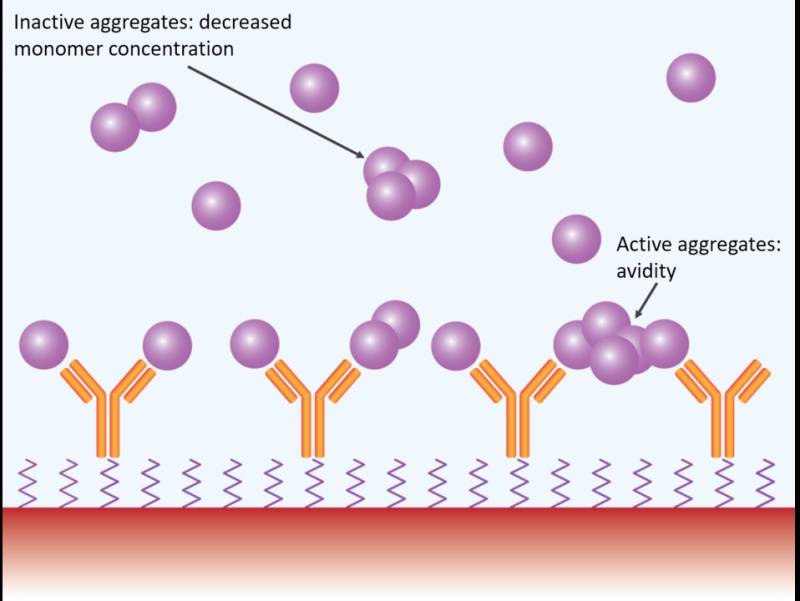
    Unstable KD values commonly stem from inaccurate sample concentrations, protein aggregation or low active protein fractions, mass transport limitations caused by excessively high immobilization density, and false signals from non-specific adsorption. To enhance fitting reliability and deliver stable, reproducible kinetic parameters, we typically optimize immobilization levels, run blank controls with reference signal subtraction, adjust the range of concentration gradients, and implement strict sample quality control protocols (including clarification by centrifugation and repeated freeze-thaw avoidance).

  • Can BLI perform competitive binding assays or epitope binning?

    Yes, BLI is widely adopted for competitive binding assays and epitope binning. Especially in antibody research and development, it can rapidly identify competitive interactions among multiple antibodies, supporting customers in formulating antibody combination strategies. For projects involving bispecific antibody design, cocktail therapeutics or antibody combination development, epitope binning data delivers high-value insights to guide key decision-making.

  • What are the common issues with BLI? How to avoid data drift and false positive results?

    Common interfering factors for BLI measurements include elevated background from non-specific adsorption, abnormal signals induced by protein aggregation, baseline drift arising from mismatched buffer formulations, and low binding efficiency due to improper sensor selection. We generally improve data stability and mitigate drift and false positive interference via multiple approaches: optimizing buffer compositions (adjusting salt concentration, adding low levels of surfactants or BSA), regulating sample quality (preventing aggregation, clarifying samples by filtration and centrifugation), and selecting compatible sensors alongside appropriate immobilization strategies.

If you have any questions, please contact us.

  • Name *

  • Tel *

  • Email *

  • Country *

  • Company *

  • Consultation Type *

  • Consultation content *

IPODIX Biotech Inc

2108 N ST, STE N
Sacramento, CA 95816, USA

For Product Information and Orders

sales@ipodix.com

For Business Collaboration

sales@ipodix.com

For CRO Services

sales@ipodix.com

For Technical Support

sales@ipodix.com
  • 50000+

    Recombinant Proteins

  • 100+

    Researchers

  • 100+

    Countries Served

  • ISO

    Certified Quality

Committed to Quality
Driven by Innovation

Learn More About US