Analytical Data
-
Gene name
NDM-1
- Application
-
Alternative Names
/
-
Species
Acinetobacter baumannii
-
Source
E. coli
-
Tag
N- His-SUMO
-
Purity
Greater than 90% as determined by SDS-PAGE.
-
Uniprot
F8UNN7
-
Expression Region
164-222aa
-
Molecular Weight
22 kDa
-
Endotoxin
< 1.0 EU per μg protein as determined by the LAL method.
-
Form
Freeze-dried powder
-
Buffer formulation
PBS, pH7.4, containing 0.01% SKL, 1mM DTT, 5% Trehalose and Proclin300.
-
Reconstitution
Reconstitute in ddH2O to a concentration of 0.1-0.5 mg/mL. Do not vortex.
- Customization
-
Stability Test
The thermal stability is described by the loss rate. The loss rate was determined by accelerated thermal degradation test, that is, incubate the protein at 37℃ for 48h, and no obvious degradation and precipitation were observed. The loss rate isless than 8% within the expiration date under appropriate storage condition.
-
Storage & Shelf Life
Samples are stable for up to twelve months from date of receipt at -20℃ to -80℃. Store it under sterile conditions at -20℃ to -80℃. It is recommended that the protein be aliquoted for optimal storage. Avoid repeated freeze-thaw cycles.
-
Shipping
In general, recombinant proteins are supplied as lyophilized powder and shipped at ambient temperature. For bulk packages, the proteins are provided as frozen liquid and shipped with blue ice, unless otherwise requested by the customer.
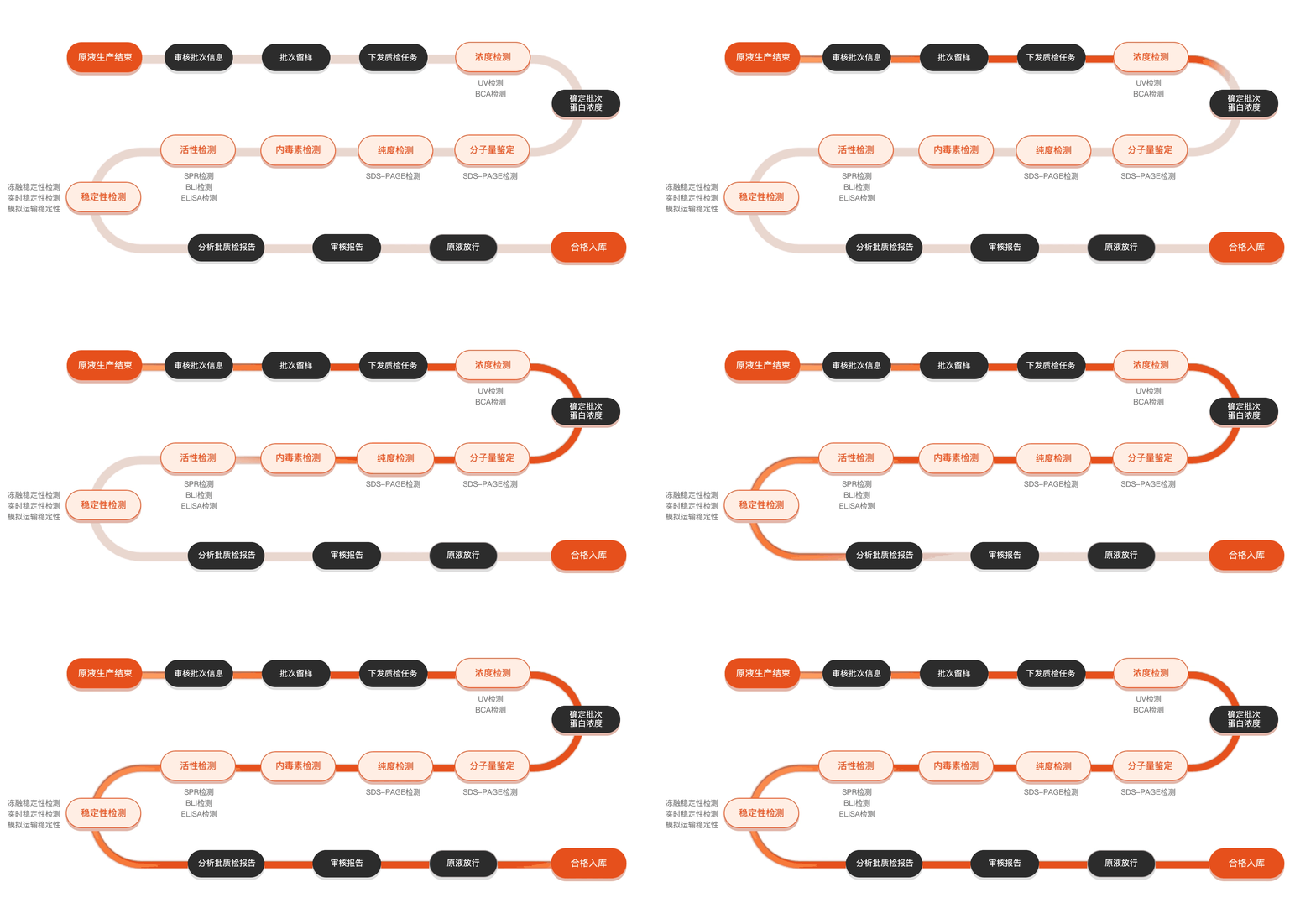
Quality inspection process
Related Products
Protein Description
NDM-1 (New Delhi Metallo-beta-lactamase-1) is a significant beta-lactamase enzyme first identified in bacteria isolated from patients in New Delhi, India, in 2008. This enzyme is notorious for conferring resistance to a broad range of beta-lactam antibiotics, including carbapenems, which are often regarded as antibiotics of last resort for treating multidrug-resistant bacterial infections. The rise of NDM-1-producing bacteria poses a severe public health threat globally, leading to treatment failures and increased morbidity and mortality rates. Research on NDM-1 recombinant proteins has focused on understanding the enzyme's structure and function to develop effective inhibitors and alternative therapeutic strategies. Studies have focused on the characterization of the enzyme's active site, substrate specificity, and the molecular mechanisms underlying its resistance properties. By engineering recombinant NDM-1 proteins, researchers aim to elucidate the biochemical pathways of antibiotic resistance and screen potential inhibitors that could restore the efficacy of existing antibiotics. Furthermore, this research contributes to the design of novel antimicrobial agents and informs public health strategies to combat the spread of antibiotic-resistant infections. As NDM-1 continues to emerge in various pathogens worldwide, ongoing studies of its recombinant form are crucial for developing a proactive approach to managing antibiotic resistance.