Analytical Data
-
Gene name
MSP/MST1
-
简介
The MSP/MST1 protein, encoded by this gene, is predicted to have receptor tyrosine kinase binding activity. It is involved in various processes, including embryo implantation, mammary duct growth, and regulation of mammary gland cell proliferation. The protein is mainly found in the vacuole and expressed in tissues like the esophagus, liver, pharynx, and stomach. Notably, the gene shows liver-biased expression in both adult and embryonic stages. MSP/MST1 Protein, Mouse (C677A, HEK293) is the recombinant mouse-derived MSP/MST1 protein, expressed by HEK293 , with tag free, and C677A mutation.
- Application
-
Biological Activity
Measured by its ability to inhibit the proliferation of Hela cell. The ED50 for this effect is 4.080 ng/ml, corresponding to a specific activity is 2.45×10^5 units/mg. Measured by its ability to inhibit the proliferation of Hela cell. The ED50 for this effect is 4.080 ng/mL, corresponding to a specific activity is 2.45×10⁵ units/mg.
-
Species
Mouse
-
Source
HEK293
-
Tag
Tag Free
-
Purity
Greater than 90% as determined by SDS-PAGE.
-
Uniprot
P26928
-
Expression Region
Q19-E716, C677A
-
AA Sequence
QRSPLNDFQLFRGTELRNLLHTAVPGPWQEDVADAEECARRCGPLLDCRAFHYNMSSHGCQLLPWTQHSLHTQLYHSSLCHLFQKKDYVRTCIMDNGVSYRGTVARTAGGLPCQAWSRRFPNDHKYTPTPKNGLEENFCRNPDGDPRGPWCYTTNRSVRFQSCGIKTCREAVCVLCNGEDYRGEVDVTESGRECQRWDLQHPHSHPFQPEKFLDKDLKDNYCRNPDGSERPWCYTTDPNVEREFCDLPSCGPNLPPTVKGSKSQRRNKGKALNCFRGKGEDYRGTTNTTSAGVPCQRWDAQSPHQHRFVPEKYACKDLRENFCRNPDGSEAPWCFTSRPGLRMAFCHQIPRCTEELVPEGCYHGSGEQYRGSVSKTRKGVQCQHWSSETPHKPQFTPTSAPQAGLEANFCRNPDGDSHGPWCYTLDPDILFDYCALQRCDDDQPPSILDPPDQVVFEKCGKRVDKSNKLRVVGGHPGNSPWTVSLRNRQGQHFCGGSLVKEQWVLTARQCIWSCHEPLTGYEVWLGTINQNPQPGEANLQRVPVAKAVCGPAGSQLVLLKLERPVILNHHVALICLPPEQYVVPPGTKCEIAGWGESIGTSNNTVLHVASMNVISNQECNTKYRGHIQESEICTQGLVVPVGACEGDYGGPLACYTHDAWVLQGLIIPNRVCARPRWPAIFTRVSVFVDWINKVMQLE
-
Protein Length
Full Length of Mature Protein
-
Molecular Weight
92 (α+β chain) & 61-62 (α chain) & 32-36 (β chain)kDa
-
Endotoxin
< 1.0 EU per μg protein as determined by the LAL method.
-
Form
Freeze-dried powder
-
Buffer formulation
PBS, pH7.4, containing 0.01% SKL, 1mM DTT, 5% Trehalose and Proclin300.
-
Reconstitution
Reconstitute in ddH2O to a concentration of 0.1-0.5 mg/mL. Do not vortex.
- Customization
-
Stability Test
The thermal stability is described by the loss rate. The loss rate was determined by accelerated thermal degradation test, that is, incubate the protein at 37℃ for 48h, and no obvious degradation and precipitation were observed. The loss rate isless than 8% within the expiration date under appropriate storage condition.
-
Storage & Shelf Life
Samples are stable for up to twelve months from date of receipt at -20℃ to -80℃. Store it under sterile conditions at -20℃ to -80℃. It is recommended that the protein be aliquoted for optimal storage. Avoid repeated freeze-thaw cycles.
-
Shipping
In general, recombinant proteins are supplied as lyophilized powder and shipped at ambient temperature. For bulk packages, the proteins are provided as frozen liquid and shipped with blue ice, unless otherwise requested by the customer.
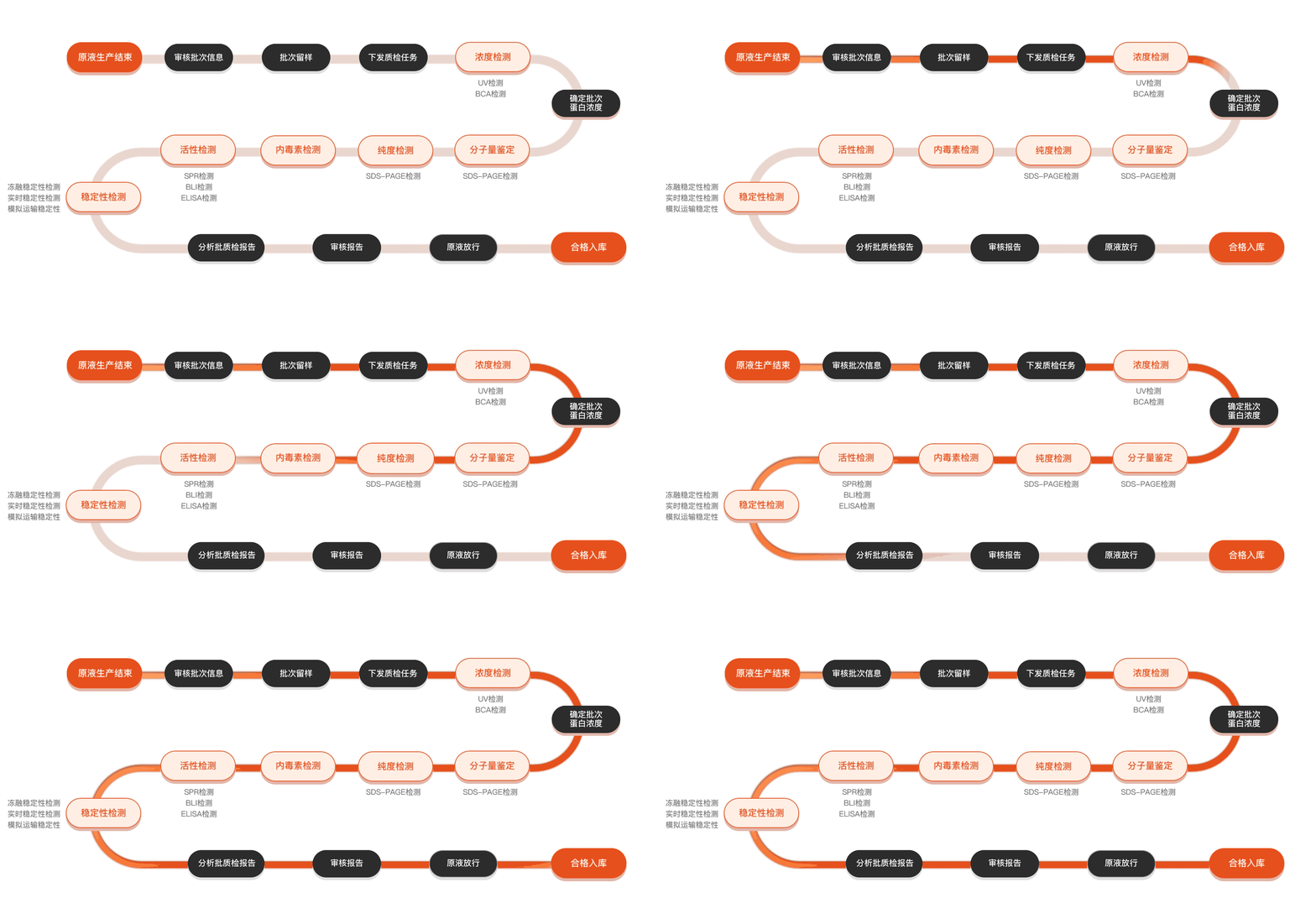
Quality inspection process
Related Products
Protein Description
MSP (Myelin Protein Zero) and MST1 (Mammalian Sterile 20-like kinase 1) are important proteins that have garnered significant attention in the field of molecular biology and biochemistry due to their roles in cellular signaling and development. MSP, primarily known for its critical role in myelination within the nervous system, is a major component of peripheral nerve myelin and contributes to axonal insulation and signal transmission. On the other hand, MST1 is a serine/threonine kinase that plays a pivotal role in various cellular processes, including apoptosis, epithelial cell polarity, and tissue homeostasis. The study of recombinant MSP/MST1 proteins is essential for understanding their distinct biological functions and potential implications in pathophysiological conditions, such as neuropathies and cancers. By expressing these proteins in a recombinant system, researchers can effectively attain large quantities for detailed studies, including structural analysis, functional assays, and interaction studies with other cellular components. Furthermore, these investigations have the potential to unveil new therapeutic targets or strategies for diseases related to myelin degeneration and cellular signaling dysregulation. Overall, the exploration of MSP and MST1 recombinant proteins provides valuable insights into their biological significance and therapeutic potential, making it a critical area of research in molecular biology and medicine.