Analytical Data
-
Gene name
SYCP3
- Application
-
Alternative Names
SYCP3;SCP3;Synaptonemal complex Protein 3
-
Species
Human
-
Source
E. coli
-
Tag
His tag N-Terminus
-
Purity
Greater than 90% as determined by SDS-PAGE.
-
Uniprot
Q8IZU3
-
Expression Region
1-236aa
-
AA Sequence
MVSSGKKYSR KSGKPSVEDQ FTRAYDFETE DKKDLSGSEE DVIEGKTAVI EKRRKKRSSA GVVEDMGGEV QNMLEGVGVD INKALLAKRK RLEMYTKASL KTSNQKIEHV WKTQQDQRQK LNQEYSQQFL TLFQQWDLDM QKAEEQEEKI LNMFRQQQKI LQQSRIVQSQ RLKTIKQLYE QFIKSMEELE KNHDNLLTGA QNEFKKEMAM LQKKIMMETQ QQEIASVRKS LQSMLF
-
Molecular Weight
27.7 kDa
-
Endotoxin
< 1.0 EU per μg protein as determined by the LAL method.
-
Form
Freeze-dried powder
-
Buffer formulation
PBS, pH7.4, containing 0.01% SKL, 1mM DTT, 5% Trehalose and Proclin300.
-
Reconstitution
Reconstitute in ddH2O to a concentration of 0.1-0.5 mg/mL. Do not vortex.
- Customization
-
Stability Test
The thermal stability is described by the loss rate. The loss rate was determined by accelerated thermal degradation test, that is, incubate the protein at 37℃ for 48h, and no obvious degradation and precipitation were observed. The loss rate isless than 8% within the expiration date under appropriate storage condition.
-
Storage & Shelf Life
Samples are stable for up to twelve months from date of receipt at -20℃ to -80℃. Store it under sterile conditions at -20℃ to -80℃. It is recommended that the protein be aliquoted for optimal storage. Avoid repeated freeze-thaw cycles.
-
Shipping
In general, recombinant proteins are supplied as lyophilized powder and shipped at ambient temperature. For bulk packages, the proteins are provided as frozen liquid and shipped with blue ice, unless otherwise requested by the customer.
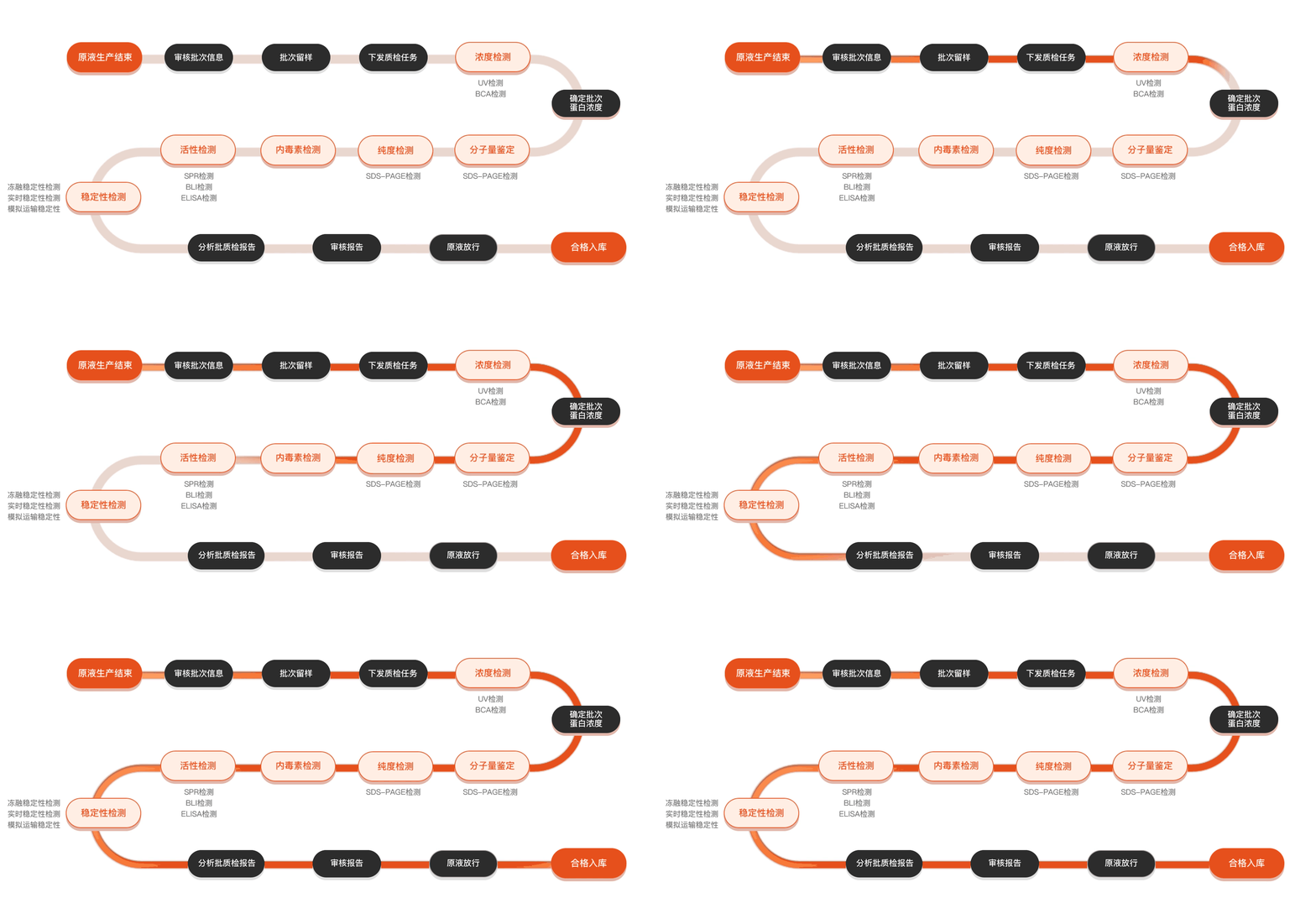
Quality inspection process
Related Products
Protein Description
SYCP3 (Synaptonemal Complex Protein 3) is a vital protein involved in the formation and maintenance of the synaptonemal complex (SC), a structure critical for meiotic chromosome pairing and recombination in eukaryotic cells. Research on SYCP3 is primarily focused on its role in male and female gametogenesis, where it facilitates the accurate alignment of homologous chromosomes during meiosis, ensuring genetic diversity and proper segregation. Mutations or deficiencies in SYCP3 have been linked to infertility and chromosomal abnormalities, emphasizing its importance in reproduction. The study of SYCP3 recombinant proteins aims to elucidate its structural and functional properties, providing insights into its interactions with other meiotic proteins within the SC. Understanding these mechanisms is crucial for developing potential therapeutic strategies to address reproductive disorders associated with meiotic defects. As such, SYCP3 serves as a significant marker and target for investigating the underlying cellular processes governing meiosis, making it a focal point in reproductive biology and genetics research. This research not only contributes to our fundamental understanding of meiosis but also has implications for human health, particularly in areas related to fertility and developmental biology.