Analytical Data
-
Gene name
FNTa
- Application
-
Alternative Names
FNTa;Protein farnesyltransferase/geranylgeranyltransferase type-1 subunit alpha
-
Species
Human
-
Source
E. coli
-
Tag
His tag N-Terminus
-
Purity
Greater than 90% as determined by SDS-PAGE.
-
Uniprot
P49354
-
Expression Region
2-379aa
-
AA Sequence
AATEGVGEA AQGGEPGQPA QPPPQPHPPP PQQQHKEEMA AEAGEAVASP MDDGFVSLDS PSYVLYRDRA EWADIDPVPQ NDGPNPVVQI IYSDKFRDVY DYFRAVLQRD ERSERAFKLT RDAIELNAAN YTVWHFRRVL LKSLQKDLHE EMNYITAIIE EQPKNYQVWH HRRVLVEWLR DPSQELEFIA DILNQDAKNY HAWQHRQWVI QEFKLWDNEL QYVDQLLKED VRNNSVWNQR YFVISNTTGY NDRAVLEREV QYTLEMIKLV PHNESAWNYL KGILQDRGLS KYPNLLNQLL DLQPSHSSPY LIAFLVDIYE DMLENQCDNK EDILNKALEL CEILAKEKDT IRKEYWRYIG RSLQSKHSTE NDSPTNVQQ
-
Molecular Weight
44.4 kDa
-
Endotoxin
< 1.0 EU per μg protein as determined by the LAL method.
-
Form
Freeze-dried powder
-
Buffer formulation
PBS, pH7.4, containing 0.01% SKL, 1mM DTT, 5% Trehalose and Proclin300.
-
Reconstitution
Reconstitute in ddH2O to a concentration of 0.1-0.5 mg/mL. Do not vortex.
- Customization
-
Stability Test
The thermal stability is described by the loss rate. The loss rate was determined by accelerated thermal degradation test, that is, incubate the protein at 37℃ for 48h, and no obvious degradation and precipitation were observed. The loss rate isless than 8% within the expiration date under appropriate storage condition.
-
Storage & Shelf Life
Samples are stable for up to twelve months from date of receipt at -20℃ to -80℃. Store it under sterile conditions at -20℃ to -80℃. It is recommended that the protein be aliquoted for optimal storage. Avoid repeated freeze-thaw cycles.
-
Shipping
In general, recombinant proteins are supplied as lyophilized powder and shipped at ambient temperature. For bulk packages, the proteins are provided as frozen liquid and shipped with blue ice, unless otherwise requested by the customer.
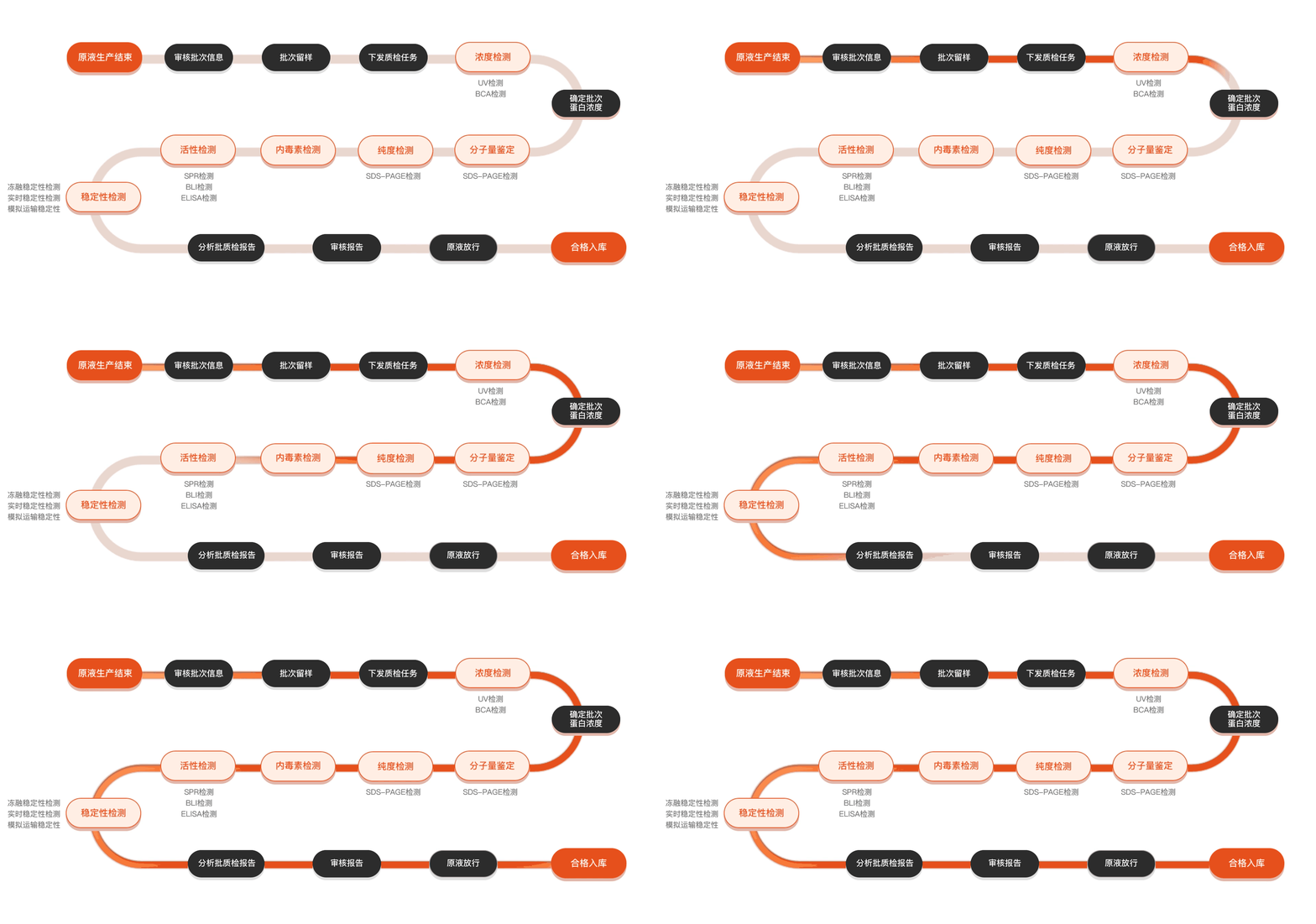
Quality inspection process
Related Products
Protein Description
The study of FNTa recombinant protein is rooted in the growing interest in understanding protein functions and their applications in biotechnology and medicine. FNTa, a specific recombinant protein, has garnered attention due to its unique structural properties and potential role in various biological processes. Researchers have identified FNTa's involvement in cellular signaling and its potential as a therapeutic target in diseases such as cancer and metabolic disorders. The production of FNTa through recombinant DNA technology allows for the generation of large quantities of this protein, facilitating detailed functional studies and enabling the exploration of its interactions with other biomolecules. This approach not only improves our understanding of FNTa's biological significance but also opens avenues for developing novel diagnostic and therapeutic strategies. Furthermore, the study of FNTa can enhance our knowledge of protein engineering and synthetic biology, contributing to advancements in drug delivery systems and vaccine development. Thus, the investigation of FNTa recombinant protein represents a crucial intersection of fundamental research and practical applications, with the potential to significantly impact health and disease management.