Analytical Data
-
Gene name
Smad2
- Application
-
Alternative Names
SMAD2;MADH2;MADR2;Mothers against decapentaplegic homolog 2
-
Species
Human
-
Source
E. coli
-
Tag
His tag N-Terminus
-
Purity
Greater than 90% as determined by SDS-PAGE.
-
Uniprot
Q15796
-
Expression Region
1-467aa
-
AA Sequence
MGSSHHHHHH SSGLVPRGSH MSSILPFTPP VVKRLLGWKK SAGGSGGAGG GEQNGQEEKW CEKAVKSLVK KLKKTGRLDE LEKAITTQNC NTKCVTIPSTCSEIWGLSTP NTIDQWDTTG LYSFSEQTRS LDGRLQVSHR KGLPHVIYCR LWRWPDLHSH HELKAIENCE YAFNLKKDEV CVNPYHYQRV ETPVLPPVLVPRHTEILTEL PPLDDYTHSI PENTNFPAGI EPQSNYIPET PPPGYISEDG ETSDQQLNQS MDTGSPAELS PTTLSPVNHS LDLQPVTYSE PAFWCSIAYYELNQRVGETF HASQPSLTVD GFTDPSNSER FCLGLLSNVN RNATVEMTRR HIGRGVRLYY IGGEVFAECL SDSAIFVQSP NCNQRYGWHP ATVCKIPPGCNLKIFNNQEF AALLAQSVNQ GFEAVYQLTR MCTIRMSFVK GWGAEYRRQT VTSTPCWIEL HLNGPLQWLD KVLTQMGSPS VRCSSMS
-
Molecular Weight
54 kDa
-
Endotoxin
< 1.0 EU per μg protein as determined by the LAL method.
-
Form
Freeze-dried powder
-
Buffer formulation
PBS, pH7.4, containing 0.01% SKL, 1mM DTT, 5% Trehalose and Proclin300.
-
Reconstitution
Reconstitute in ddH2O to a concentration of 0.1-0.5 mg/mL. Do not vortex.
- Customization
-
Stability Test
The thermal stability is described by the loss rate. The loss rate was determined by accelerated thermal degradation test, that is, incubate the protein at 37℃ for 48h, and no obvious degradation and precipitation were observed. The loss rate isless than 8% within the expiration date under appropriate storage condition.
-
Storage & Shelf Life
Samples are stable for up to twelve months from date of receipt at -20℃ to -80℃. Store it under sterile conditions at -20℃ to -80℃. It is recommended that the protein be aliquoted for optimal storage. Avoid repeated freeze-thaw cycles.
-
Shipping
In general, recombinant proteins are supplied as lyophilized powder and shipped at ambient temperature. For bulk packages, the proteins are provided as frozen liquid and shipped with blue ice, unless otherwise requested by the customer.
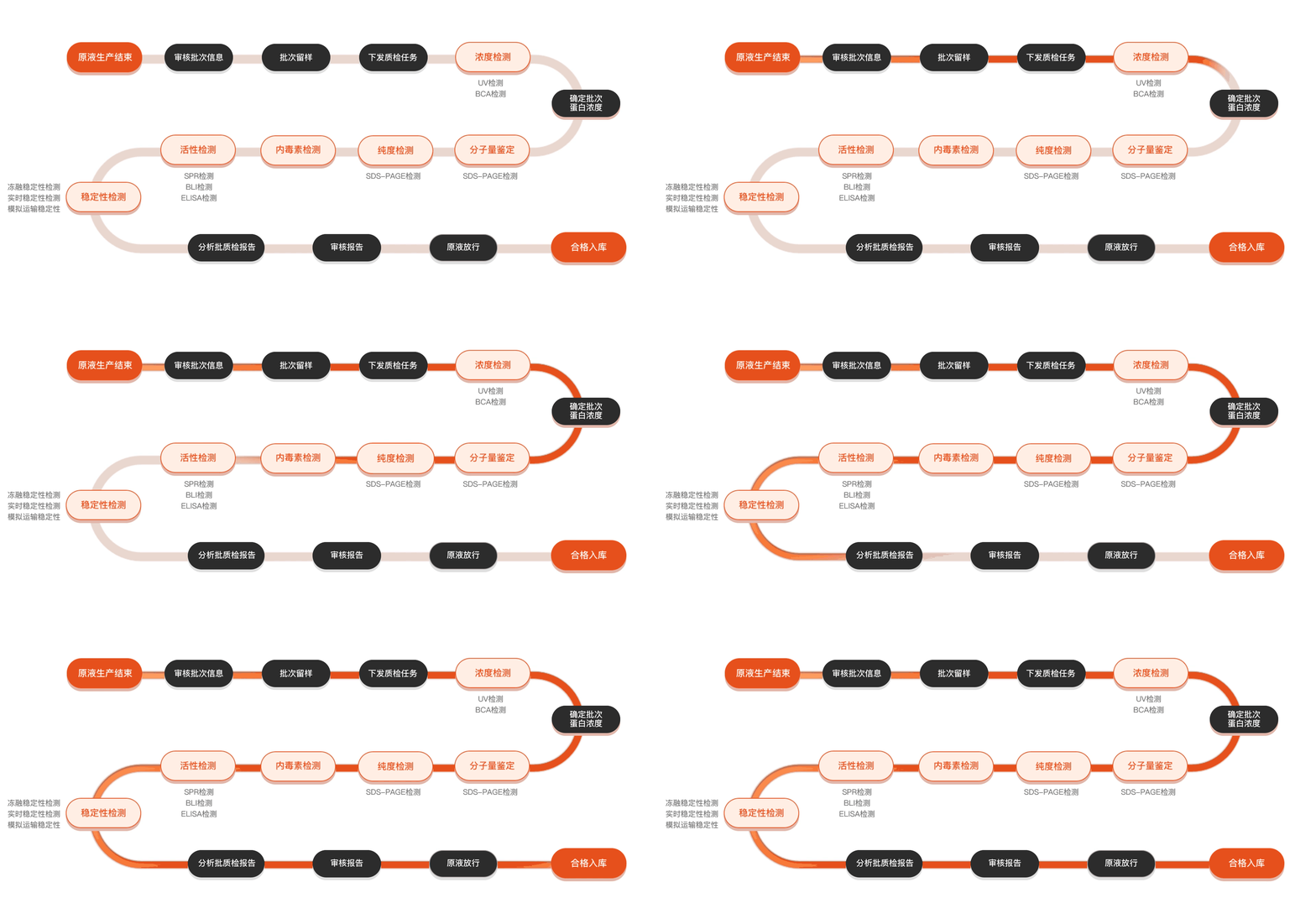
Quality inspection process
Related Products
Protein Description
Smad2 is a crucial intracellular signaling mediator in the transforming growth factor-beta (TGF-β) superfamily signaling pathway, which plays a vital role in regulating various cellular processes, including proliferation, differentiation, and apoptosis. Upon binding of TGF-β to its receptor, Smad2 is phosphorylated, leading to its activation and subsequent translocation to the nucleus, where it regulates gene expression by interacting with other transcription factors. The study of recombinant Smad2 protein has gained significant attention in recent years due to its importance in understanding the molecular mechanisms underlying developmental biology, tissue homeostasis, and tumorigenesis. By expressing and purifying recombinant Smad2, researchers can investigate its functional properties, binding interactions, and post-translational modifications. Moreover, examining Smad2 in the context of various pathological conditions, such as cancer and fibrosis, can reveal insights into its role as a potential therapeutic target. The ability to produce large quantities of recombinant Smad2 also opens opportunities for drug discovery and bioengineering applications, making it a valuable subject of research in the fields of molecular biology and biotechnology. Understanding the intricacies of Smad2 signaling pathways will not only enhance our knowledge of cellular functions but also contribute to the development of novel therapeutic strategies for diseases associated with dysregulated TGF-β signaling.