Analytical Data
-
Gene name
UBE2J2
- Application
-
Alternative Names
UBE2J2;NCUBE2;Ubiquitin-conjugating enzyme E2 J2
-
Species
Human
-
Source
E. coli
-
Tag
His tag N-Terminus
-
Purity
Greater than 90% as determined by SDS-PAGE.
-
Uniprot
Q8N2K1
-
Expression Region
1-226aa
-
AA Sequence
MGSSHHHHHH SSGLVPRGSH MGSHMSSTSS KRAPTTATQR LKQDYLRIKK DPVPYICAEP LPSNILEWHY VVRGPEMTPY EGGYYHGKLI FPREFPFKPP SIYMITPNGR FKCNTRLCLS ITDFHPDTWN PAWSVSTILT GLLSFMVEKG PTLGSIETSD FTKRQLAVQS LAFNLKDKVF CELFPEVVEE IKQKQKAQDE LSSRPQTLPL PDVVPDGETH LVQNGIQLLN GHAPGAVPNL AGLQQANRHH
-
Molecular Weight
28 kDa
-
Endotoxin
< 1.0 EU per μg protein as determined by the LAL method.
-
Form
Freeze-dried powder
-
Buffer formulation
PBS, pH7.4, containing 0.01% SKL, 1mM DTT, 5% Trehalose and Proclin300.
-
Reconstitution
Reconstitute in ddH2O to a concentration of 0.1-0.5 mg/mL. Do not vortex.
- Customization
-
Stability Test
The thermal stability is described by the loss rate. The loss rate was determined by accelerated thermal degradation test, that is, incubate the protein at 37℃ for 48h, and no obvious degradation and precipitation were observed. The loss rate isless than 8% within the expiration date under appropriate storage condition.
-
Storage & Shelf Life
Samples are stable for up to twelve months from date of receipt at -20℃ to -80℃. Store it under sterile conditions at -20℃ to -80℃. It is recommended that the protein be aliquoted for optimal storage. Avoid repeated freeze-thaw cycles.
-
Shipping
In general, recombinant proteins are supplied as lyophilized powder and shipped at ambient temperature. For bulk packages, the proteins are provided as frozen liquid and shipped with blue ice, unless otherwise requested by the customer.
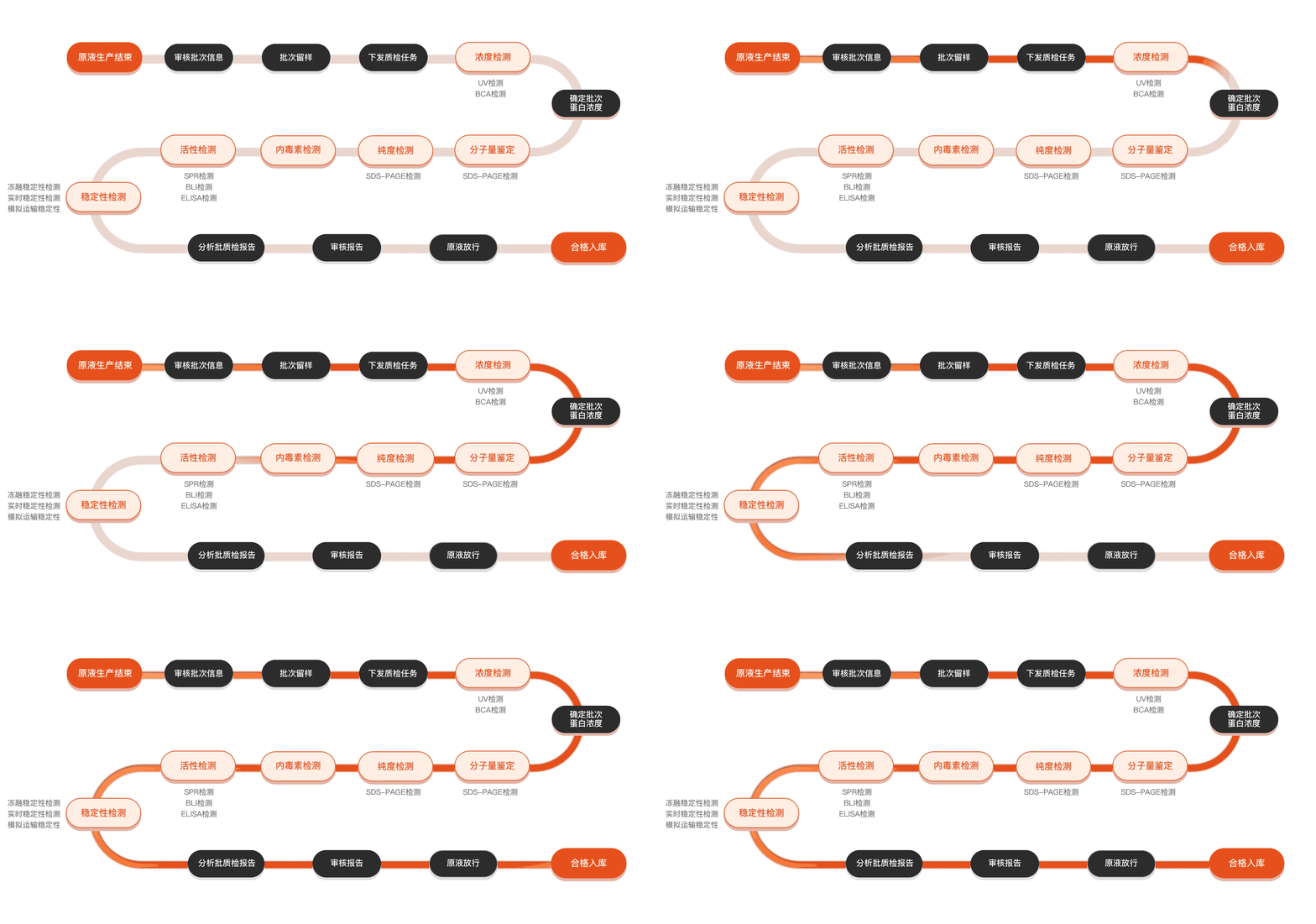
Quality inspection process
Related Products
Protein Description
UBE2J2, a member of the ubiquitin-conjugating enzyme family, plays a crucial role in the ubiquitin-proteasome system, which regulates various cellular processes, including protein degradation, cell cycle progression, and signal transduction. The enzyme mediates the attachment of ubiquitin to target proteins, marking them for proteasomal degradation or altering their function and localization. Research indicates that UBE2J2 is involved in the modification of key substrates associated with several diseases, including cancer and neurodegenerative disorders, highlighting its potential as a therapeutic target. Recent studies have suggested that UBE2J2 may have distinct effects on the regulation of cellular stress responses and the stability of specific oncoproteins, which warrants further investigation into its functional mechanisms. The recombinant expression of UBE2J2 in host systems allows for the purification and detailed study of its enzymatic activity, substrate specificity, and structural characteristics. Understanding UBE2J2's role in cellular pathways could provide valuable insights into its contribution to disease pathology and uncover novel strategies for drug development aimed at modulating ubiquitin-mediated processes.