Analytical Data
-
Gene name
HMBS
- Application
-
Alternative Names
HMBS;PBGD;UPS;Porphobilinogen deaminase
-
Species
Human
-
Source
E. coli
-
Tag
His tag N-Terminus
-
Purity
Greater than 90% as determined by SDS-PAGE.
-
Uniprot
P08397
-
Expression Region
2-361aa
-
AA Sequence
SGNGNAAAT AEENSPKMRV IRVGTRKSQL ARIQTDSVVA TLKASYPGLQ FEIIAMSTTG DKILDTALSK IGEKSLFTKE LEHALEKNEV DLVVHSLKDL PTVLPPGFTI GAICKRENPH DAVVFHPKFV GKTLETLPEK SVVGTSSLRR AAQLQRKFPH LEFRSIRGNL NTRLRKLDEQ QEFSAIILAT AGLQRMGWHN RVGQILHPEE CMYAVGQGAL GVEVRAKDQD ILDLVGVLHD PETLLRCIAE RAFLRHLEGG CSVPVAVHTA MKDGQLYLTG GVWSLDGSDS IQETMQATIH VPAQHEDGPE DDPQLVGITA RNIPRGPQLA AQNLGISLAN LLLSKGAKNI LDVARQLNDA H
-
Endotoxin
< 1.0 EU per μg protein as determined by the LAL method.
-
Form
Freeze-dried powder
-
Buffer formulation
PBS, pH7.4, containing 0.01% SKL, 1mM DTT, 5% Trehalose and Proclin300.
-
Reconstitution
Reconstitute in ddH2O to a concentration of 0.1-0.5 mg/mL. Do not vortex.
- Customization
-
Stability Test
The thermal stability is described by the loss rate. The loss rate was determined by accelerated thermal degradation test, that is, incubate the protein at 37℃ for 48h, and no obvious degradation and precipitation were observed. The loss rate isless than 8% within the expiration date under appropriate storage condition.
-
Storage & Shelf Life
Samples are stable for up to twelve months from date of receipt at -20℃ to -80℃. Store it under sterile conditions at -20℃ to -80℃. It is recommended that the protein be aliquoted for optimal storage. Avoid repeated freeze-thaw cycles.
-
Shipping
In general, recombinant proteins are supplied as lyophilized powder and shipped at ambient temperature. For bulk packages, the proteins are provided as frozen liquid and shipped with blue ice, unless otherwise requested by the customer.
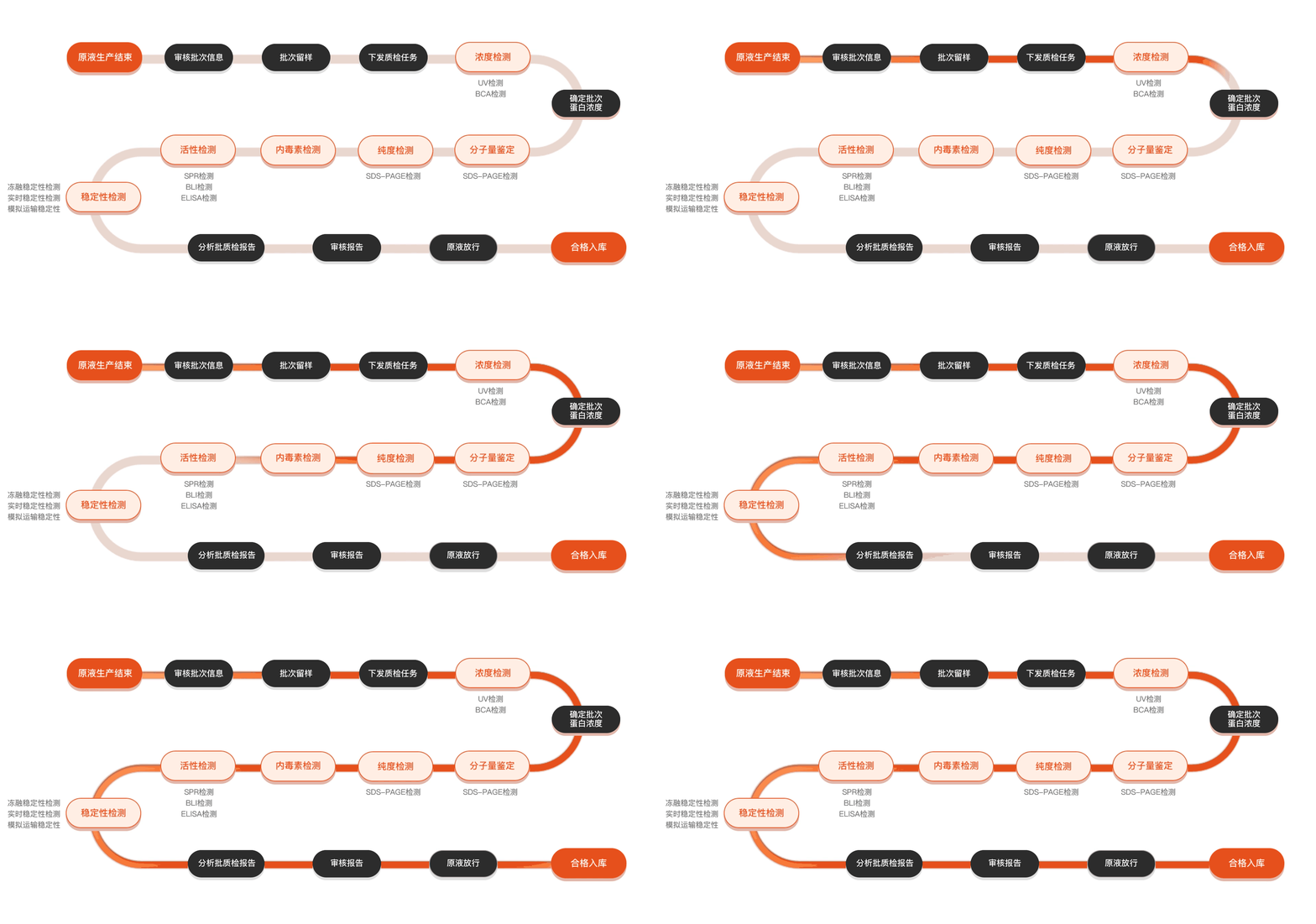
Quality inspection process
Related Products
Protein Description
HMBS, or Hydroxymethylbilane Synthase, is an essential enzyme involved in the heme biosynthesis pathway. Disruptions in HMBS function can lead to hereditary diseases such as Acute Intermittent Porphyria (AIP), characterized by symptoms including severe abdominal pain, neurological issues, and skin sensitivity. Research on HMBS recombinant protein has gained importance due to the enzyme's complex role in regulating porphyrin metabolism. By utilizing recombinant DNA technology, researchers can produce HMBS in significant quantities, facilitating detailed studies of its structure, function, and interactions with other metabolic components. Investigating HMBS as a recombinant protein not only helps in understanding the underlying mechanisms of porphyrias but also opens avenues for therapeutic interventions. Potential applications include developing enzyme replacement therapies or small molecules to enhance or mimic HMBS activity, thereby offering hope for patients suffering from enzyme deficiencies. Additionally, insights gained from HMBS studies can contribute to a broader understanding of related enzymes in the heme biosynthesis pathway, ultimately aiding in the development of novel treatments for various hematological conditions. Thus, HMBS recombinant protein research stands at the intersection of biochemical genetics and therapeutic innovation, promising advancements in curing or managing metabolic disorders linked to porphyrin metabolism.