Analytical Data
-
Gene name
LALBA
- Application
-
Alternative Names
LALBA;LYZL7;Alpha-lactalbumin
-
Species
Human
-
Source
E. coli
-
Tag
His tag N-Terminus
-
Purity
Greater than 90% as determined by SDS-PAGE.
-
Uniprot
P00709
-
Expression Region
1-142aa
-
AA Sequence
MRFFVPLFLV GILFPAILAK QFTKCELSQL LKDIDGYGGI ALPELICTMF HTSGYDTQAI VENNESTEYG LFQISNKLWC KSSQVPQSRN ICDISCDKFL DDDITDDIMC AKKILDIKGI DYWLAHKALC TEKLEQWLCE KL
-
Molecular Weight
16 kDa
-
Endotoxin
< 1.0 EU per μg protein as determined by the LAL method.
-
Form
Freeze-dried powder
-
Buffer formulation
PBS, pH7.4, containing 0.01% SKL, 1mM DTT, 5% Trehalose and Proclin300.
-
Reconstitution
Reconstitute in ddH2O to a concentration of 0.1-0.5 mg/mL. Do not vortex.
- Customization
-
Stability Test
The thermal stability is described by the loss rate. The loss rate was determined by accelerated thermal degradation test, that is, incubate the protein at 37℃ for 48h, and no obvious degradation and precipitation were observed. The loss rate isless than 8% within the expiration date under appropriate storage condition.
-
Storage & Shelf Life
Samples are stable for up to twelve months from date of receipt at -20℃ to -80℃. Store it under sterile conditions at -20℃ to -80℃. It is recommended that the protein be aliquoted for optimal storage. Avoid repeated freeze-thaw cycles.
-
Shipping
In general, recombinant proteins are supplied as lyophilized powder and shipped at ambient temperature. For bulk packages, the proteins are provided as frozen liquid and shipped with blue ice, unless otherwise requested by the customer.
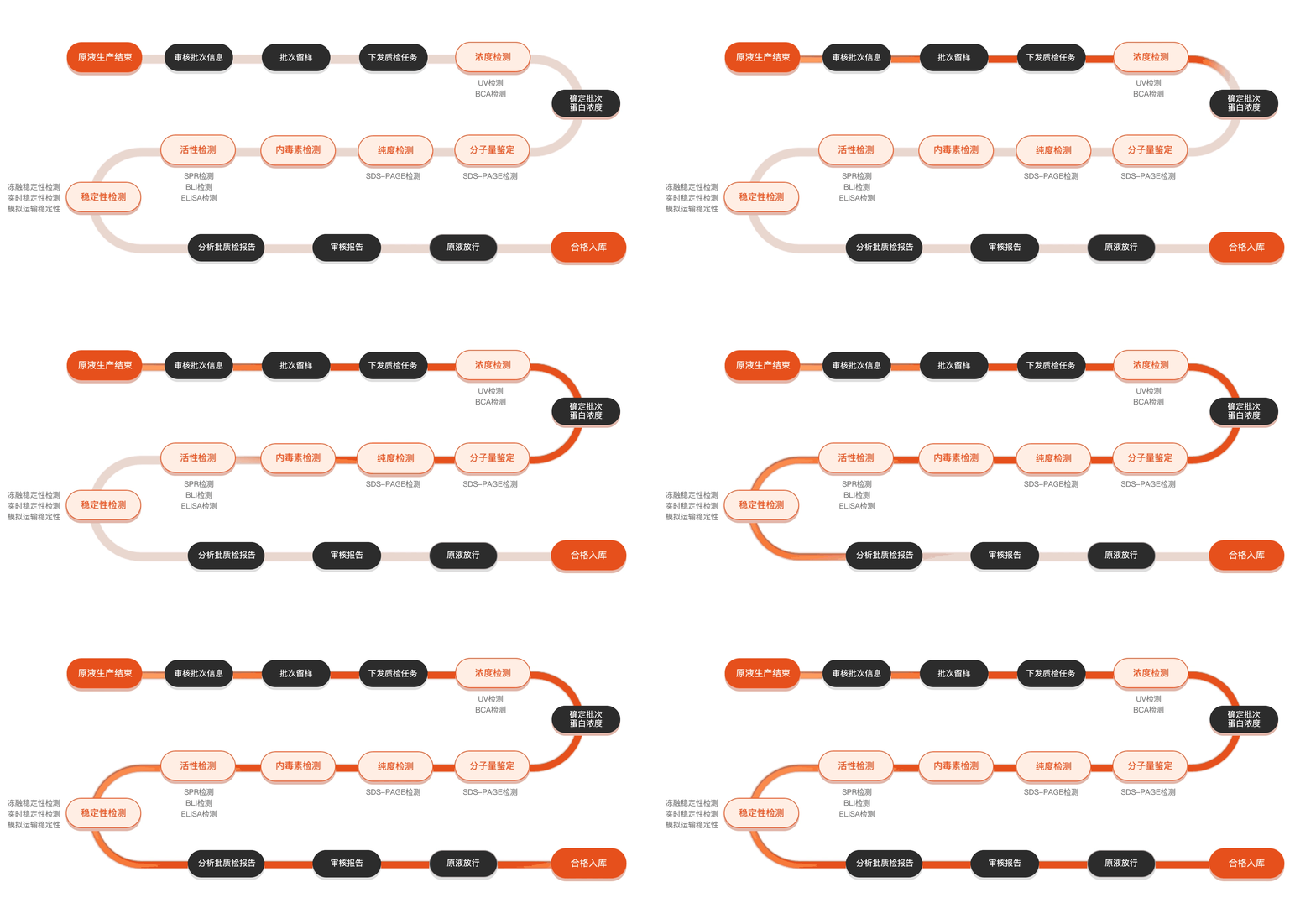
Quality inspection process
Related Products
Protein Description
LALBA (Lactalbumin), also known as whey acidic protein, is a key component of whey protein derived from milk, playing a vital role in various biological functions, including calcium binding and lactose synthesis. Its unique structure and properties have made it a focus of research in biochemistry and molecular biology. The recombinant production of LALBA has gained attention as a more sustainable and efficient alternative to traditional extraction methods from milk, which can be costly and environmentally taxing. By employing recombinant DNA technology, scientists can produce LALBA in microbial systems (like E. coli or yeast), allowing for faster growth rates, reduced risk of contamination, and the ability to modify the protein for specific applications. Additionally, understanding LALBA's folding mechanisms and post-translational modifications through recombinant systems promotes insights into protein behavior in various environments. The multifunctional properties of LALBA have potential applications in food technology, nutrition, and pharmaceuticals. Research into its recombinant production and subsequent functional analyses is crucial for developing novel therapeutic agents, enhancing food products, and contributing to the biotechnology field. Thus, LALBA serves as a prime example of how modern molecular techniques can revolutionize traditional industries and open new avenues for scientific exploration.