Analytical Data
-
Gene name
PTRF
- Application
-
Alternative Names
2310075E07Rik; AW546441; Cavin 1; Cavin; Cavin-1; CAVIN1; CGL4; FKSG13; FLJ90031; MGC118550; OTTMUSP00000002049; Polymerase I and transcript release factor; Ptrf; PTRF_HUMAN; RNA polymerase I and transcript release factor; RP23-279L23.6; TTF I interacting peptide 12
-
Species
Human
-
Source
E. coli
-
Tag
His tag N-Terminus
-
Purity
Greater than 90% as determined by SDS-PAGE.
-
Uniprot
Q6NZI2
-
Expression Region
1-390 aa
-
AA Sequence
MEDPTLYIVE RPLPGYPDAE APEPSSAGAQ AAEEPSGAGS EELIKSDQVN GVLVLSLLDK IIGAVDQIQL TQAQLEERQA EMEGAVQSIQ GELSKLGKAH ATTSNTVSKL LEKVRKVSVN VKTVRGSLER QAGQIKKLEV NEAELLRRRN FKVMIYQDEV KLPAKLSISK SLKESEALPE KEGEELGEGE RPEEDAAALE LSSDEAVEVE EVIEESRAER IKRSGLRRVD DFKKAFSKEK MEKTKVRTRE NLEKTRLKTK ENLEKTRHTL EKRMNKLGTR LVPAERREKL KTSRDKLRKS FTPDHVVYAR SKTAVYKVPP FTFHVKKIRE GQVEVLKATE MVEVGADDDE GGAERGEAGD LRRGSSPDVH ALLEITEESD AVLVDKSDSD
-
Molecular Weight
43.4 kDa
-
Endotoxin
< 1.0 EU per μg protein as determined by the LAL method.
-
Form
Freeze-dried powder
-
Buffer formulation
PBS, pH7.4, containing 0.01% SKL, 1mM DTT, 5% Trehalose and Proclin300.
-
Reconstitution
Reconstitute in ddH2O to a concentration of 0.1-0.5 mg/mL. Do not vortex.
- Customization
-
Stability Test
The thermal stability is described by the loss rate. The loss rate was determined by accelerated thermal degradation test, that is, incubate the protein at 37℃ for 48h, and no obvious degradation and precipitation were observed. The loss rate isless than 8% within the expiration date under appropriate storage condition.
-
Storage & Shelf Life
Samples are stable for up to twelve months from date of receipt at -20℃ to -80℃. Store it under sterile conditions at -20℃ to -80℃. It is recommended that the protein be aliquoted for optimal storage. Avoid repeated freeze-thaw cycles.
-
Shipping
In general, recombinant proteins are supplied as lyophilized powder and shipped at ambient temperature. For bulk packages, the proteins are provided as frozen liquid and shipped with blue ice, unless otherwise requested by the customer.
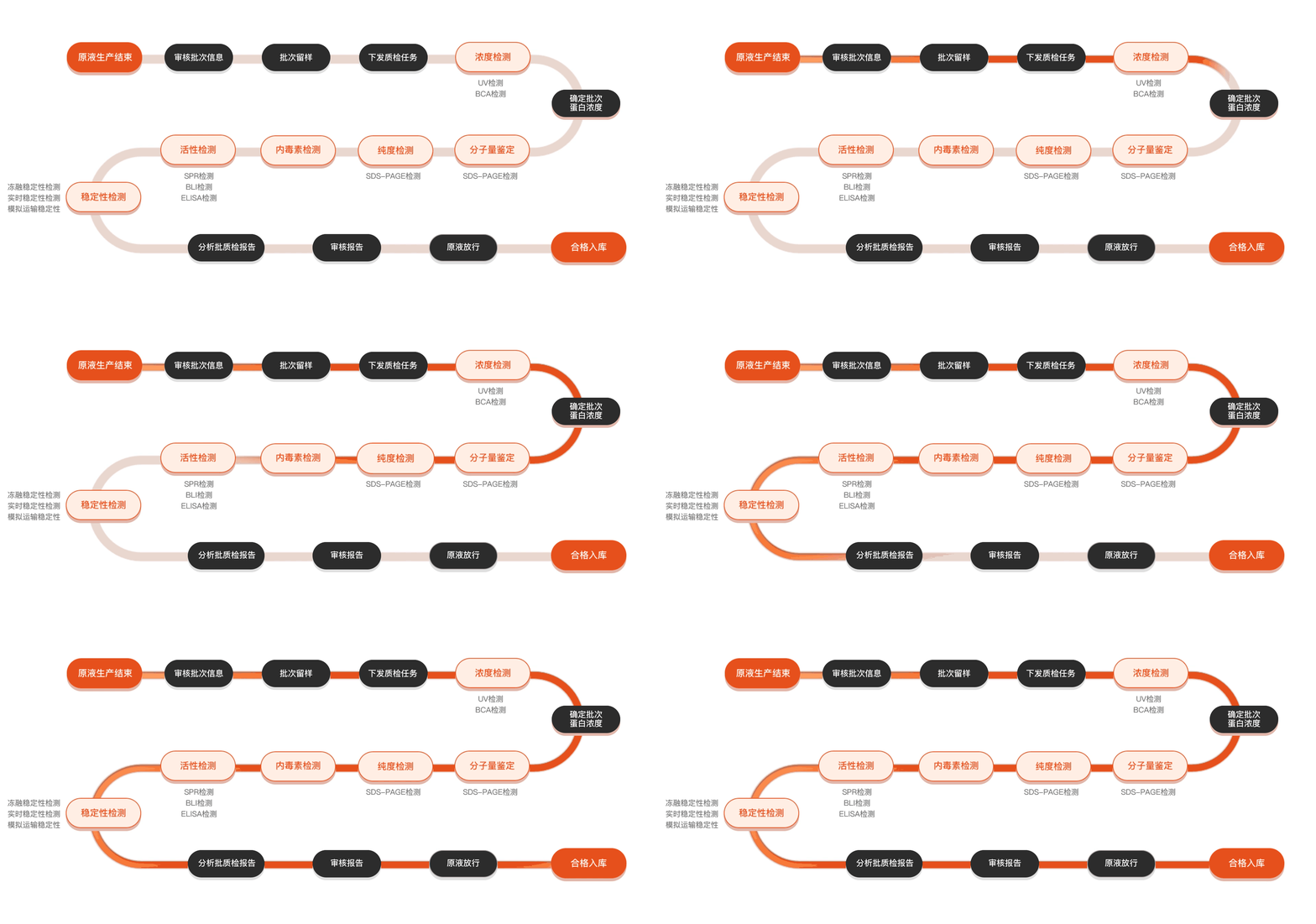
Quality inspection process
Related Products
Protein Description
PTRF, or Pulmonary Tumor Rejection Factor, is a critical protein initially identified for its role in cellular regulation and tumor rejection mechanisms. Research has unveiled its potential implications in various biological processes, including cell proliferation, apoptosis, and immune response modulation. With the increasing incidence of tumors and chronic diseases, understanding the molecular functions of PTRF has gained prominence in biomedical research. Studies have shown that PTRF interacts with key signaling pathways, influencing cell behavior and contributing to tumorigenesis or tumor suppression. Moreover, its involvement in the regulation of extracellular vesicles highlights its importance in intercellular communication during disease progression. The reconstitution of PTRF in laboratory settings has provided an invaluable tool for dissecting its precise roles and mechanisms, opening new avenues for therapeutic interventions in cancer treatment and prevention strategies. As researchers investigate the potential of PTRF as a biomarker for disease progression or as a target for novel therapies, the study of this recombinant protein continues to enhance our understanding of its multifaceted roles in health and disease. Thus, the exploration of PTRF not only emphasizes its biological significance but also underscores its potential as a focal point in the development of innovative therapeutic strategies aimed at combating various forms of cancer and associated disorders.