Analytical Data
-
Gene name
sepA
- Application
-
Alternative Names
sepA;Serine protease SepA autotransporter
-
Species
E.coli
-
Source
E. coli
-
Tag
His tag N-Terminus
-
Purity
Greater than 90% as determined by SDS-PAGE.
-
Uniprot
P0C0Q4
-
Expression Region
208-507aa
-
AA Sequence
AATTGTGKGVLGDTKQININSVSGGYALQDLTQQGTLSAYNYDANTGQAYLMQDKDKNFVDDEQRAGVDANYYAKETYDYYKNTFGRESYDNQGSPIISIAHVNNFQGQDNRNNAAWIGDKMIYGDGDGRTFTALSGANDVVAHEITHGVTQQTANLVYRSQSGALNESFSDVFGYFIDDEDFLMGEDVYTPGVGGDALRSMSNPERFGQPSHMNDFVYTNSDNGGVHTNSGIPNKAAYNTIRSIGKQRSEQIYYRALTVYLTSNSDFQDAKASLQQAAFDLYGDGIAQQVGQAWDSVGV
-
Molecular Weight
37.7 kDa
-
Endotoxin
< 1.0 EU per μg protein as determined by the LAL method.
-
Form
Freeze-dried powder
-
Buffer formulation
PBS, pH7.4, containing 0.01% SKL, 1mM DTT, 5% Trehalose and Proclin300.
-
Reconstitution
Reconstitute in ddH2O to a concentration of 0.1-0.5 mg/mL. Do not vortex.
- Customization
-
Stability Test
The thermal stability is described by the loss rate. The loss rate was determined by accelerated thermal degradation test, that is, incubate the protein at 37℃ for 48h, and no obvious degradation and precipitation were observed. The loss rate isless than 8% within the expiration date under appropriate storage condition.
-
Storage & Shelf Life
Samples are stable for up to twelve months from date of receipt at -20℃ to -80℃. Store it under sterile conditions at -20℃ to -80℃. It is recommended that the protein be aliquoted for optimal storage. Avoid repeated freeze-thaw cycles.
-
Shipping
In general, recombinant proteins are supplied as lyophilized powder and shipped at ambient temperature. For bulk packages, the proteins are provided as frozen liquid and shipped with blue ice, unless otherwise requested by the customer.
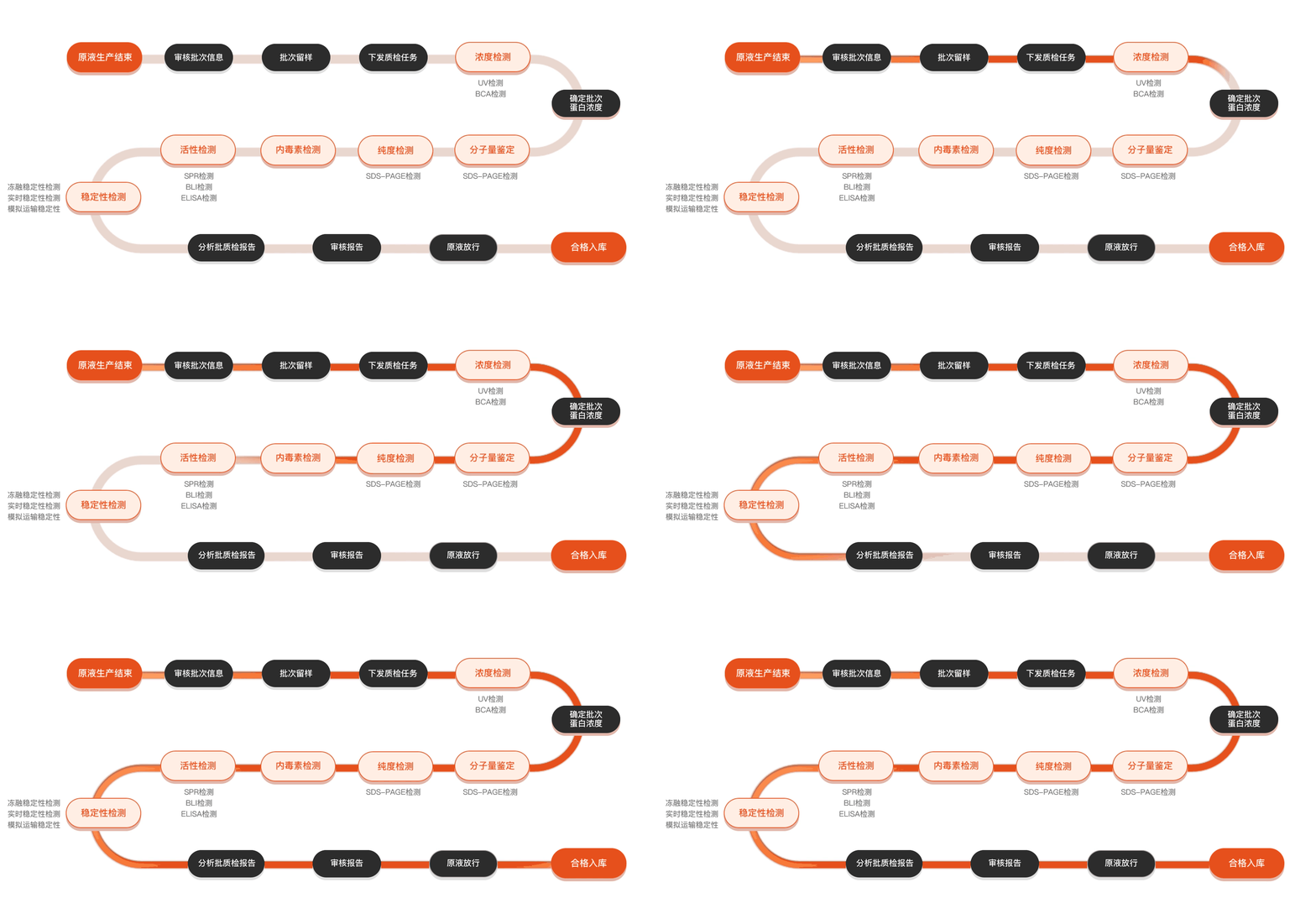
Quality inspection process
Related Products
Protein Description
SepA, a protein derived from *Staphylococcus epidermidis*, has garnered significant attention in biomedical research due to its multifaceted roles in bacterial pathogenesis and potential applications in vaccine development. Staphylococcus epidermidis, a coagulase-negative staphylococcus, is often considered a benign skin commensal; however, it can become pathogenic, particularly in immunocompromised individuals or in cases of indwelling medical devices. SepA has been implicated in promoting biofilm formation, which is a crucial factor in the bacteria's ability to adhere to medical devices and evade the host immune response. This characteristic poses significant challenges in clinical settings, leading to persistent infections that are difficult to treat. Understanding the structure and function of SepA is vital for elucidating the mechanisms of bacterial colonization and infection. Recent studies have focused on the recombinant expression of SepA to investigate its immunogenic properties and its potential as a target for therapeutic interventions. By producing SepA in a recombinant system, researchers can analyze its effects on the host immune response and explore its viability as a candidate for vaccine development. Given the rising concern over antibiotic resistance and the prevalence of infections caused by biofilm-forming bacteria, the study of SepA not only enhances our understanding of staphylococcal pathogenesis but also paves the way for innovative strategies in combating bacterial infections and improving patient outcomes.