Analytical Data
-
Gene name
nlpD
- Application
-
Alternative Names
nlpD;Murein hydrolase activator NlpD
-
Species
E.coli
-
Source
E. coli
-
Tag
His tag N-Terminus
-
Purity
Greater than 90% as determined by SDS-PAGE.
-
Uniprot
P0ADA3
-
Expression Region
26-379aa
-
AA Sequence
CSDTSNPPAPVSSVNGNAPANTNSGMLITPPPKMGTTSTAQQPQIQPVQQ PQIQATQQPQIQPVQPVAQQPVQMENGRIVYNRQYGNIPKGSYSGSTYTV KKGDTLFYIAWITGNDFRDLAQRNNIQAPYALNVGQTLQVGNASGTPITG GNAITQADAAEQGVVIKPAQNSTVAVASQPTITYSESSGEQSANKMLPNN KPTATTVTAPVTVPTASTTEPTVSSTSTSTPISTWRWPTEGKVIETFGAS EGGNKGIDIAGSKGQAIIATADGRVVYAGNALRGYGNLIIIKHNDDYLSA YAHNDTMLVREQQEVKAGQKIATMGSTGTSSTRLHFEIRYKGKSVNPLRY LPQR
-
Molecular Weight
54 kDa
-
Endotoxin
< 1.0 EU per μg protein as determined by the LAL method.
-
Form
Freeze-dried powder
-
Buffer formulation
PBS, pH7.4, containing 0.01% SKL, 1mM DTT, 5% Trehalose and Proclin300.
-
Reconstitution
Reconstitute in ddH2O to a concentration of 0.1-0.5 mg/mL. Do not vortex.
- Customization
-
Stability Test
The thermal stability is described by the loss rate. The loss rate was determined by accelerated thermal degradation test, that is, incubate the protein at 37℃ for 48h, and no obvious degradation and precipitation were observed. The loss rate isless than 8% within the expiration date under appropriate storage condition.
-
Storage & Shelf Life
Samples are stable for up to twelve months from date of receipt at -20℃ to -80℃. Store it under sterile conditions at -20℃ to -80℃. It is recommended that the protein be aliquoted for optimal storage. Avoid repeated freeze-thaw cycles.
-
Shipping
In general, recombinant proteins are supplied as lyophilized powder and shipped at ambient temperature. For bulk packages, the proteins are provided as frozen liquid and shipped with blue ice, unless otherwise requested by the customer.
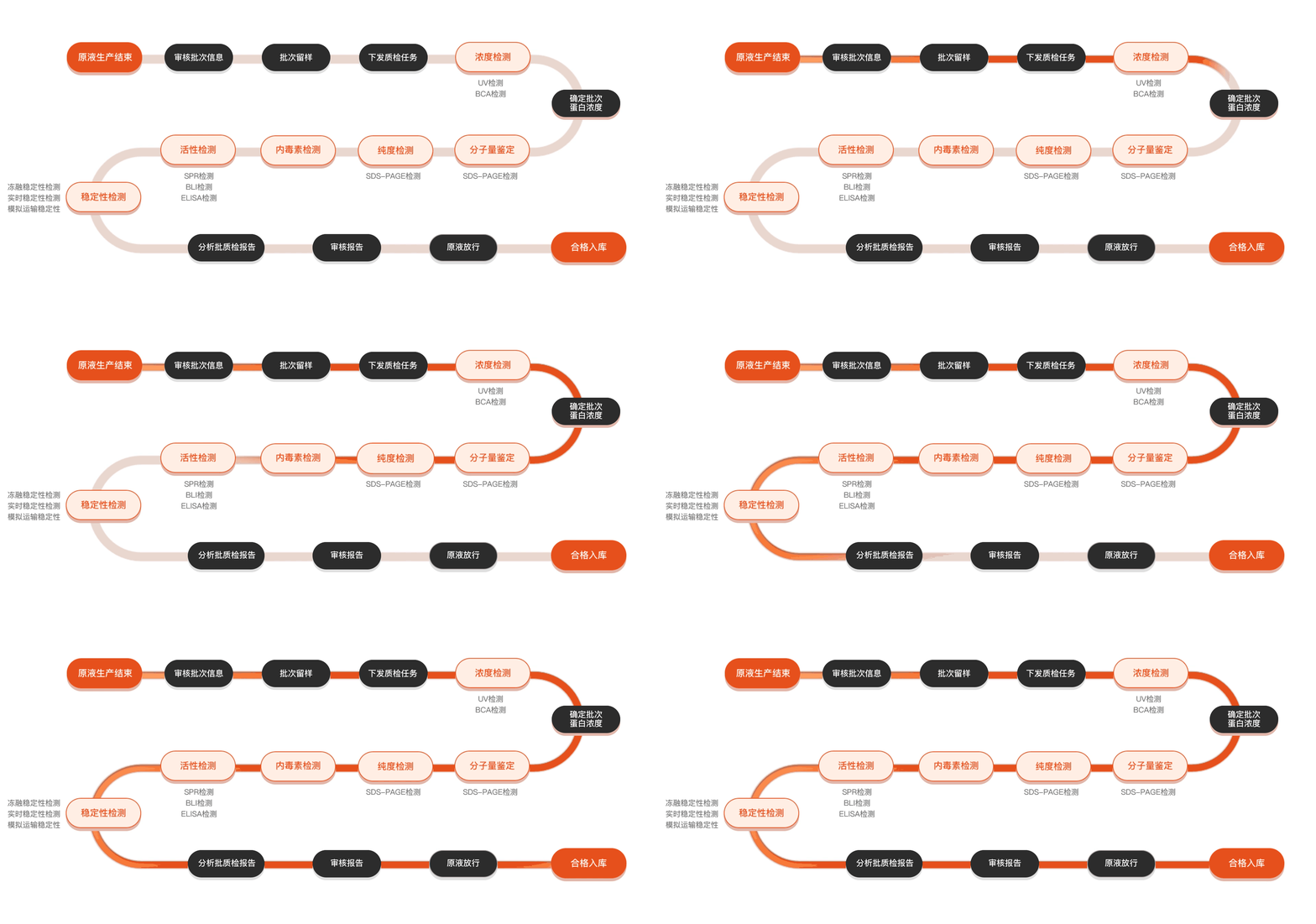
Quality inspection process
Related Products
Protein Description
The research on NLPD recombinant protein stems from the growing interest in understanding and manipulating neurotoxic peptides for therapeutic purposes. NLPD, a neurotoxin derived from certain venomous organisms, has garnered attention due to its unique structure and potent biological activity. These peptides have the potential for applications in drug development, particularly in treating neurological disorders or as tools for molecular biology. Researchers are focused on recombinant technology to produce NLPD with high purity and yield, which allows for detailed structural and functional studies. This approach not only enables the exploration of NLPD's mechanisms of action but also aids in the identification of potential analogs with improved therapeutic profiles. Additionally, studying NLPD in the context of protein engineering could lead to innovations in biomedicine, enhancing our ability to design targeted interventions for a variety of diseases. The integration of bioinformatics and molecular modeling in this research further contributes to the understanding of NLPD's interactions at the molecular level, paving the way for developing new classes of pharmaceuticals. Overall, the NLPD recombinant protein serves as a promising candidate for advancing both basic research and clinical applications in neuropharmacology.