Analytical Data
-
Gene name
LGI3
- Application
-
Alternative Names
LGI3;LGIL4;Leucine-rich repeat LGI family member 3
-
Species
Human
-
Source
E. coli
-
Tag
His tag N-Terminus
-
Purity
Greater than 90% as determined by SDS-PAGE.
-
Uniprot
Q8N145
-
Expression Region
31-548aa
-
AA Sequence
KRPPKTPPCP PSCSCTRDTA FCVDSKAVPR NLPSEVISLT LVNAAFSEIQ DGAFSHLPLL QFLLLNSNKF TLIGDNAFTG LSHLQYLFIE NNDIWALSKF TFRGLKSLTH LSLANNNLQT LPRDIFRPLD ILNDLDLRGN SLNCDCKVKW LVEWLAHTNT TVAPIYCASP PRFQEHKVQD LPLREFDCIT TDFVLYQTLA FPAVSAEPFL YSSDLYLALA QPGVSACTIL KWDYVERQLR DYDRIPAPSA VHCKPMVVDS QLYVVVAQLF GGSYIYHWDP NTTRFTRLQD IDPQRVRKPN DLEAFRIDGD WYFAVADSSK AGATSLYRWH QNGFYSHQAL HPWHRDTDLE FVDGEGKPRL IVSSSSQAPV IYQWSRTQKQ FVAQGEVTQV PDAQAVKHFR AGRDSYLCLS RYIGDSKILR WEGTRFSEVQ ALPSRGSLAL QPFLVGGRRY LALGSDFSFT QIYQWDEGRQ KFVRFQELAV QAPRAFCYMP AGDAQLLLAP SFKGQTLVYR HIVVDLSA
-
Molecular Weight
61.7 kDa
-
Endotoxin
< 1.0 EU per μg protein as determined by the LAL method.
-
Form
Freeze-dried powder
-
Buffer formulation
PBS, pH7.4, containing 0.01% SKL, 1mM DTT, 5% Trehalose and Proclin300.
-
Reconstitution
Reconstitute in ddH2O to a concentration of 0.1-0.5 mg/mL. Do not vortex.
- Customization
-
Stability Test
The thermal stability is described by the loss rate. The loss rate was determined by accelerated thermal degradation test, that is, incubate the protein at 37℃ for 48h, and no obvious degradation and precipitation were observed. The loss rate isless than 8% within the expiration date under appropriate storage condition.
-
Storage & Shelf Life
Samples are stable for up to twelve months from date of receipt at -20℃ to -80℃. Store it under sterile conditions at -20℃ to -80℃. It is recommended that the protein be aliquoted for optimal storage. Avoid repeated freeze-thaw cycles.
-
Shipping
In general, recombinant proteins are supplied as lyophilized powder and shipped at ambient temperature. For bulk packages, the proteins are provided as frozen liquid and shipped with blue ice, unless otherwise requested by the customer.
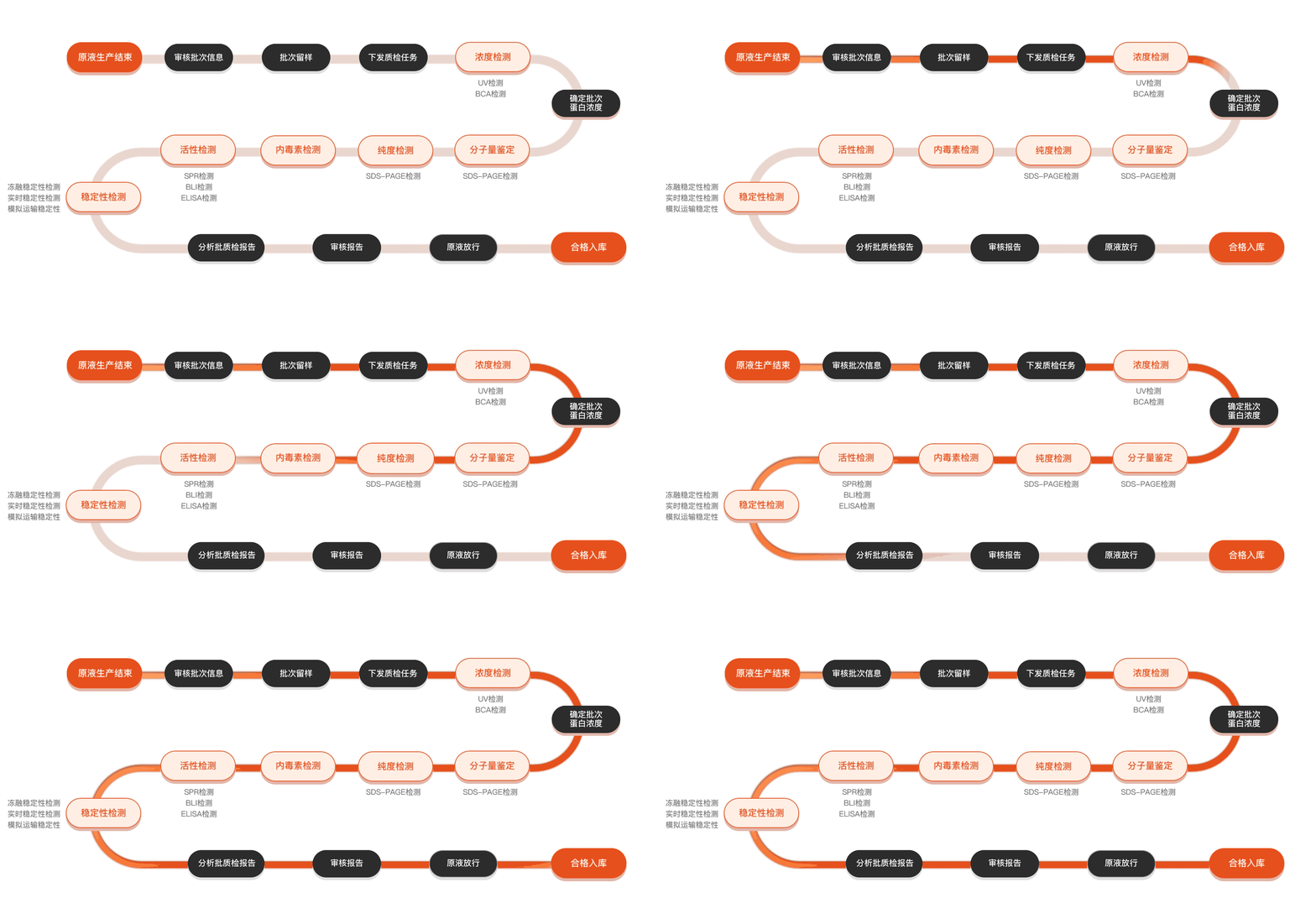
Quality inspection process
Related Products
Protein Description
LGI3 (Leucine-rich glioma-inactivated 3) is a member of the leucine-rich repeat (LRR) protein family, which is implicated in various physiological processes, including neuronal development and synaptic function. Research into LGI3 has gained momentum due to its association with neurological disorders, such as epilepsy and glioma, where it may play a role in tumor suppression and cell signaling. Additionally, LGI3 has been shown to interact with multiple proteins, affecting glioma tumor progression and the function of ion channels in neurons. Recent studies suggest that LGI3 may influence synaptic transmission and plasticity, highlighting its potential as a therapeutic target. Understanding the structure and function of recombinant LGI3 protein is crucial for elucidating its roles in neurological and oncological contexts. This research can pave the way for novel interventions and provide insights into the molecular mechanisms underlying these disorders.