Analytical Data
-
Gene name
REXO1
- Application
-
Alternative Names
REXO1;ELOABP1;KIAA1138;TCEB3BP1;RNA exonuclease 1 homolog
-
Species
Human
-
Source
E. coli
-
Tag
His tag N-Terminus
-
Purity
Greater than 90% as determined by SDS-PAGE.
-
Uniprot
Q8N1G1
-
Expression Region
1060-1221aa
-
AA Sequence
MRGSHHHHHH GMASMTGGQQ MGRDLYDDDD KDRWGSIYAL DCEMSYTTYG LELTRVTVVD TDVHVVYDTF VKPDNEIVDY NTRFSGVTEA DLADTSVTLR DVQAVLLSMF SADTILIGHS LESDLLALKV IHSTVVDTSV LFPHRLGLPY KRSLRNLMAD YLRQIIQDNV DGHSSSEDAG ACMHLVIWKV REDAKTKR
-
Molecular Weight
22 kDa
-
Endotoxin
< 1.0 EU per μg protein as determined by the LAL method.
-
Form
Freeze-dried powder
-
Buffer formulation
PBS, pH7.4, containing 0.01% SKL, 1mM DTT, 5% Trehalose and Proclin300.
-
Reconstitution
Reconstitute in ddH2O to a concentration of 0.1-0.5 mg/mL. Do not vortex.
- Customization
-
Stability Test
The thermal stability is described by the loss rate. The loss rate was determined by accelerated thermal degradation test, that is, incubate the protein at 37℃ for 48h, and no obvious degradation and precipitation were observed. The loss rate isless than 8% within the expiration date under appropriate storage condition.
-
Storage & Shelf Life
Samples are stable for up to twelve months from date of receipt at -20℃ to -80℃. Store it under sterile conditions at -20℃ to -80℃. It is recommended that the protein be aliquoted for optimal storage. Avoid repeated freeze-thaw cycles.
-
Shipping
In general, recombinant proteins are supplied as lyophilized powder and shipped at ambient temperature. For bulk packages, the proteins are provided as frozen liquid and shipped with blue ice, unless otherwise requested by the customer.
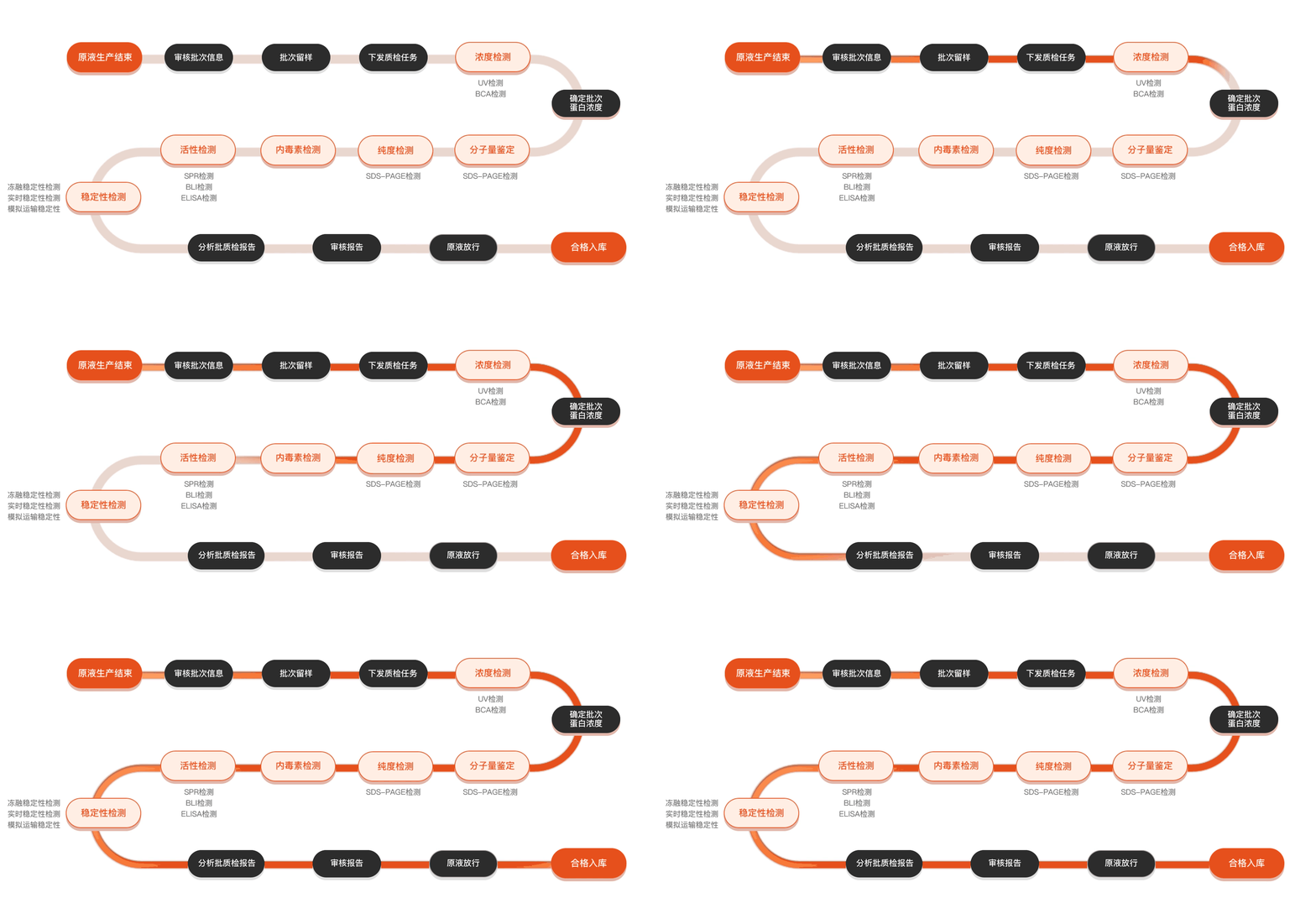
Quality inspection process
Related Products
Protein Description
REXO1, also known as RNA exonuclease 1, is a member of the 3' to 5' exoribonuclease family and plays a crucial role in RNA metabolism, including mRNA decay and processing. Its involvement in various cellular processes, such as the regulation of gene expression and the maintenance of RNA quality control, has made REXO1 a focal point of research in molecular biology. Recent studies have indicated that REXO1 may also be linked to important biological processes, such as responses to stress and the regulation of cellular proliferation. Abnormal REXO1 expression has been implicated in a variety of diseases, including cancers, where it may influence tumor progression and response to therapy. The production of recombinant REXO1 protein has become essential for investigating its biochemical properties, enzymatic activity, and structural characteristics. Such studies can provide insights into the mechanisms by which REXO1 contributes to RNA metabolism and its potential therapeutic implications. Understanding REXO1's function at the molecular level may offer novel avenues for targeting RNA-related dysregulation in diseases, highlighting the importance of recombinant protein studies in elucidating its role in cellular physiology and pathophysiology. Consequently, research on REXO1 not only enhances our comprehension of fundamental biology but also paves the way for potential biomedical applications.