Analytical Data
-
Gene name
OR7A5
- Application
-
Alternative Names
OR7A5; Olfactory receptor 7A5; Olfactory receptor OR19-17; Olfactory receptor TPCR92
-
Species
Human
-
Source
E. coli
-
Tag
His tag N-Terminus
-
Purity
Greater than 90% as determined by SDS-PAGE.
-
Uniprot
Q15622
-
Expression Region
1-319 aa
-
AA Sequence
MEPGNDTQISEFLLLGFSQEPGLQPFLFGLFLSMYLVTVLGNLLIILATISDSHLHTPMY FFLSNLSFADICVTSTTIPKMLMNIQTQNKVITYIACLMQMYFFILFAGFENFLLSVMAY DRFVAICHPLHYMVIMNPHLCGLLVLASWTMSALYSLLQILMVVRLSFCTALEIPHFFCE LNQVIQLACSDSFLNHMVIYFTVALLGGGPLTGILYSYSKIISSIHAISSAQGKYKAFST CASHLSVVSLFYGAILGVYLSSAATRNSHSSATASVMYTVVTPMLNPFIYSLRNKDIKRA LGIHLLWGTMKGQFFKKCP
-
Molecular Weight
35.5 kDa
-
Endotoxin
< 1.0 EU per μg protein as determined by the LAL method.
-
Form
Freeze-dried powder
-
Buffer formulation
PBS, pH7.4, containing 0.01% SKL, 1mM DTT, 5% Trehalose and Proclin300.
-
Reconstitution
Reconstitute in ddH2O to a concentration of 0.1-0.5 mg/mL. Do not vortex.
- Customization
-
Stability Test
The thermal stability is described by the loss rate. The loss rate was determined by accelerated thermal degradation test, that is, incubate the protein at 37℃ for 48h, and no obvious degradation and precipitation were observed. The loss rate isless than 8% within the expiration date under appropriate storage condition.
-
Storage & Shelf Life
Samples are stable for up to twelve months from date of receipt at -20℃ to -80℃. Store it under sterile conditions at -20℃ to -80℃. It is recommended that the protein be aliquoted for optimal storage. Avoid repeated freeze-thaw cycles.
-
Shipping
In general, recombinant proteins are supplied as lyophilized powder and shipped at ambient temperature. For bulk packages, the proteins are provided as frozen liquid and shipped with blue ice, unless otherwise requested by the customer.
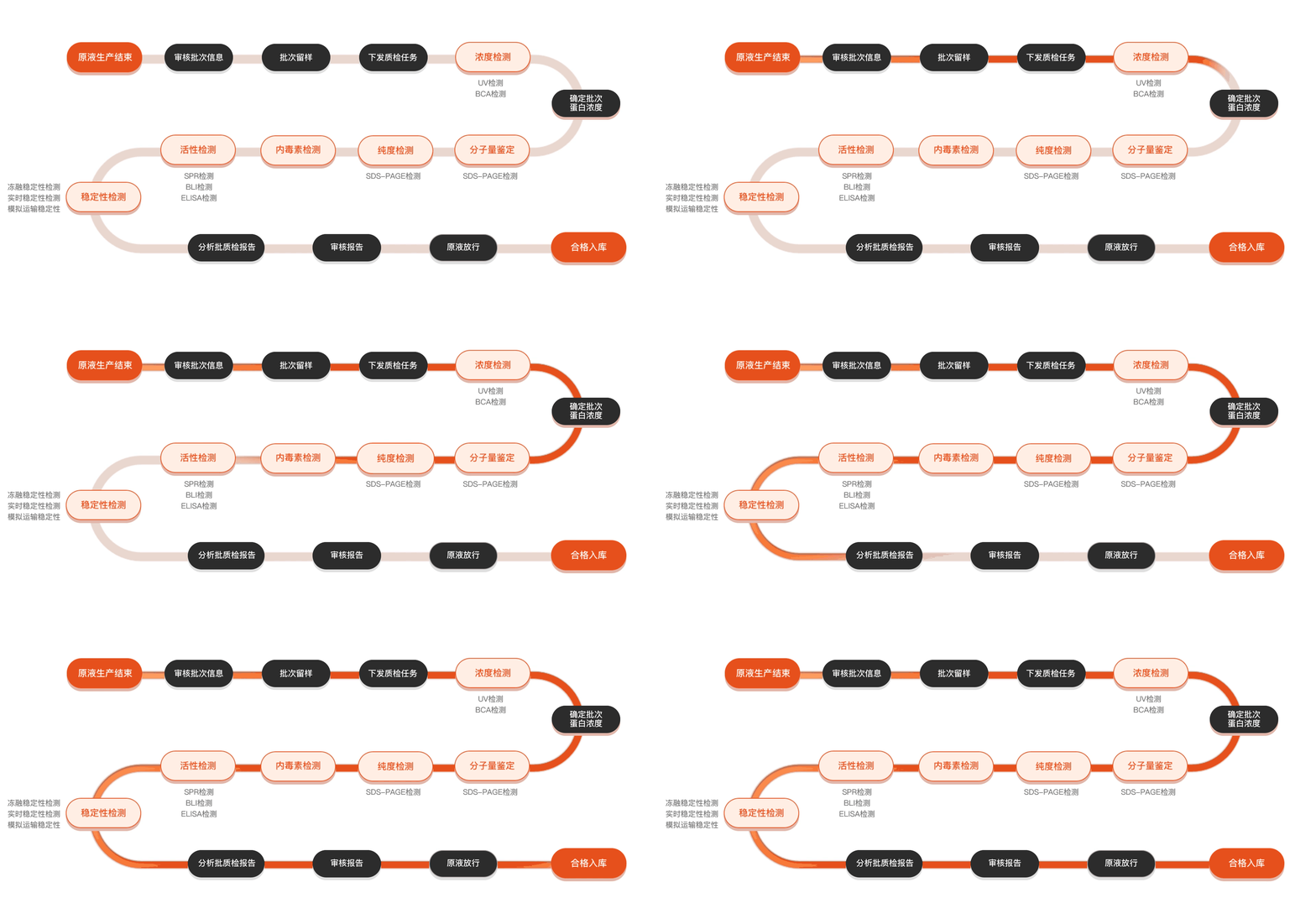
Quality inspection process
Related Products
Protein Description
OR7A5 is a member of the olfactory receptor gene family, which is critical for the detection of pheromones and other odorant molecules in mammals. This particular receptor is noted for its role in the chemosensory system, influencing behavior and physiological responses related to reproductive and social activities. Despite its importance, the functional characterization of OR7A5 has been limited due to challenges in understanding its structure and interaction with various ligands. Recent advances in recombinant protein technology have enabled the expression and purification of OR7A5 in vitro, facilitating studies on its ligand binding affinity and signaling mechanisms. Research has shown that OR7A5 may have specific ligand preferences, which can differ between species, hinting at evolutionary adaptations in olfactory signaling pathways. Current studies aim to elucidate the receptor's 3D structure, interactions with potential odorants, and its downstream signaling pathways, enhancing our understanding of the genetic and biochemical basis of olfaction. This research not only contributes to basic scientific knowledge but also has potential applications in developing biosensors and improving pheromone-based communication systems in various fields, including agriculture and pest management.