Analytical Data
-
Gene name
GERP
- Application
-
Alternative Names
GERP;GERP;RNF27;E3 ubiquitin-Protein ligase TRIM8
-
Species
Human
-
Source
E. coli
-
Tag
His tag N-Terminus
-
Purity
Greater than 90% as determined by SDS-PAGE.
-
Uniprot
Q9BZR9
-
Expression Region
1-551aa
-
AA Sequence
MAENWKNCFE EELICPICLH VFVEPVQLPC KHNFCRGCIG EAWAKDSGLV RCPECNQAYN QKPGLEKNLK LTNIVEKFNA LHVEKPPAAL HCVFCRRGPP LPAQKVCLRC EAPCCQSHVQ THLQQPSTAR GHLLVEADDV RAWSCPQHNA YRLYHCEAEQ VAVCQYCCYY SGAHQGHSVC DVEIRRNEIR KMLMKQQDRL EEREQDIEDQ LYKLESDKRL VEEKVNQLKE EVRLQYEKLH QLLDEDLRQT VEVLDKAQAK FCSENAAQAL HLGERMQEAK KLLGSLQLLF DKTEDVSFMK NTKSVKILMD RTQTCTSSSL SPTKIGHLNS KLFLNEVAKK EKQLRKMLEG PFSTPVPFLQ SVPLYPCGVS SSGAEKRKHS TAFPEASFLE TSSGPVGGQY GAAGTASGEG QSGQPLGPCS STQHLVALPG GAQPVHSSPV FPPSQYPNGS AAQQPMLPQY GGRKILVCSV DNCYCSSVAN HGGHQPYPRS GHFPWTVPSQ EYSHPLPPTP SVPQSLPSLA VRDWLDASQQ PGHQDFYRVY GQPSTKHYVT S
-
Molecular Weight
61.4 kDa
-
Endotoxin
< 1.0 EU per μg protein as determined by the LAL method.
-
Form
Freeze-dried powder
-
Buffer formulation
PBS, pH7.4, containing 0.01% SKL, 1mM DTT, 5% Trehalose and Proclin300.
-
Reconstitution
Reconstitute in ddH2O to a concentration of 0.1-0.5 mg/mL. Do not vortex.
- Customization
-
Stability Test
The thermal stability is described by the loss rate. The loss rate was determined by accelerated thermal degradation test, that is, incubate the protein at 37℃ for 48h, and no obvious degradation and precipitation were observed. The loss rate isless than 8% within the expiration date under appropriate storage condition.
-
Storage & Shelf Life
Samples are stable for up to twelve months from date of receipt at -20℃ to -80℃. Store it under sterile conditions at -20℃ to -80℃. It is recommended that the protein be aliquoted for optimal storage. Avoid repeated freeze-thaw cycles.
-
Shipping
In general, recombinant proteins are supplied as lyophilized powder and shipped at ambient temperature. For bulk packages, the proteins are provided as frozen liquid and shipped with blue ice, unless otherwise requested by the customer.
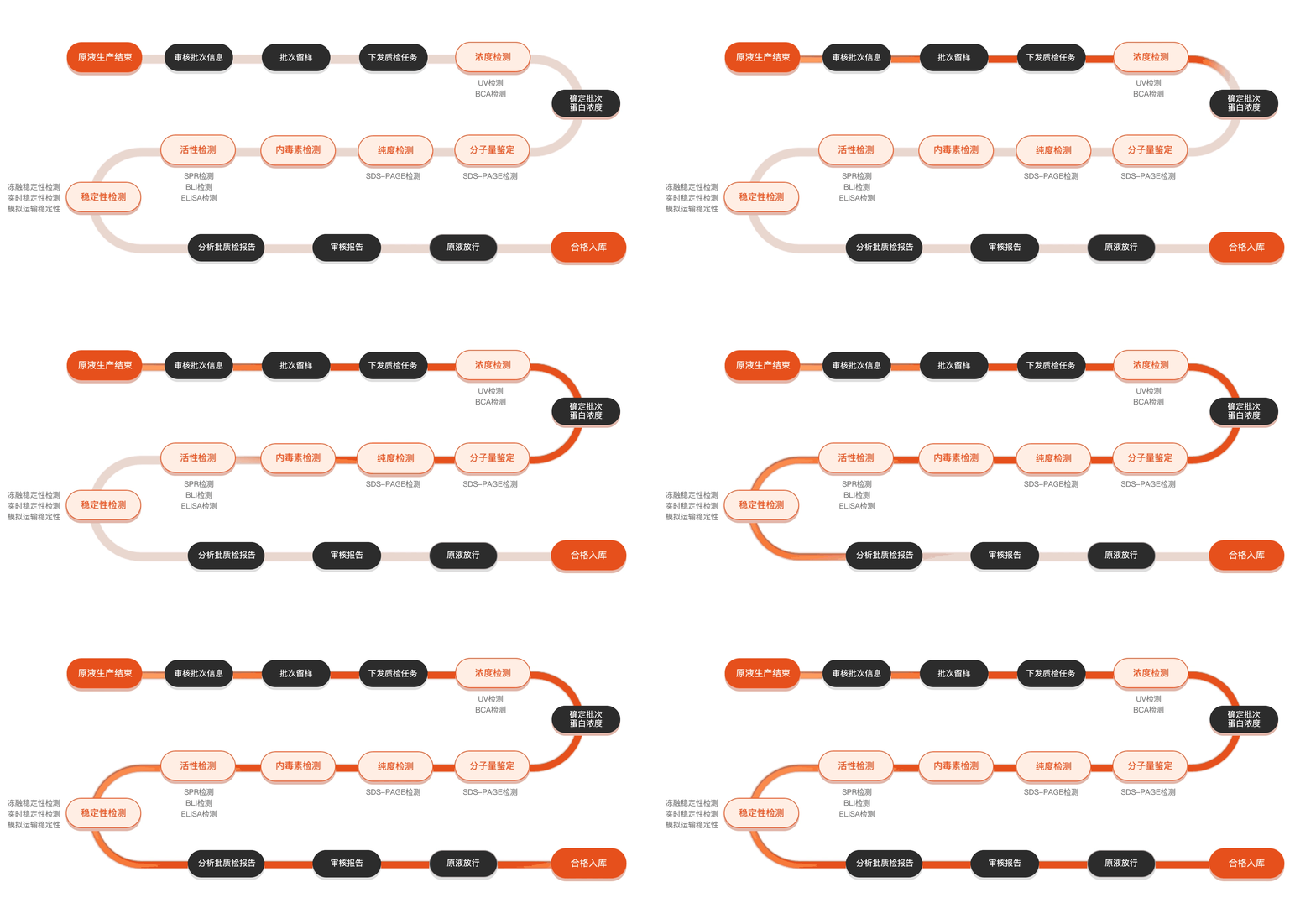
Quality inspection process
Related Products
Protein Description
GERP (Gamma-Enhanced Recombination Protein) is a significant focus of research within the fields of molecular biology and genetics due to its crucial role in promoting genetic recombination and maintaining genomic stability. Enhanced recombination is pivotal for various biological processes, including DNA repair, immune diversity, and chromosomal segregation. GERP is particularly interesting because it is implicated in mechanisms that facilitate homologous recombination, which is essential for repair of double-strand breaks and genetic diversity in organisms. Studies have shown that GERP can increase the frequency of recombination events, indicating potential applications in genetic engineering, synthetic biology, and gene therapy. Furthermore, understanding the structure-function relationship of GERP can provide insights into its mechanism of action, revealing how it interacts with other proteins and DNA during recombination processes. As researchers continue to explore GERP's functionalities and regulatory elements, this protein may offer innovative approaches for enhancing crop resilience, developing new therapeutic strategies for genetic disorders, and advancing biotechnological applications. The ongoing investigation into GERP’s role not only enriches our understanding of fundamental biological processes but also lays the groundwork for potential technological advancements in genetics and molecular medicine.