Analytical Data
-
Gene name
SRP54
- Application
-
Alternative Names
SRP54;Signal recognition particle subunit SRP54
-
Species
Human
-
Source
E. coli
-
Tag
His tag N-Terminus
-
Purity
Greater than 90% as determined by SDS-PAGE.
-
Uniprot
P61011
-
Expression Region
1-504aa
-
AA Sequence
MVLADLGRKITSALRSLSNATIINEEVLNAMLKEVCTALLEADVNIKLVKQLRENVKSAIDLEEMASGLNKRKMIQHAVFKELVKLVDPGVKAWTPTKGKQNVIMFVGLQGSGKTTTCSKLAYYYQRKGWKTCLICADTFRAGAFDQLKQNATKARIPFYGSYTEMDPVIIASEGVEKFKNENFEIIIVDTSGRHKQEDSLFEEMLQVANAIQPDNIVYVMDASIGQACEAQAKAFKDKVDVASVIVTKLDGHAKGGGALSAVAATKSPIIFIGTGEHIDDFEPFKTQPFISKLLGMGDIEGLIDKVNELKLDDNEALIEKLKHGQFTLRDMYEQFQNIMKMGPFSQILGMIPGFGTDFMSKGNEQESMARLKKLMTIMDSMNDQELDSTDGAKVFSKQPGRIQRVARGSGVSTRDVQELLTQYTKFAQMVKKMGGIKGLFKGGDMSKNVSQSQMAKLNQQMAKMMDPRVLHHMGGMAGLQSMMRQFQQGAAGNMKGMMGFNNM
-
Molecular Weight
62.6 kDa
-
Endotoxin
< 1.0 EU per μg protein as determined by the LAL method.
-
Form
Freeze-dried powder
-
Buffer formulation
PBS, pH7.4, containing 0.01% SKL, 1mM DTT, 5% Trehalose and Proclin300.
-
Reconstitution
Reconstitute in ddH2O to a concentration of 0.1-0.5 mg/mL. Do not vortex.
- Customization
-
Stability Test
The thermal stability is described by the loss rate. The loss rate was determined by accelerated thermal degradation test, that is, incubate the protein at 37℃ for 48h, and no obvious degradation and precipitation were observed. The loss rate isless than 8% within the expiration date under appropriate storage condition.
-
Storage & Shelf Life
Samples are stable for up to twelve months from date of receipt at -20℃ to -80℃. Store it under sterile conditions at -20℃ to -80℃. It is recommended that the protein be aliquoted for optimal storage. Avoid repeated freeze-thaw cycles.
-
Shipping
In general, recombinant proteins are supplied as lyophilized powder and shipped at ambient temperature. For bulk packages, the proteins are provided as frozen liquid and shipped with blue ice, unless otherwise requested by the customer.
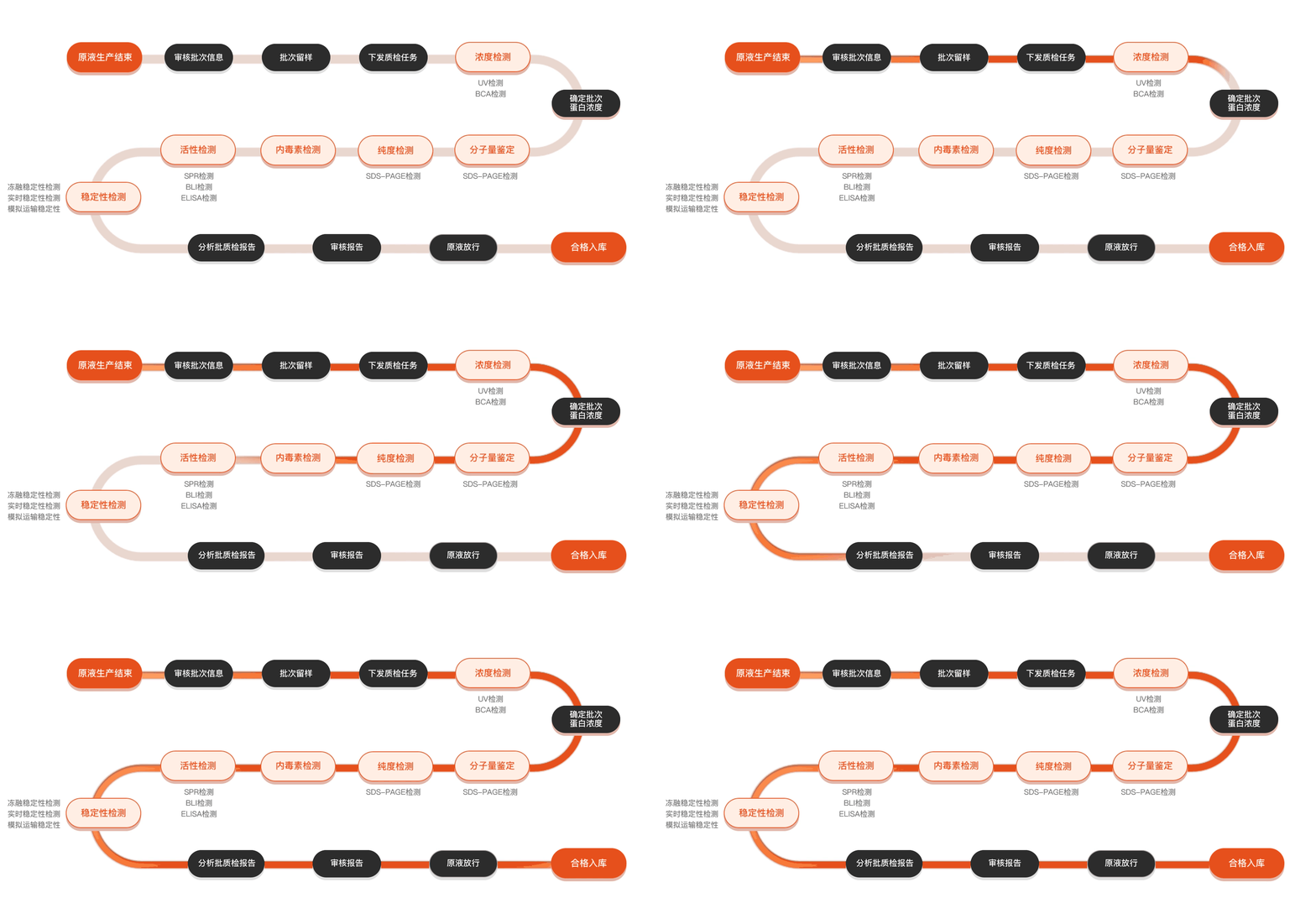
Quality inspection process
Related Products
Protein Description
SRP54 (Signal Recognition Particle 54) is a crucial protein involved in the co-translational targeting of nascent polypeptides to the endoplasmic reticulum (ER) in eukaryotic cells. It plays a significant role in the SRP pathway, where it binds to signal sequences emerging from ribosomes, facilitating the correct localization of membrane and secretory proteins. Research on recombinant SRP54 has gained traction due to its potential implications in understanding the mechanisms of protein translocation and membrane insertion, which are essential for maintaining cellular function. Additionally, SRP54 has been linked to various diseases and disorders when improperly regulated, making it a target for therapeutic strategies. The production and purification of recombinant SRP54 in model systems, such as E. coli or yeast, allow for detailed structural and functional studies, enabling researchers to dissect the molecular interactions and dynamics of the SRP complex. These studies can also pave the way for advancements in biotechnology and drug development, as a better understanding of SRP54's role may provide insights into novel treatment approaches for diseases related to protein misfolding and secretion. Furthermore, understanding the structure-function relationship of SRP54 can provide invaluable information for designing inhibitors or enhancers of the SRP pathway, with the potential to influence protein synthesis and therapeutic protein production. Overall, the study of recombinant SRP54 is vital for both basic and applied sciences, making it a significant area of research in molecular biology and biochemistry.