Analytical Data
-
Gene name
PUNC
- Application
-
Alternative Names
IGDCC3; PUNC; Immunoglobulin superfamily DCC subclass member 3; Putative neuronal cell adhesion molecule
-
Species
Human
-
Source
E. coli
-
Tag
GST-tag at N-terminal
-
Purity
Greater than 90% as determined by SDS-PAGE.
-
Uniprot
Q8IVU1
-
Expression Region
1-439 aa
-
AA Sequence
MECCRRATPGTLLLFLAFLLLSSRTARSEEDRDGLWDAWGPWSECSRTCGGGASYSLRRCLSSKSCEGRNIRYRTCSNVDCPPEAGDFRAQQCSAHNDVKHHGQFYEWLPVSNDPDNPCSLKCQAKGTTLVVELAPKVLDGTRCYTESLDMCISGLCQIVGCDHQLGSTVKEDNCGVCNGDGSTCRLVRGQYKSQLSATKSDDTVVAIPYGSRHIRLVLKGPDHLYLETKTLQGTKGENSLSSTGTFLVDNSSVDFQKFPDKEILRMAGPLTADFIVKIRNSGSADSTVQFIFYQPIIHRWRETDFFPCSATCGGGYQLTSAECYDLRSNRVVADQYCHYYPENIKPKPKLQECNLDPCPARWEATPWTACSSSCGGGIQSRAVSCVEEDIQGHVTSVEEWKCMYTPKMPIAQPCNIFDCPKWLAQEWSPVTVPSFFVH
-
Molecular Weight
75.2 kDa
-
Endotoxin
< 1.0 EU per μg protein as determined by the LAL method.
-
Form
Freeze-dried powder
-
Buffer formulation
PBS, pH7.4, containing 0.01% SKL, 1mM DTT, 5% Trehalose and Proclin300.
-
Reconstitution
Reconstitute in ddH2O to a concentration of 0.1-0.5 mg/mL. Do not vortex.
- Customization
-
Stability Test
The thermal stability is described by the loss rate. The loss rate was determined by accelerated thermal degradation test, that is, incubate the protein at 37℃ for 48h, and no obvious degradation and precipitation were observed. The loss rate isless than 8% within the expiration date under appropriate storage condition.
-
Storage & Shelf Life
Samples are stable for up to twelve months from date of receipt at -20℃ to -80℃. Store it under sterile conditions at -20℃ to -80℃. It is recommended that the protein be aliquoted for optimal storage. Avoid repeated freeze-thaw cycles.
-
Shipping
In general, recombinant proteins are supplied as lyophilized powder and shipped at ambient temperature. For bulk packages, the proteins are provided as frozen liquid and shipped with blue ice, unless otherwise requested by the customer.
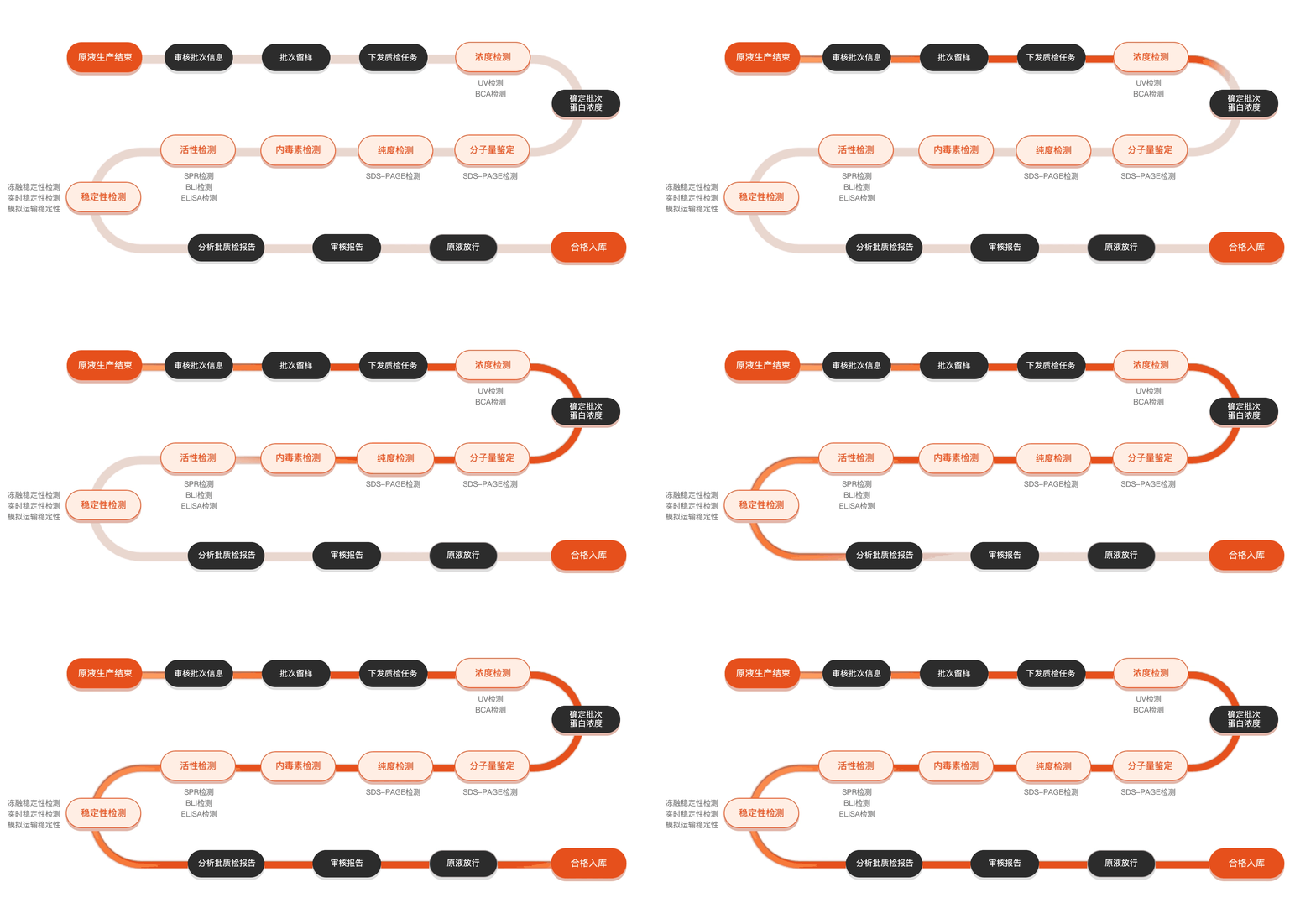
Quality inspection process
Related Products
Protein Description
PUNC (Pseudomonas aeruginosa Universal Nanobody Construct) recombinant proteins are of significant interest in the field of biotechnology and therapeutic development. The growing prevalence of antibiotic-resistant infections, particularly those caused by Pseudomonas aeruginosa, a leading pathogen in nosocomial infections, has driven researchers to seek innovative solutions. Nanobodies, derived from the unique immune system of camels and other llamoids, are a promising class of single-domain antibodies known for their stability, ease of engineering, and ability to bind to a wide variety of targets. The PUNC platform aims to harness these advantages by developing specific PUNC recombinant proteins that can effectively neutralize pathogens or modulate immune responses. Early studies have demonstrated the potential of PUNC nanobodies as diagnostic and therapeutic agents, showing promise in targeting bacterial infections while minimizing side effects. Additionally, their small size allows for enhanced tissue penetration and accessibility, making PUNC proteins ideal candidates for novel drug formulations. Ongoing research focuses on optimizing the production, purification, and functional characterization of these recombinant proteins, paving the way for advancements in infectious disease treatment and the development of new therapeutic strategies against resistant bacterial strains. As research progresses, PUNC recombinant proteins may play a pivotal role in addressing global health challenges posed by multidrug-resistant organisms.