Analytical Data
-
Gene name
PUS3
- Application
-
Alternative Names
2610020J05Rik; FKSG32; pseudouridylate synthase 3; Pus3; PUS3_HUMAN; tRNA pseudouridine synthase 3; tRNA pseudouridine(38/39) synthase; tRNA pseudouridylate synthase 3; tRNA-uridine isomerase 3
-
Species
Human
-
Source
E. coli
-
Tag
His tag N-Terminus
-
Purity
Greater than 90% as determined by SDS-PAGE.
-
Uniprot
Q9BZE2
-
Expression Region
2-481 aa
-
AA Sequence
AYNDTDRNQ TEKLLKRVRE LEQEVQRLKK EQAKNKEDSN IRENSAGAGK TKRAFDFSAH GRRHVALRIA YMGWGYQGFA SQENTNNTIE EKLFEALTKT RLVESRQTSN YHRCGRTDKG VSAFGQVISL DLRSQFPRGR DSEDFNVKEE ANAAAEEIRY THILNRVLPP DIRILAWAPV EPSFSARFSC LERTYRYFFP RADLDIVTMD YAAQKYVGTH DFRNLCKMDV ANGVINFQRT ILSAQVQLVG QSPGEGRWQE PFQLCQFEVT GQAFLYHQVR CMMAILFLIG QGMEKPEIID ELLNIEKNPQ KPQYSMAVEF PLVLYDCKFE NVKWIYDQEA QEFNITHLQQ LWANHAVKTH MLYSMLQGLD TVPVPCGIGP KMDGMTEWGN VKPSVIKQTS AFVEGVKMRT YKPLMDRPKC QGLESRIQHF VRRGRIEHPH LFHEEETKAK RDCNDTLEEE NTNLETPTKR VCVDTEIKSI I
-
Molecular Weight
55.6 kDa
-
Endotoxin
< 1.0 EU per μg protein as determined by the LAL method.
-
Form
Freeze-dried powder
-
Buffer formulation
PBS, pH7.4, containing 0.01% SKL, 1mM DTT, 5% Trehalose and Proclin300.
-
Reconstitution
Reconstitute in ddH2O to a concentration of 0.1-0.5 mg/mL. Do not vortex.
- Customization
-
Stability Test
The thermal stability is described by the loss rate. The loss rate was determined by accelerated thermal degradation test, that is, incubate the protein at 37℃ for 48h, and no obvious degradation and precipitation were observed. The loss rate isless than 8% within the expiration date under appropriate storage condition.
-
Storage & Shelf Life
Samples are stable for up to twelve months from date of receipt at -20℃ to -80℃. Store it under sterile conditions at -20℃ to -80℃. It is recommended that the protein be aliquoted for optimal storage. Avoid repeated freeze-thaw cycles.
-
Shipping
In general, recombinant proteins are supplied as lyophilized powder and shipped at ambient temperature. For bulk packages, the proteins are provided as frozen liquid and shipped with blue ice, unless otherwise requested by the customer.
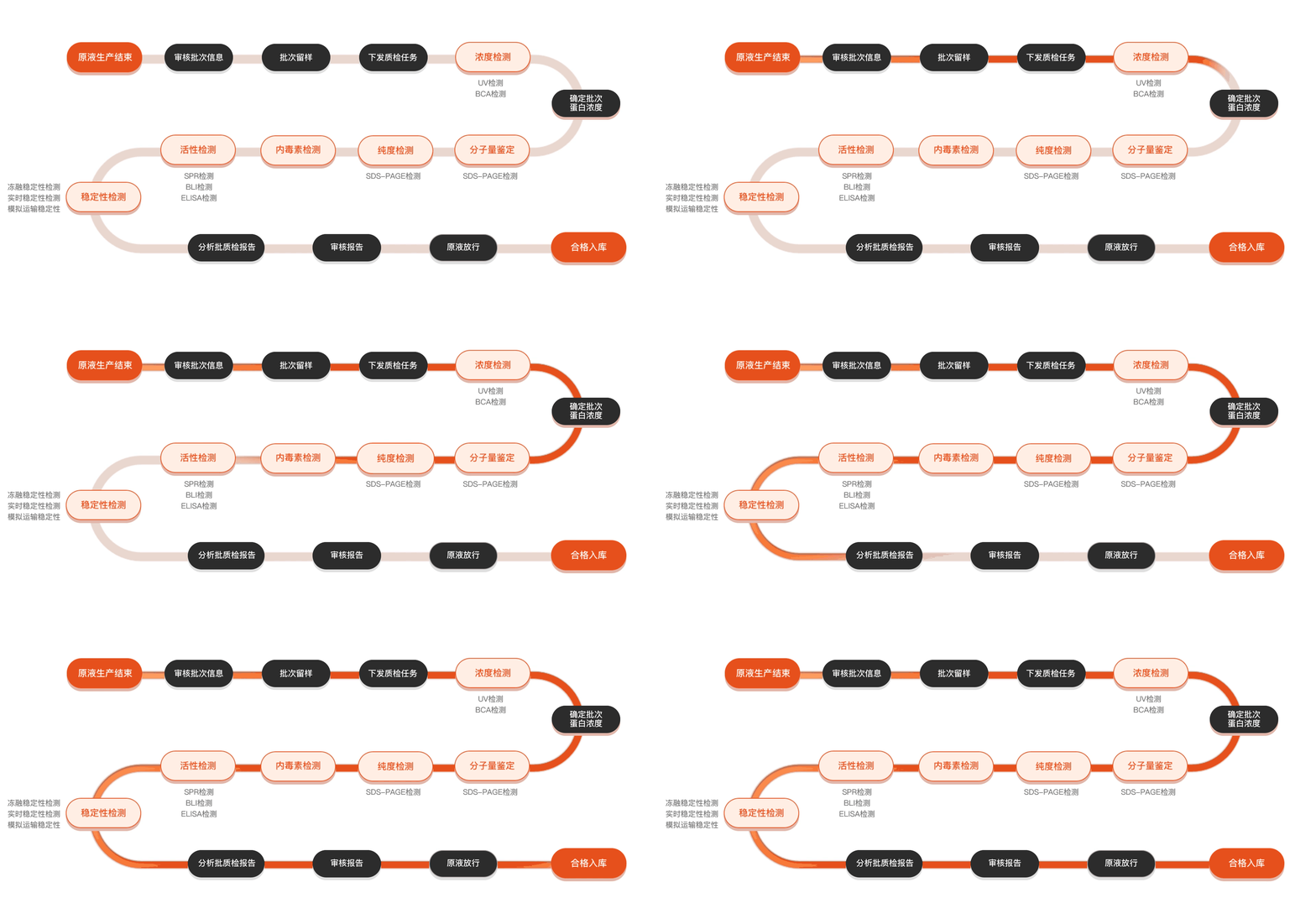
Quality inspection process
Related Products
Protein Description
PUS3 is a pivotal enzyme belonging to the Pseudouridine synthase family, which catalyzes the conversion of uridine residues in RNA into pseudouridine, a modified nucleoside that plays significant roles in the stability and function of RNA molecules. Research has increasingly highlighted the importance of PUS3 in various biological processes, including tRNA modification, ribosome biogenesis, and the regulation of gene expression. Dysregulation of PUS3 has been implicated in several diseases, including cancer and neurodegenerative disorders, underscoring its potential as a therapeutic target. The study of recombinant PUS3 protein allows for detailed investigation of its enzymatic mechanisms, substrate specificity, and interactions with other cellular components. Advances in structural biology, such as X-ray crystallography and cryo-electron microscopy, have provided insights into the molecular architecture of PUS3, revealing key active sites and conformational changes during substrate binding. This research is crucial for understanding the broader implications of RNA modifications in health and disease, paving the way for novel biomolecular interventions and enhancing our comprehension of RNA biology.