Analytical Data
-
Gene name
lasB
- Application
-
Alternative Names
lasB;lasB;Epoxide hydrolase LasB
-
Species
E.coli
-
Source
E. coli
-
Tag
His tag N-Terminus
-
Purity
Greater than 90% as determined by SDS-PAGE.
-
Uniprot
P14756
-
Expression Region
198-498aa
-
AA Sequence
AEAGGPGGNQKIGKYTYGSDYGPLIVNDRCEMDDGNVITVDMNSSTDDSKTTPFRFACPTNTYKQVNGAYSPLNDAHFFGGVVFKLYRDWFGTSPLTHKLYMKVHYGRSVENAYWDGTAMLFGDGATMFYPLVSLDVAAHEVSHGFTEQNSGLIYRGQSGGMNEAFSDMAGEAAEFYMRGKNDFLIGYDIKKGSGALRYMDQPSRDGRSIDNASQYYNGIDVHHSSGVYNRAFYLLANSPGWDTRKAFEVFVDANRYYWTATSNYNSGACGVIRSAQNRNYSAADVTRAFSTVGVTCPSAL
-
Molecular Weight
35.2 kDa
-
Endotoxin
< 1.0 EU per μg protein as determined by the LAL method.
-
Form
Freeze-dried powder
-
Buffer formulation
PBS, pH7.4, containing 0.01% SKL, 1mM DTT, 5% Trehalose and Proclin300.
-
Reconstitution
Reconstitute in ddH2O to a concentration of 0.1-0.5 mg/mL. Do not vortex.
- Customization
-
Stability Test
The thermal stability is described by the loss rate. The loss rate was determined by accelerated thermal degradation test, that is, incubate the protein at 37℃ for 48h, and no obvious degradation and precipitation were observed. The loss rate isless than 8% within the expiration date under appropriate storage condition.
-
Storage & Shelf Life
Samples are stable for up to twelve months from date of receipt at -20℃ to -80℃. Store it under sterile conditions at -20℃ to -80℃. It is recommended that the protein be aliquoted for optimal storage. Avoid repeated freeze-thaw cycles.
-
Shipping
In general, recombinant proteins are supplied as lyophilized powder and shipped at ambient temperature. For bulk packages, the proteins are provided as frozen liquid and shipped with blue ice, unless otherwise requested by the customer.
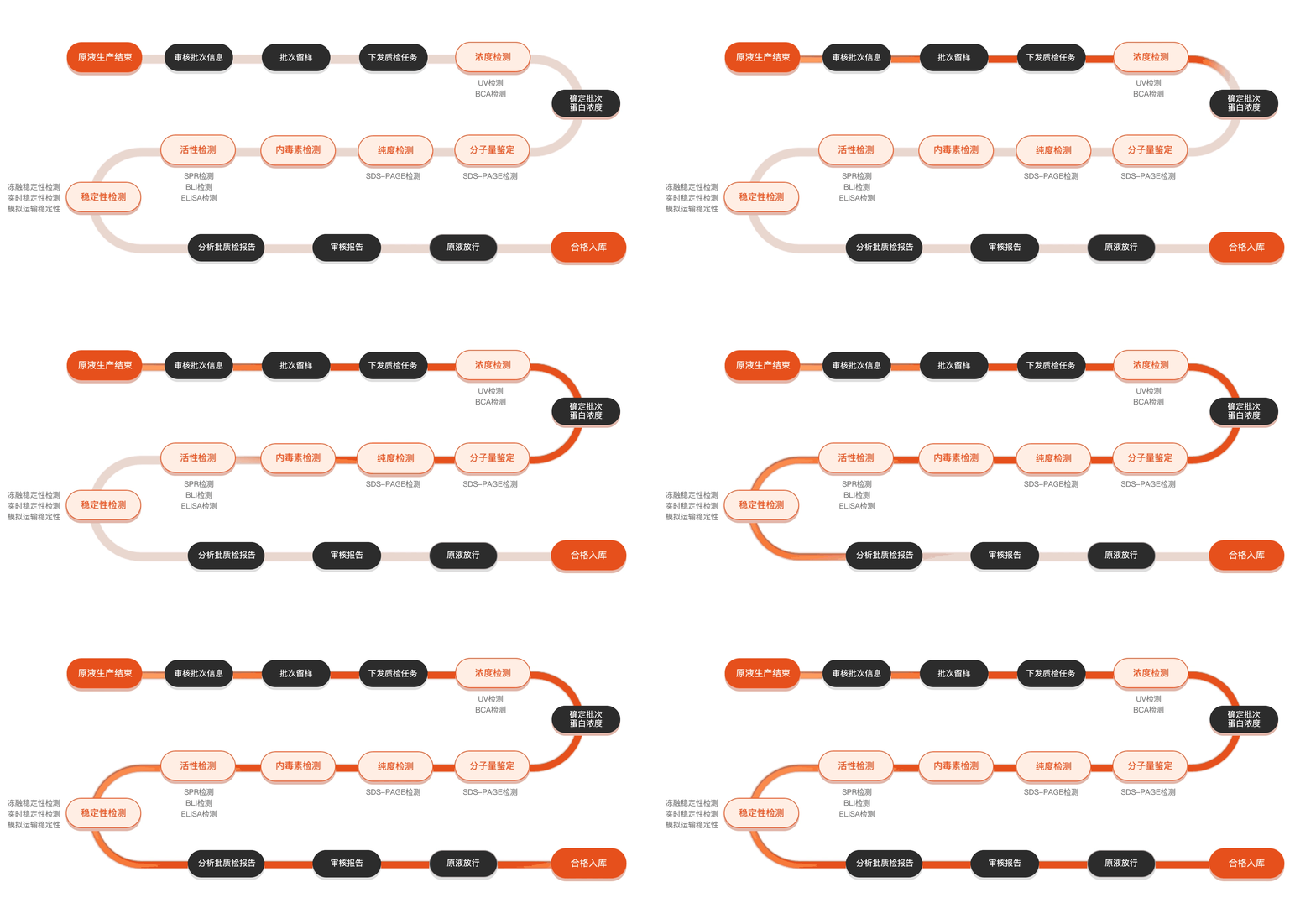
Quality inspection process
Related Products
Protein Description
LasB, also known as elastase, is a key virulence factor produced by the pathogenic bacterium Pseudomonas aeruginosa. This enzyme plays a significant role in the bacterium's ability to invade host tissues and evade the immune response. LasB primarily functions by degrading elastin and other extracellular matrix components, which facilitates tissue destruction and enhances bacterial dissemination. Given its pivotal role in infection, LasB has garnered attention as a target for therapeutic intervention. Researchers have been investigating the potential of LasB as a biomarker for Pseudomonas aeruginosa infections, particularly in chronic lung diseases such as cystic fibrosis. Furthermore, recombinant LasB protein has been explored in various studies to understand its enzymatic properties and mechanisms of action. Advances in recombinant DNA technology have enabled the production of LasB in heterologous systems, allowing for detailed structural and functional analyses. These studies aim to elucidate how LasB interacts with host tissues and immune cells, providing insights that may lead to the development of novel anti-virulence strategies. By targeting LasB activity, researchers hope to ameliorate the effects of Pseudomonas aeruginosa infections and enhance treatment outcomes, particularly for immunocompromised patients or those with chronic conditions. Ultimately, the study of recombinant LasB protein not only contributes to our understanding of Pseudomonas aeruginosa pathogenesis but also opens avenues for innovative therapeutic approaches that could mitigate the significant morbidity and mortality associated with infections caused by this opportunistic pathogen.