Analytical Data
-
Gene name
IZUMO1
- Application
-
Alternative Names
IZUMO1;FOLR4;JUNO;Sperm-egg fusion Protein Juno
-
Species
Human
-
Source
E. coli
-
Tag
His tag N-Terminus
-
Purity
Greater than 90% as determined by SDS-PAGE.
-
Uniprot
Q8IYV9
-
Expression Region
1-292aa
-
AA Sequence
MGPHFTLLCA ALAGCLLPAE GCVICDPSVV LALKSLEKDY LPGHLDAKHH KAMMERVENA VKDFQELSL NEDAYMGVVD EATLQKGSWS LLKDLKRITD SDVKGDLFVK ELFWMLHLQK ETFATYVAR FQKEAYCPNK CGVMLQTLIW CKNCKKEVHA CRKSYDCGER NVEVPQMEDM ILDCELNWH QASEGLTDYS FYRVWGNNTE TLVSKGKEAT LTKPMVGPED AGSYRCELGS VNSSPATII NFHVTVLPKM IKEEKPSPNI VTPGEATTES SISLQPLQPE KMLASR
-
Molecular Weight
32 kDa
-
Endotoxin
< 1.0 EU per μg protein as determined by the LAL method.
-
Form
Freeze-dried powder
-
Buffer formulation
PBS, pH7.4, containing 0.01% SKL, 1mM DTT, 5% Trehalose and Proclin300.
-
Reconstitution
Reconstitute in ddH2O to a concentration of 0.1-0.5 mg/mL. Do not vortex.
- Customization
-
Stability Test
The thermal stability is described by the loss rate. The loss rate was determined by accelerated thermal degradation test, that is, incubate the protein at 37℃ for 48h, and no obvious degradation and precipitation were observed. The loss rate isless than 8% within the expiration date under appropriate storage condition.
-
Storage & Shelf Life
Samples are stable for up to twelve months from date of receipt at -20℃ to -80℃. Store it under sterile conditions at -20℃ to -80℃. It is recommended that the protein be aliquoted for optimal storage. Avoid repeated freeze-thaw cycles.
-
Shipping
In general, recombinant proteins are supplied as lyophilized powder and shipped at ambient temperature. For bulk packages, the proteins are provided as frozen liquid and shipped with blue ice, unless otherwise requested by the customer.
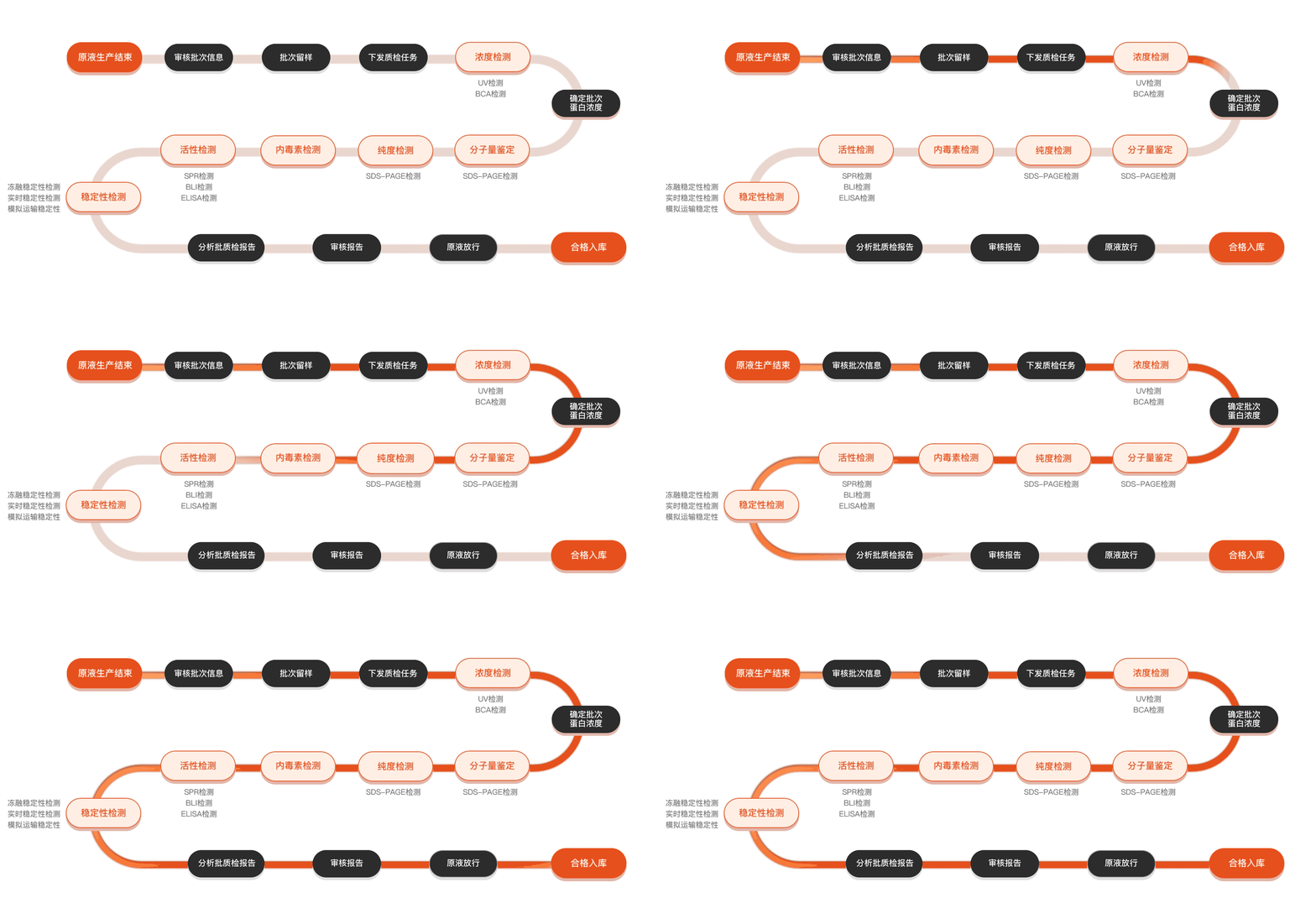
Quality inspection process
Related Products
Protein Description
IZUMO1 is a sperm-specific protein that plays a crucial role in the fertilization process by facilitating the fusion between sperm and egg membranes. Discovered initially in mammals, it has garnered significant attention in reproductive biology due to its essential function in sperm-egg interaction. During fertilization, IZUMO1 is expressed on the surface of sperm and binds to its receptor, JUNO, located on the oocyte, initiating the fusion process that leads to successful fertilization. Research has shown that the absence or dysfunction of IZUMO1 can lead to infertility, making it a critical target for studies in reproductive health. Moreover, understanding the mechanisms of IZUMO1 can shed light on the evolutionary aspects of fertilization across different species, as homologous proteins have been identified in various organisms. Recent advancements in recombinant protein technology allow for the production of IZUMO1 in vitro, providing valuable tools for studying its structure and function, as well as its potential applications in diagnostics and fertility treatments. The exploration of IZUMO1 not only enhances our understanding of the fundamental processes involved in reproduction but also opens new avenues for addressing infertility issues in humans and possibly developing contraceptive methods.