Analytical Data
-
Gene name
RIMS3
- Application
-
Alternative Names
RIMS3; KIAA0237; Regulating synaptic membrane exocytosis protein 3; Nim3; RIM3 gamma; Rab-3-interacting molecule 3; RIM 3
-
Species
Human
-
Source
E. coli
-
Tag
His tag N-Terminus
-
Purity
Greater than 90% as determined by SDS-PAGE.
-
Uniprot
Q9UJD0
-
Expression Region
1-308 aa
-
AA Sequence
MFNGEPGPAS SGASRNVVRS SSISGEICGS QQAGGGAGTT TAKKRRSSLG AKMVAIVGLT QWSKSTLQLP QPEGATKKLR SNIRRSTETG IAVEMRSRVT RQGSRESTDG STNSNSSDGT FIFPTTRLGA ESQFSDFLDG LGPAQIVGRQ TLATPPMGDV HIAIMDRSGQ LEVEVIEARG LTPKPGSKSL PATYIKVYLL ENGACLAKKK TKMTKKTCDP LYQQALLFDE GPQGKVLQVI VWGDYGRMDH KCFMGMAQIM LDELDLSAAV TGWYKLFPTS SVADSTLGSL TRRLSQSSLE SATSPSCS
-
Molecular Weight
32.7 kDa
-
Endotoxin
< 1.0 EU per μg protein as determined by the LAL method.
-
Form
Freeze-dried powder
-
Buffer formulation
PBS, pH7.4, containing 0.01% SKL, 1mM DTT, 5% Trehalose and Proclin300.
-
Reconstitution
Reconstitute in ddH2O to a concentration of 0.1-0.5 mg/mL. Do not vortex.
- Customization
-
Stability Test
The thermal stability is described by the loss rate. The loss rate was determined by accelerated thermal degradation test, that is, incubate the protein at 37℃ for 48h, and no obvious degradation and precipitation were observed. The loss rate isless than 8% within the expiration date under appropriate storage condition.
-
Storage & Shelf Life
Samples are stable for up to twelve months from date of receipt at -20℃ to -80℃. Store it under sterile conditions at -20℃ to -80℃. It is recommended that the protein be aliquoted for optimal storage. Avoid repeated freeze-thaw cycles.
-
Shipping
In general, recombinant proteins are supplied as lyophilized powder and shipped at ambient temperature. For bulk packages, the proteins are provided as frozen liquid and shipped with blue ice, unless otherwise requested by the customer.
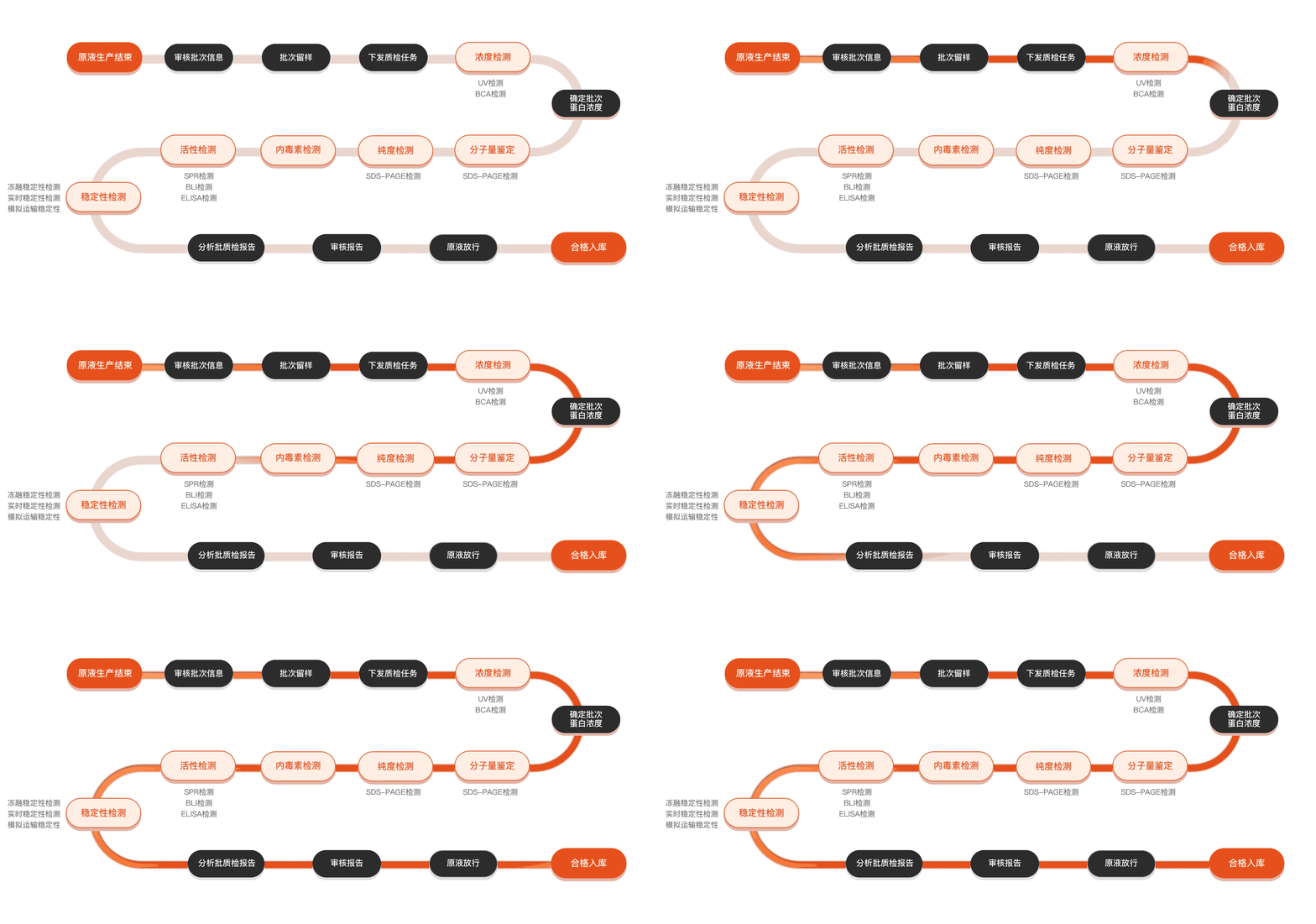
Quality inspection process
Related Products
Protein Description
RIMS3 (regulating synaptic membrane exocytosis 3) is a member of the RIMS protein family, which plays a crucial role in synaptic transmission by regulating the release of neurotransmitters. Research into RIMS3 has gained momentum due to its involvement in synaptic plasticity and its potential implications in neurological disorders. As a presynaptic active zone protein, RIMS3 interacts with various synaptic components, contributing to the anchoring of voltage-gated calcium channels and the release machinery necessary for neurotransmitter exocytosis. Studies have shown that alterations in RIMS3 expression and function can lead to abnormal synaptic transmission, making it a candidate for understanding conditions like autism spectrum disorders, schizophrenia, and other neuropsychiatric conditions. Furthermore, investigations into RIMS3’s structure and interaction partners have broadened our understanding of synaptic regulation, highlighting its significance in maintaining neuronal health and signaling. This growing body of research underscores the importance of RIMS3 as a potential target for therapeutic strategies aimed at restoring normal synaptic function in various neurological diseases, paving the way for innovative approaches in neuropharmacology and synaptic biology.