Analytical Data
-
Gene name
CAMKK2
- Application
-
Alternative Names
CAMKK2;CAMKID;Calcium/calmodulin-dependent Protein kinase type 1D
-
Species
Human
-
Source
E. coli
-
Tag
His tag N-Terminus
-
Purity
Greater than 90% as determined by SDS-PAGE.
-
Uniprot
Q96RR4
-
Expression Region
2-588aa
-
AA Sequence
SSCVSSQPS SNRAAPQDEL GGRGSSSSES QKPCEALRGL SSLSIHLGME SFIVVTECEP GCAVDLGLAR DRPLEADGQE VPLDTSGSQA RPHLSGRKLS LQERSQGGLA AGGSLDMNGR CICPSLPYSP VSSPQSSPRL PRRPTVESHH VSITGMQDCV QLNQYTLKDE IGKGSYGVVK LAYNENDNTY YAMKVLSKKK LIRQAGFPRR PPPRGTRPAP GGCIQPRGPI EQVYQEIAIL KKLDHPNVVK LVEVLDDPNE DHLYMVFELV NQGPVMEVPT LKPLSEDQAR FYFQDLIKGI EYLHYQKIIH RDIKPSNLLV GEDGHIKIAD FGVSNEFKGS DALLSNTVGT PAFMAPESLS ETRKIFSGKA LDVWAMGVTL YCFVFGQCPF MDERIMCLHS KIKSQALEFP DQPDIAEDLK DLITRMLDKN PESRIVVPEI KLHPWVTRHG AEPLPSEDEN CTLVEVTEEE VENSVKHIPS LATVILVKTM IRKRSFGNPF EGSRREERSL SAPGNLLTKK PTRECESLSE LKEARQRRQP PGHRPAPRGG GGSALVRGSP CVESCWAPAP GSPARMHPLR PEEAMEPE
-
Endotoxin
< 1.0 EU per μg protein as determined by the LAL method.
-
Form
Freeze-dried powder
-
Buffer formulation
PBS, pH7.4, containing 0.01% SKL, 1mM DTT, 5% Trehalose and Proclin300.
-
Reconstitution
Reconstitute in ddH2O to a concentration of 0.1-0.5 mg/mL. Do not vortex.
- Customization
-
Stability Test
The thermal stability is described by the loss rate. The loss rate was determined by accelerated thermal degradation test, that is, incubate the protein at 37℃ for 48h, and no obvious degradation and precipitation were observed. The loss rate isless than 8% within the expiration date under appropriate storage condition.
-
Storage & Shelf Life
Samples are stable for up to twelve months from date of receipt at -20℃ to -80℃. Store it under sterile conditions at -20℃ to -80℃. It is recommended that the protein be aliquoted for optimal storage. Avoid repeated freeze-thaw cycles.
-
Shipping
In general, recombinant proteins are supplied as lyophilized powder and shipped at ambient temperature. For bulk packages, the proteins are provided as frozen liquid and shipped with blue ice, unless otherwise requested by the customer.
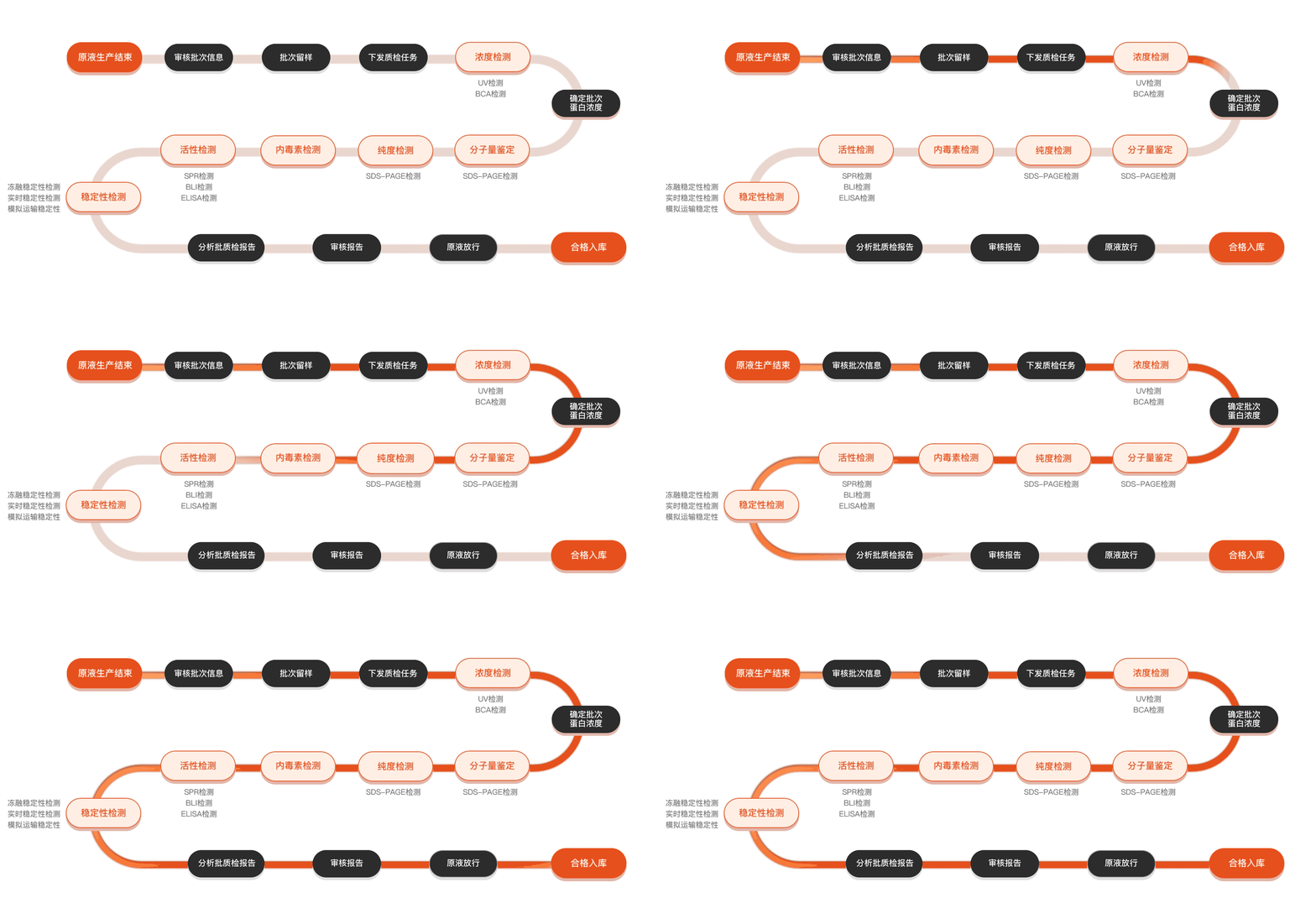
Quality inspection process
Related Products
Protein Description
CAMKK2, or calcium/calmodulin-dependent protein kinase kinase 2, plays a crucial role in cellular signaling pathways that are vital for various physiological processes, including metabolism, neuronal function, and muscle contraction. As a serine/threonine kinase, CAMKK2 is activated by calcium ions and calmodulin, serving as a key regulator of the AMP-activated protein kinase (AMPK) pathway, which is essential for energy homeostasis in cells. Dysregulation of CAMKK2 has been implicated in several pathological conditions, such as obesity, diabetes, and neurodegenerative diseases, highlighting its potential as a therapeutic target. The recombinant expression of CAMKK2 protein allows for detailed functional studies to unravel its role in signaling pathways and its interactions with other proteins. Understanding the structure and function of CAMKK2 through recombinant technologies offers insights into its mechanism of action and facilitates the development of specific inhibitors or modulators for therapeutic applications. Research on CAMKK2 recombinant protein is essential not only for basic molecular biology but also for its potential translational applications in developing treatments for metabolic and neurodegenerative disorders.