Analytical Data
-
Gene name
AMIGO2
- Application
-
Alternative Names
AMIGO2;ALI1;Amphoterin-induced Protein 2
-
Species
Human
-
Source
E. coli
-
Tag
His tag N-Terminus
-
Purity
Greater than 90% as determined by SDS-PAGE.
-
Uniprot
Q86SJ2
-
Expression Region
40-398aa
-
AA Sequence
VCPTACICAT DIVSCTNKNL SKVPGNLFRL IKRLDLSYNR IGLLDSEWIP VSFAKLNTLI LRHNNITSIS TGSFSTTPNL KCLDLSSNKL KTVKNAVFQE LKVLEVLLLY NNHISYLDPS AFGGLSQLQK LYLSGNFLTQ FPMDLYVGRF KLAELMFLDV SYNRIPSMPM HHINLVPGKQ LRGIYLHGNP FVCDCSLYSL LVFWYRRHFS SVMDFKNDYT CRLWSDSRHS RQVLLLQDSF MNCSDSIING SFRALGFIHE AQVGERLMVH CDSKTGNANT DFIWVGPDNR LLEPDKEMEN FYVFHNGSLV IESPRFEDAG VYSCIAMNKQ RLLNETVDVT INVSNFTVSR SHAHEAFNTL EHHHHHH
-
Molecular Weight
43 kDa
-
Endotoxin
< 1.0 EU per μg protein as determined by the LAL method.
-
Form
Freeze-dried powder
-
Buffer formulation
PBS, pH7.4, containing 0.01% SKL, 1mM DTT, 5% Trehalose and Proclin300.
-
Reconstitution
Reconstitute in ddH2O to a concentration of 0.1-0.5 mg/mL. Do not vortex.
- Customization
-
Stability Test
The thermal stability is described by the loss rate. The loss rate was determined by accelerated thermal degradation test, that is, incubate the protein at 37℃ for 48h, and no obvious degradation and precipitation were observed. The loss rate isless than 8% within the expiration date under appropriate storage condition.
-
Storage & Shelf Life
Samples are stable for up to twelve months from date of receipt at -20℃ to -80℃. Store it under sterile conditions at -20℃ to -80℃. It is recommended that the protein be aliquoted for optimal storage. Avoid repeated freeze-thaw cycles.
-
Shipping
In general, recombinant proteins are supplied as lyophilized powder and shipped at ambient temperature. For bulk packages, the proteins are provided as frozen liquid and shipped with blue ice, unless otherwise requested by the customer.
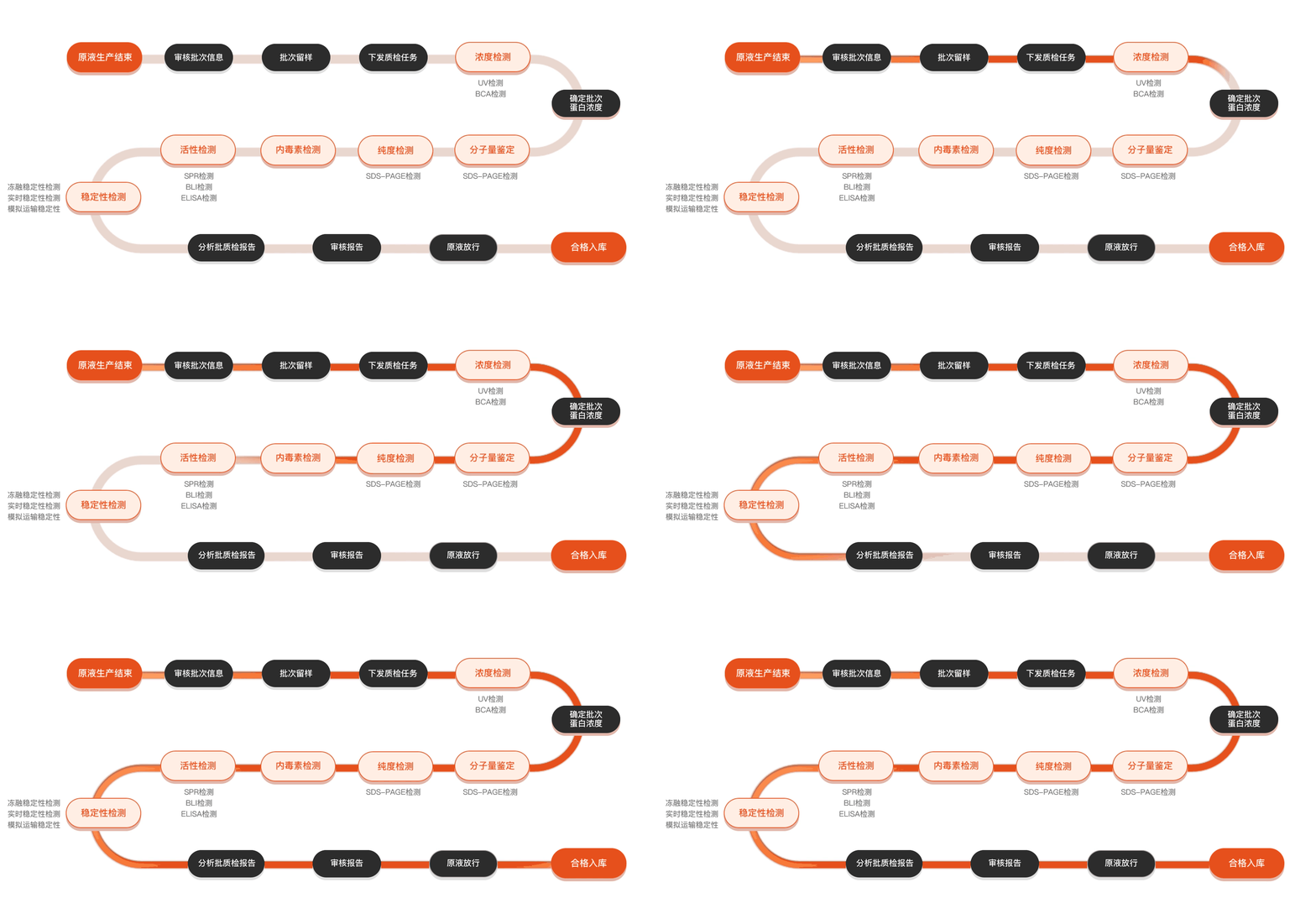
Quality inspection process
Related Products
Protein Description
AMIGO2, or Adhesion Molecule with Ig-like Domains 2, has emerged as a significant focus of research due to its involvement in various physiological and pathological processes, particularly in the nervous system. It is a member of the AMIGO family, characterized by its unique structure resembling immunoglobulin-like domains, which play crucial roles in cell adhesion and signaling. Investigations into AMIGO2 have revealed its potential implications in neuronal development, as well as in the process of neurodegeneration, making it a candidate for studying neurodevelopmental disorders and neurodegenerative diseases. Additionally, AMIGO2 has been linked to the regulation of inflammation and immune responses, further broadening its relevance in therapeutic contexts. The recombinant protein form of AMIGO2 allows for in-depth studies of its molecular interactions, functional roles, and potential as a biomarker or therapeutic target. This research is particularly pertinent as it could lead to new insights into the mechanisms underlying neurological diseases and open avenues for novel treatment strategies. The ability to express and purify AMIGO2 as a recombinant protein thus represents a crucial step in understanding its biological functions and therapeutic potential.