

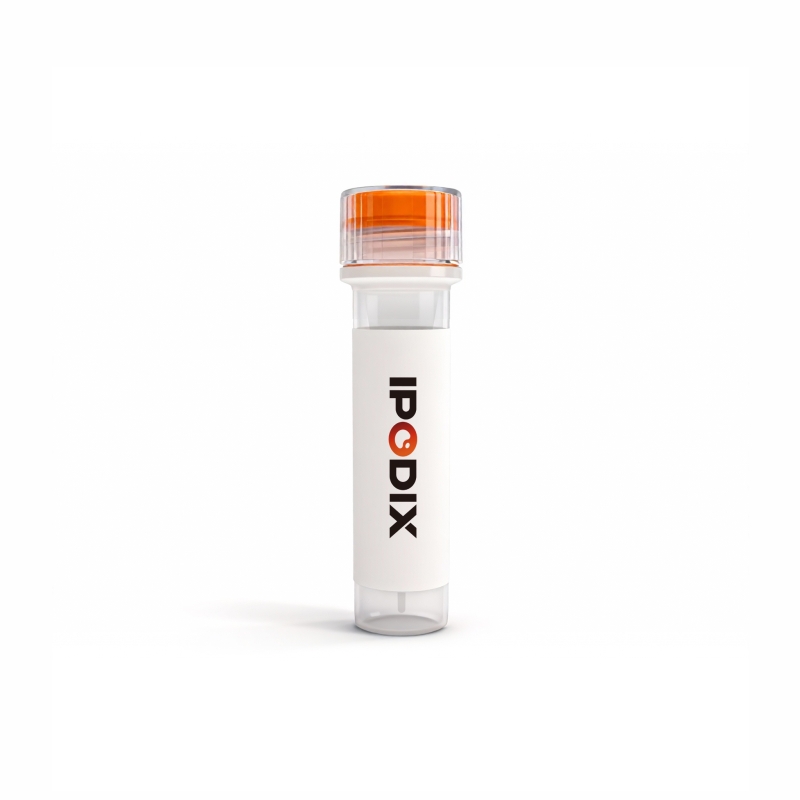
Analytical Data
-
Gene name
INPP1
- Application
-
Alternative Names
INPP1;Inositol polyphosphate 1-phosphatase
-
Species
Human
-
Source
E. coli
-
Tag
His tag N-Terminus
-
Purity
Greater than 90% as determined by SDS-PAGE.
-
Uniprot
P49441
-
Expression Region
1-399aa
-
AA Sequence
MSDILRELLC VSEKAANIAR ACRQQEALFQ LLIEEKKEGE KNKKFAVDFK TLADVLVQEV IKQNMENKFP GLEKNIFGEE SNEFTNDWGE KITLRLCSTE EETAELLSKV LNGNKVASEA LARVVHQDVA FTDPTLDSTE INVPQDILGI WVDPIDSTYQ YIKGSADIKS NQGIFPCGLQ CVTILIGVYD IQTGVPLMGV INQPFVSRDP NTLRWKGQCY WGLSYMGTNM HSLQLTISRR NGSETHTGNT GSEAAFSPSF SAVISTSEKE TIKAALSRVC GDRIFGAAGA GYKSLCVVQG LVDIYIFSED TTFKWDSCAA HAILRAMGGG IVDLKECLER NPETGLDLPQ LVYHVENEGA AGVDRWANKG GLIAYRSRKR LETFLSLLVQ NLAPAETHT
-
Endotoxin
< 1.0 EU per μg protein as determined by the LAL method.
-
Form
Freeze-dried powder
-
Buffer formulation
PBS, pH7.4, containing 0.01% SKL, 1mM DTT, 5% Trehalose and Proclin300.
-
Reconstitution
Reconstitute in ddH2O to a concentration of 0.1-0.5 mg/mL. Do not vortex.
- Customization
-
Stability Test
The thermal stability is described by the loss rate. The loss rate was determined by accelerated thermal degradation test, that is, incubate the protein at 37℃ for 48h, and no obvious degradation and precipitation were observed. The loss rate isless than 8% within the expiration date under appropriate storage condition.
-
Storage & Shelf Life
Samples are stable for up to twelve months from date of receipt at -20℃ to -80℃. Store it under sterile conditions at -20℃ to -80℃. It is recommended that the protein be aliquoted for optimal storage. Avoid repeated freeze-thaw cycles.
-
Shipping
In general, recombinant proteins are supplied as lyophilized powder and shipped at ambient temperature. For bulk packages, the proteins are provided as frozen liquid and shipped with blue ice, unless otherwise requested by the customer.
Quality inspection process

Related Products
Protein Description
INPP1 (Inositol Polyphosphate Phosphatase 1) is a crucial enzyme involved in the metabolism of inositol phosphates, playing a significant role in cellular signaling processes. This protein is responsible for dephosphorylating inositol 1,4,5-trisphosphate and other polyphosphoinositides, which are key molecules in various signal transduction pathways related to cell growth, differentiation, and apoptosis. Dysregulation of INPP1 has been linked to several diseases, including cancer and neurodegenerative disorders, making it a target of interest for therapeutic research. The development of recombinant INPP1 allows for detailed biochemical characterization and further understanding of its function in cellular signaling. By producing INPP1 in a controlled environment, researchers can investigate its structure-function relationships, explore the molecular mechanisms underlying its activity, and assess its potential as a drug target. Moreover, recombinant INPP1 can be utilized in high-throughput screening assays to identify small molecule inhibitors or modulators, paving the way for new therapeutic strategies. Overall, the study of recombinant INPP1 not only enhances our comprehension of inositol phosphate signaling but also contributes to the broader understanding of its implications in human health and disease.







