Analytical Data
-
Gene name
aspf3
- Application
-
Alternative Names
aspf3;Peroxiredoxin Asp f3
-
Species
E.coli
-
Source
E. coli
-
Tag
His tag N-Terminus
-
Purity
Greater than 90% as determined by SDS-PAGE.
-
Uniprot
O43099
-
Expression Region
1-168aa
-
AA Sequence
MSGLKAGDSFPSDVVFSYIPWSEDKGEITACGIPINYNASKEWADKKVILFALPGAFTPVCSARHVPEYIEKLPEIRAKGVDVVAVLAYNDAYVMSAWGKANQVTGDDILFLSDPDARFSKSIGWADEEGRTKRYALVIDHGKITYAALEPAKNHLEFSSAETVLKHL
-
Molecular Weight
34.5 kDa
-
Endotoxin
< 1.0 EU per μg protein as determined by the LAL method.
-
Form
Freeze-dried powder
-
Buffer formulation
PBS, pH7.4, containing 0.01% SKL, 1mM DTT, 5% Trehalose and Proclin300.
-
Reconstitution
Reconstitute in ddH2O to a concentration of 0.1-0.5 mg/mL. Do not vortex.
- Customization
-
Stability Test
The thermal stability is described by the loss rate. The loss rate was determined by accelerated thermal degradation test, that is, incubate the protein at 37℃ for 48h, and no obvious degradation and precipitation were observed. The loss rate isless than 8% within the expiration date under appropriate storage condition.
-
Storage & Shelf Life
Samples are stable for up to twelve months from date of receipt at -20℃ to -80℃. Store it under sterile conditions at -20℃ to -80℃. It is recommended that the protein be aliquoted for optimal storage. Avoid repeated freeze-thaw cycles.
-
Shipping
In general, recombinant proteins are supplied as lyophilized powder and shipped at ambient temperature. For bulk packages, the proteins are provided as frozen liquid and shipped with blue ice, unless otherwise requested by the customer.
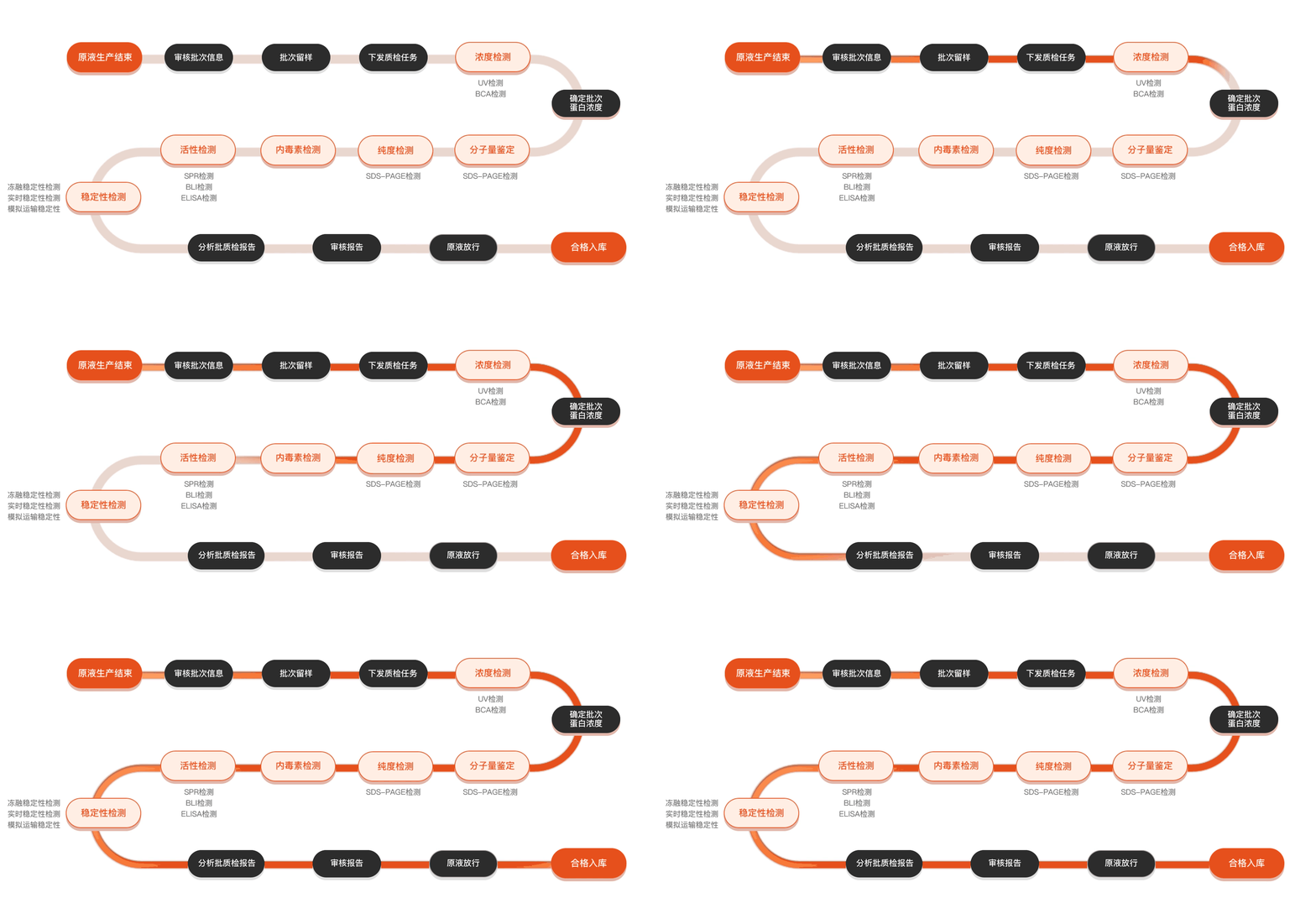
Quality inspection process
Related Products
Protein Description
The research on Aspf3 recombinant protein is rooted in the growing need to understand and mitigate the impact of fungal allergens, particularly those associated with allergens from the Aspergillus species. Aspergillus fumigatus, a common airborne mold, produces a range of allergens, with Aspf3 being one of the most significant. This allergen is known to provoke immune responses in sensitized individuals, contributing to respiratory conditions like asthma and allergic rhinitis. Given the prevalence of Aspergillus-related allergies and their clinical significance, Aspf3 has garnered attention for its potential role in diagnostic and therapeutic applications. Recombinant protein technology allows for the production of pure, defined quantities of Aspf3, enabling detailed studies of its structure, function, and immunogenicity. This advancement facilitates better elucidation of its role in allergic responses and aids in the development of more effective diagnostic tools and allergen-specific immunotherapies. The ongoing research aims to characterize the protein's properties, assess its reactivity in various populations, and explore its potential as a candidate for therapeutic interventions, thereby contributing to improved management strategies for individuals affected by Aspergillus-related allergies.