Analytical Data
-
Gene name
GM-CSF
- Application
-
Alternative Names
CSF2; GMCSF; Sargramostim; Molgramostin; Granulocyte-Macrophage Colony Stimulating Factor
-
Species
Porcine
-
Source
HEK293
-
Tag
C-His
-
Purity
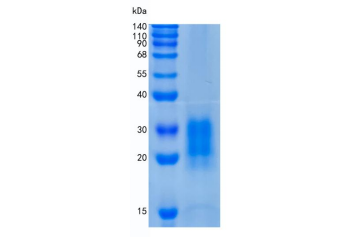
Greater than 95% as determined by SDS-PAGE.
-
Uniprot
Q4F733
-
Molecular Weight
18-30 kDa as determined by SDS-PAGE reducing conditions
-
Endotoxin
< 1.0 EU per μg protein as determined by the LAL method.
-
Form
Freeze-dried powder
-
Buffer formulation
liquid from a 0.22 μm filtered solution of PBS, pH 7.4, 5 % trehalose, 5 %mannitol
-
Reconstitution
Reconstitute in ddH2O to a concentration of 0.1-0.5 mg/mL. Do not vortex.
- Customization
-
Stability Test
The thermal stability is described by the loss rate. The loss rate was determined by accelerated thermal degradation test, that is, incubate the protein at 37℃ for 48h, and no obvious degradation and precipitation were observed. The loss rate isless than 8% within the expiration date under appropriate storage condition.
-
Storage & Shelf Life
Samples are stable for up to twelve months from date of receipt at -20℃ to -80℃. Store it under sterile conditions at -20℃ to -80℃. It is recommended that the protein be aliquoted for optimal storage. Avoid repeated freeze-thaw cycles.
-
Shipping
In general, recombinant proteins are supplied as lyophilized powder and shipped at ambient temperature. For bulk packages, the proteins are provided as frozen liquid and shipped with blue ice, unless otherwise requested by the customer.
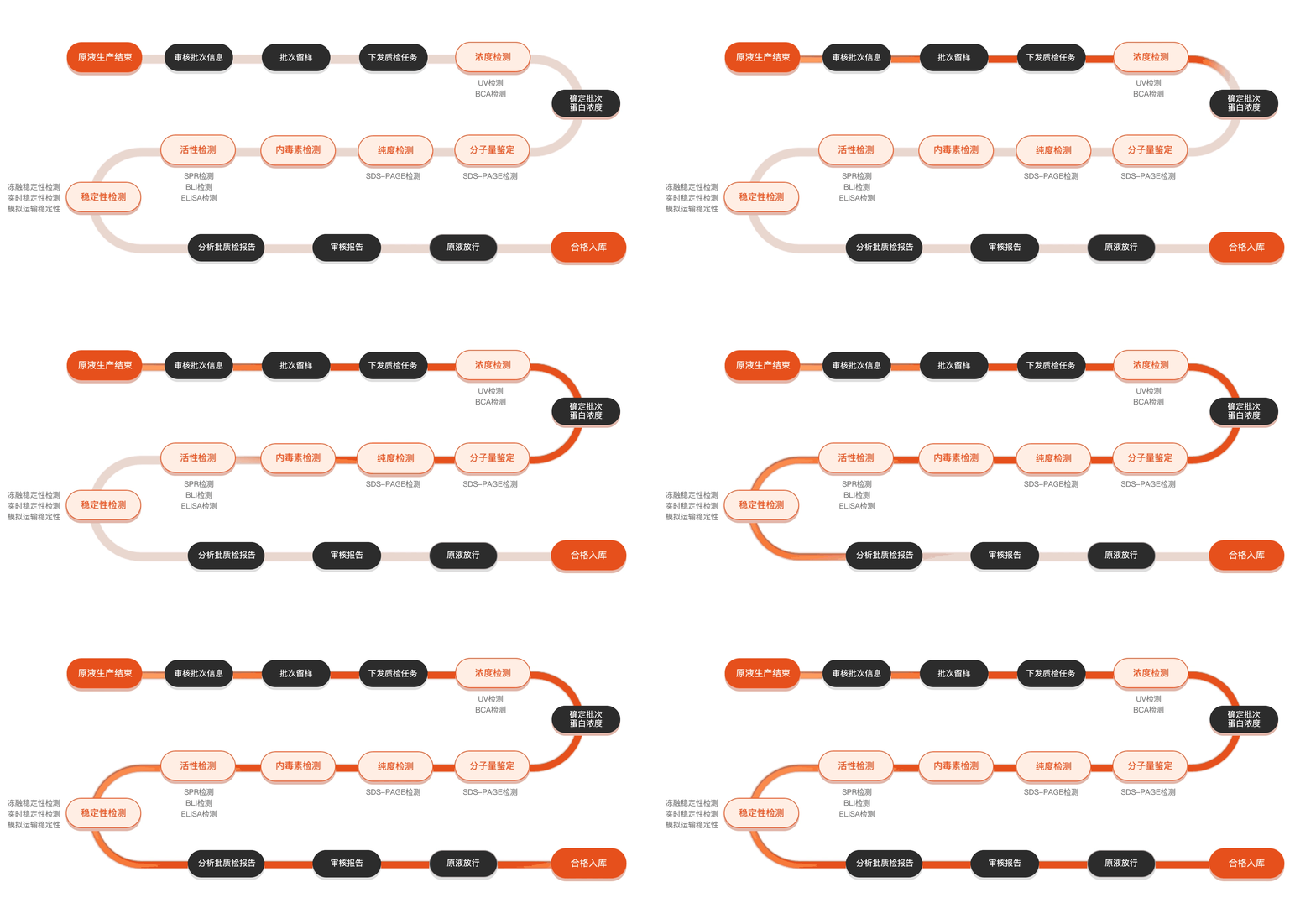
Quality inspection process
Related Products
Identification
Protein Description
Granulocyte-macrophage colony-stimulating factor (GM-CSF) is a pivotal cytokine that plays a crucial role in the regulation of immune responses, particularly in the proliferation, differentiation, and activation of myeloid lineage cells, such as neutrophils and monocytes. Research on GM-CSF has gained significant attention due to its implications in various pathophysiological conditions, including autoimmune diseases, cancer, and infections. Recombinant GM-CSF (rGM-CSF) has been developed to utilize its therapeutic potential, showing promise in enhancing immune reconstitution in patients undergoing chemotherapy or bone marrow transplantation. It has also been investigated for its role in vaccine adjuvants and immunotherapy, as it can boost the immune system's ability to respond to pathogens and tumors. Furthermore, the unique molecular properties of rGM-CSF, including its ability to modulate immune cell activity, have sparked interest in studying its mechanisms of action and optimizing its delivery in clinical applications. However, despite the encouraging findings, challenges remain regarding its dosage, safety profile, and long-term effects, warranting continued exploration of rGM-CSF to maximize its therapeutic efficacy and minimize adverse reactions. Overall, GM-CSF recombinant protein research represents a dynamic field with the potential to significantly advance our understanding and treatment of diverse immune-related disorders.