Analytical Data
-
Gene name
PTX3
- Application
-
Alternative Names
PTX3;TNFAIP5;TSG14;Pentraxin-related Protein PTX3
-
Species
Human
-
Source
HEK293
-
Tag
C-His
-
Purity
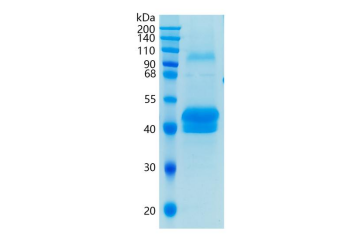
Greater than 95% as determined by SDS-PAGE.
-
Uniprot
P26022
-
Molecular Weight
45-50 kDa as determined by SDS-PAGE reducing conditions
-
Endotoxin
< 1.0 EU per μg protein as determined by the LAL method.
-
Form
Freeze-dried powder
-
Buffer formulation
liquid from a 0.22 μm filtered solution of PBS, pH 7.4, 5 % trehalose, 5 %mannitol
-
Reconstitution
Reconstitute in ddH2O to a concentration of 0.1-0.5 mg/mL. Do not vortex.
- Customization
-
Stability Test
The thermal stability is described by the loss rate. The loss rate was determined by accelerated thermal degradation test, that is, incubate the protein at 37℃ for 48h, and no obvious degradation and precipitation were observed. The loss rate isless than 8% within the expiration date under appropriate storage condition.
-
Storage & Shelf Life
Samples are stable for up to twelve months from date of receipt at -20℃ to -80℃. Store it under sterile conditions at -20℃ to -80℃. It is recommended that the protein be aliquoted for optimal storage. Avoid repeated freeze-thaw cycles.
-
Shipping
In general, recombinant proteins are supplied as lyophilized powder and shipped at ambient temperature. For bulk packages, the proteins are provided as frozen liquid and shipped with blue ice, unless otherwise requested by the customer.
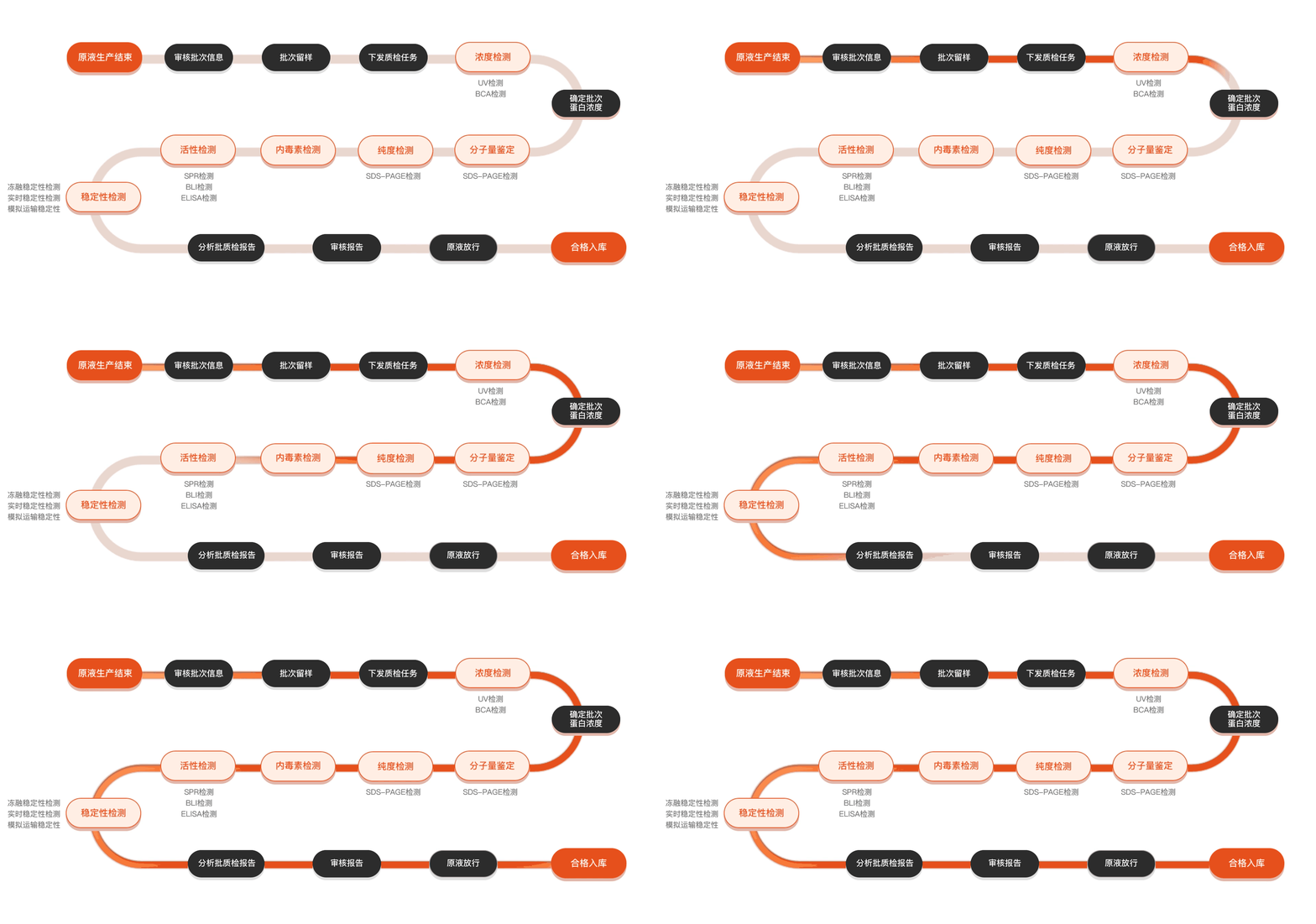
Quality inspection process
Related Products
Identification
Protein Description
PTX3 (Pentraxin 3) is an evolutionarily conserved, multifunctional protein that plays a crucial role in the immune response and tissue homeostasis. As a member of the pentraxin family, PTX3 functions as an acute-phase reactant and is involved in various inflammatory processes, playing a significant role in recognizing pathogens and modulating immune responses. Research into PTX3 has gained momentum due to its potential biomarkers for inflammatory diseases, cardiovascular conditions, and various cancers. The recombinant form of PTX3 has been studied for its therapeutic properties, particularly in enhancing immune responses and modulating inflammation. Its ability to bind to interleukin-1 beta and other cytokines highlights its role in regulating the immune environment, making it a candidate for development in immunotherapy and disease modeling. Moreover, understanding the structure and function of recombinant PTX3 may aid in identifying novel targets for drug design and improving diagnostic tools for inflammatory diseases. Consequently, ongoing studies are investigating the therapeutic applications of PTX3, its mechanisms of action, and its potential as a biomarker, ultimately aiming to leverage its properties for clinical benefit in disease management.