Analytical Data
-
Gene name
KIR2DS3
- Application
-
Alternative Names
MHC class I NK cell receptor Natural killer-associated transcript 7 NKAT7
-
Species
Human
-
Source
Yeast
-
Tag
N- His
-
Purity
Greater than 90% as determined by SDS-PAGE.
-
Uniprot
Q14952
-
Expression Region
22-245aa
-
Molecular Weight
26.7 kDa
-
Endotoxin
< 1.0 EU per μg protein as determined by the LAL method.
-
Form
Freeze-dried powder
-
Buffer formulation
PBS, pH7.4, containing 0.01% SKL, 1mM DTT, 5% Trehalose and Proclin300.
-
Reconstitution
Reconstitute in ddH2O to a concentration of 0.1-0.5 mg/mL. Do not vortex.
- Customization
-
Stability Test
The thermal stability is described by the loss rate. The loss rate was determined by accelerated thermal degradation test, that is, incubate the protein at 37℃ for 48h, and no obvious degradation and precipitation were observed. The loss rate isless than 8% within the expiration date under appropriate storage condition.
-
Storage & Shelf Life
Samples are stable for up to twelve months from date of receipt at -20℃ to -80℃. Store it under sterile conditions at -20℃ to -80℃. It is recommended that the protein be aliquoted for optimal storage. Avoid repeated freeze-thaw cycles.
-
Shipping
In general, recombinant proteins are supplied as lyophilized powder and shipped at ambient temperature. For bulk packages, the proteins are provided as frozen liquid and shipped with blue ice, unless otherwise requested by the customer.
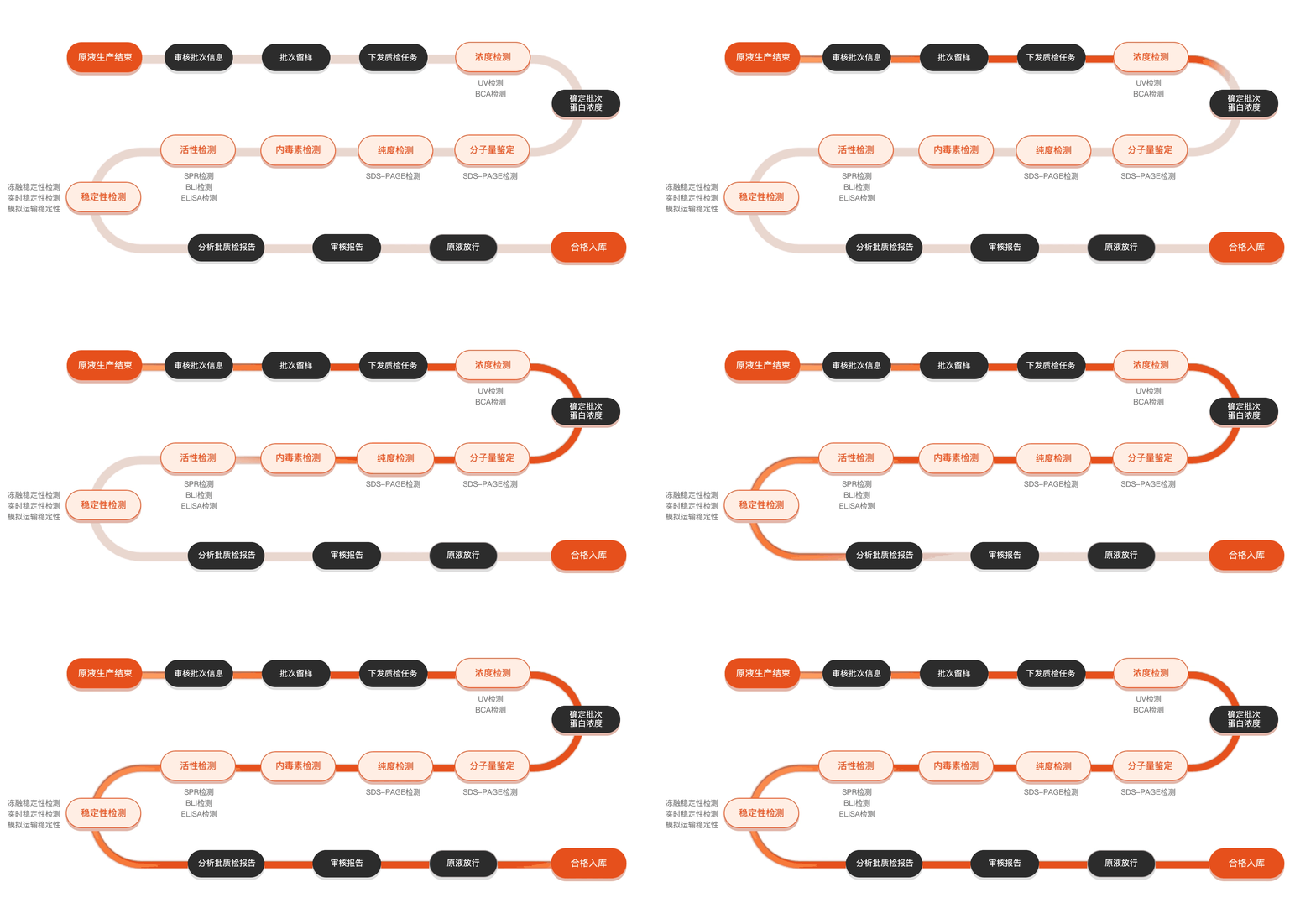
Quality inspection process
Related Products
Protein Description
KIR2DS3 is a member of the killer immunoglobulin-like receptor (KIR) family, which plays a crucial role in the regulation of immune responses, particularly in natural killer (NK) cells. Unlike its inhibitory counterparts, KIR2DS3 is classified as an activating receptor. Its function is integral to the immune surveillance of tumors and virally infected cells. Research has revealed that KIR2DS3 interacts with specific ligands on target cells, thereby triggering NK cell activation and subsequent cytotoxic responses. The understanding of KIR2DS3 has gained significant attention due to its potential implications in cancer immunotherapy and transplant acceptance. Additionally, genetic polymorphisms in KIR genes, including KIR2DS3, can influence susceptibility to various diseases, making it a subject of extensive studies in immunogenetics. The recombination and expression of KIR2DS3 as a recombinant protein allow for further investigation of its biological activities and receptor-ligand interactions in vitro and in vivo. This research is particularly relevant for developing novel therapeutic strategies that harness the power of NK cells in combating malignancies and enhancing the efficacy of immunotherapy. Moreover, characterizing KIR2DS3 may provide insights into individual variations in immune responses, paving the way for personalized medicine approaches. As such, the study of KIR2DS3 and its recombinant protein has become a pivotal area of research in understanding immune modulation and enhancing the effectiveness of various immunotherapeutic strategies.