Analytical Data
-
Gene name
VEGFR-2
-
简介
VEGFR-2 is a tyrosine-protein kinase of the cell surface receptors of VEGFA, VEGFC, and VEGFD that mediates activation of the MAPK1/ERK2, MAPK3/ERK1, and MAP kinase signaling pathways, as well as the AKT1 signaling pathway. VEGFR-2 can promote the proliferation, survival, migration and differentiation of endothelial cells. Overexpression of VEGFR-2 is associated with the development of tumors. VEGFR-2 Protein, Human (HEK293, His) is the recombinant human-derived VEGFR-2 protein, expressed by HEK293 , with C-His labeled tag.
- Application
-
Biological Activity
1. Measured by its ability to inhibit the VEGF-dependent proliferation of HUVEC human umbilical vein endothelial cells. The ED50for this effect is 9-160 ng/mL in the presence of 10 ng/mL recombinant human VEGF165 (HY-P7110A). 2. Immobilized Human VEGFR2-His at 1μg/ml (100 μ l/well)can bind Anti-Human VEGFR2 mAb.The ED50 of Anti-Human VEGFR2 mAb is ≤36.55 ng/ml. Measured by its ability to inhibit the VEGF-dependent proliferation of HUVEC human umbilical vein endothelial cells. The ED50 for this effect is 9.805 ng/mL in the presence of 10 ng/mL recombinant human VEGF165, corresponding to a specific activity is 1.020×10⁵ units/mg.
-
Alternative Names
Vascular endothelial growth factor receptor 2; KDR; VEGFR-2; Fetal liver kinase 1; FLK-1; Kinase insert domain receptor; Protein-tyrosine kinase receptor flk-1; VEGFR2; VEGF R2
-
Species
Human
-
Source
HEK293
-
Tag
C-His
-
Purity
Greater than 90% as determined by SDS-PAGE.
-
Uniprot
AAI31823.1
-
Expression Region
A20-E764
-
AA Sequence
ASVGLPSVSLDLPRLSIQKDILTIKANTTLQITCRGQRDLDWLWPNNQSGSEQRVEVTECSDGLFCKTLTIPKVIGNDTGAYKCFYRETDLASVIYVYVQDYRSPFIASVSDQHGVVYITENKNKTVVIPCLGSISNLNVSLCARYPEKRFVPDGNRISWDSKKGFTIPSYMISYAGMVFCEAKINDESYQSIMYIVVVVGYRIYDVVLSPSHGIELSVGEKLVLNCTARTELNVGIDFNWEYPSSKHQHKKLVNRDLKTQSGSEMKKFLSTLTIDGITRSDQGLYTCAASSGLMTKKNSTFVRVHEKPFVAFGSGMESLVEATVGERVRIPAKYLGYPPPEIKWYKNGIPLESNHTIKAGHVLTIMEVSERDTGNYTVILTNPISKEKQSHVVSLVVYVPPQIGEKSLISPVDSYQYGTTQTLTCTVYAIPPPHHIHWYWQLEEECANEPSHAVSVTNPYPCEEWRSVEDFQGGNKIEVNKNQFALIEGKNKTVSTLVIQAANVSALYKCEAVNKVGRGERVISFHVTRGPEITLQPDMQPTEQESVSLWCTADRSTFENLTWYKLGPQPLPIHVGELPTPVCKNLDTLWKLNATMFSNSTNDILIMELKNASLQDQGDYVCLAQDRKTKKRHCVVRQLTVLERVAPTITGNLENQTTSIGESIEVSCTASGNPPPQIMWFKDNETLVEDSGIVLKDGNRNLTIRRVRKEDEGLYTCQACSVLGCAKVEAFFIIEGAQEKTNLE
-
Protein Length
Partial
-
Molecular Weight
84-140 kDa
-
Endotoxin
< 1.0 EU per μg protein as determined by the LAL method.
-
Form
Freeze-dried powder
-
Buffer formulation
PBS, pH7.4, containing 0.01% SKL, 1mM DTT, 5% Trehalose and Proclin300.
-
Reconstitution
Reconstitute in ddH2O to a concentration of 0.1-0.5 mg/mL. Do not vortex.
- Customization
-
Stability Test
The thermal stability is described by the loss rate. The loss rate was determined by accelerated thermal degradation test, that is, incubate the protein at 37℃ for 48h, and no obvious degradation and precipitation were observed. The loss rate isless than 8% within the expiration date under appropriate storage condition.
-
Storage & Shelf Life
Samples are stable for up to twelve months from date of receipt at -20℃ to -80℃. Store it under sterile conditions at -20℃ to -80℃. It is recommended that the protein be aliquoted for optimal storage. Avoid repeated freeze-thaw cycles.
-
Shipping
In general, recombinant proteins are supplied as lyophilized powder and shipped at ambient temperature. For bulk packages, the proteins are provided as frozen liquid and shipped with blue ice, unless otherwise requested by the customer.
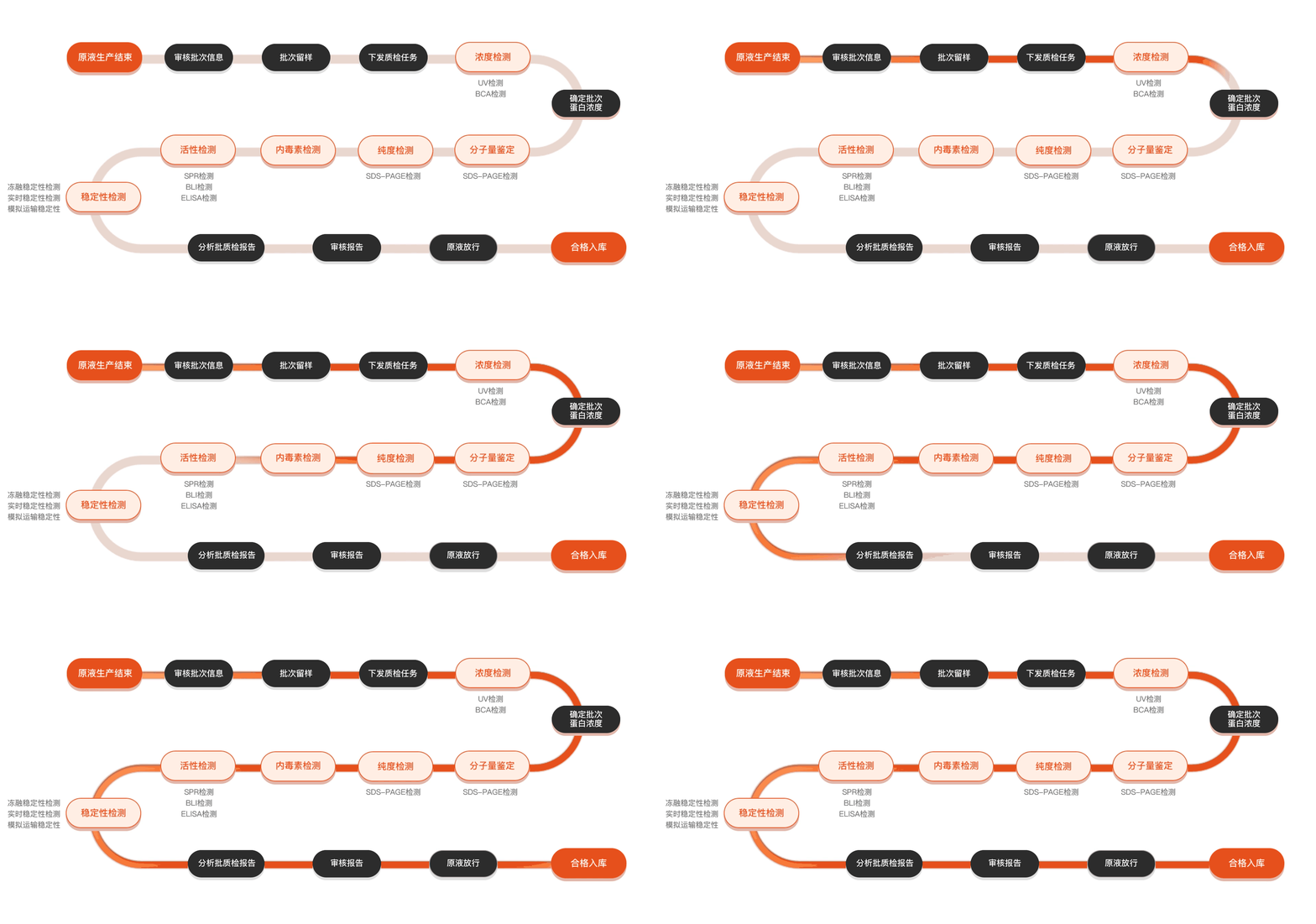
Quality inspection process
Related Products
Protein Description
Vascular Endothelial Growth Factor Receptor 2 (VEGFR-2) is a key receptor in the vascular system, primarily involved in angiogenesis, the process by which new blood vessels form from pre-existing ones. This receptor is activated by binding to its primary ligand, VEGF, which plays a pivotal role in physiological and pathological processes, including tumor growth and metastasis. The study of VEGFR-2 is crucial due to its implications in cancer therapy, where its overexpression is commonly associated with malignant progression and poor patient outcomes. Researchers have been focusing on developing recombinant VEGFR-2 proteins to better understand its structure, function, and interactions within signaling pathways. These recombinant proteins serve as critical tools for elucidating the mechanisms of angiogenesis and identifying potential therapeutic targets. By generating VEGFR-2 in a heterologous expression system, scientists can produce large quantities of the protein for biochemical assays and structural studies. This research aids in the design of novel anti-angiogenic drugs, including monoclonal antibodies and small molecule inhibitors, which aim to block VEGFR-2 signaling and inhibit tumor angiogenesis. Additionally, studying VEGFR-2 can help in the exploration of potential biomarkers for disease prognosis and treatment responses. Overall, the ongoing research on VEGFR-2 recombinant proteins holds great promise for advancing cancer therapies and improving clinical outcomes for patients with angiogenesis-related diseases.