Analytical Data
-
Gene name
CD1B
-
简介
CD1C belongs to Group 1 of the transmembrane glycoprotein CD1 family. CD1C protein, as a key antigen-presenting molecule, has shown the ability to bind both self and non-self lipid and glycolipid antigens, mediating host defense against tuberculosis. CD1C is associated with breast cancer prognosis and immune invasion. CD1C-B2M Heterodimer Protein, Rhesus Macaque (HEK293, His) is a recombinant protein dimer complex containing Rhesus Macaque-derived CD1C-B2M Heterodimer protein, expressed by HEK293 , with C-His labeled tag. CD1C-B2M Heterodimer Protein, Rhesus Macaque (HEK293, His), has molecular weight of ~44.7 (33.1+ 11.6) KDa.
- Application
-
Biological Activity
Measured by its binding ability in a functional ELISA. Immobilized Rhesus Macaque CD1C-B2M Heterodimer, at 2μg/mL (100μL/well) can bind Anti-CD1C antibody. The ED50 for this effect is 0.1125 μg/mL. Measured by its binding ability in a functional ELISA. Immobilized Rhesus Macaque CD1C-B2M Heterodimer, at 2 μg/mL (100 μL/well) can bind Anti-CD1C antibody. The ED50 for this effect is 0.1125 μg/mL.
-
Alternative Names
T-cell surface glycoprotein CD1c; CD1C; Beta-2-microglobulin; B2M
-
Species
Rhesus Macaque
-
Source
HEK293
-
Tag
C-6*His
-
Purity
Greater than 90% as determined by SDS-PAGE.
-
Uniprot
NP_001139005 (Q21-F298)&NP_001040602
-
Expression Region
NP_001139005 (Q21-F298)&NP_001040602 (I21-M119)
-
Molecular Weight
38 & 12 kDa.
-
Endotoxin
< 1.0 EU per μg protein as determined by the LAL method.
-
Form
Freeze-dried powder
-
Buffer formulation
PBS, pH7.4, containing 0.01% SKL, 1mM DTT, 5% Trehalose and Proclin300.
-
Reconstitution
Reconstitute in ddH2O to a concentration of 0.1-0.5 mg/mL. Do not vortex.
- Customization
-
Stability Test
The thermal stability is described by the loss rate. The loss rate was determined by accelerated thermal degradation test, that is, incubate the protein at 37℃ for 48h, and no obvious degradation and precipitation were observed. The loss rate isless than 8% within the expiration date under appropriate storage condition.
-
Storage & Shelf Life
Samples are stable for up to twelve months from date of receipt at -20℃ to -80℃. Store it under sterile conditions at -20℃ to -80℃. It is recommended that the protein be aliquoted for optimal storage. Avoid repeated freeze-thaw cycles.
-
Shipping
In general, recombinant proteins are supplied as lyophilized powder and shipped at ambient temperature. For bulk packages, the proteins are provided as frozen liquid and shipped with blue ice, unless otherwise requested by the customer.
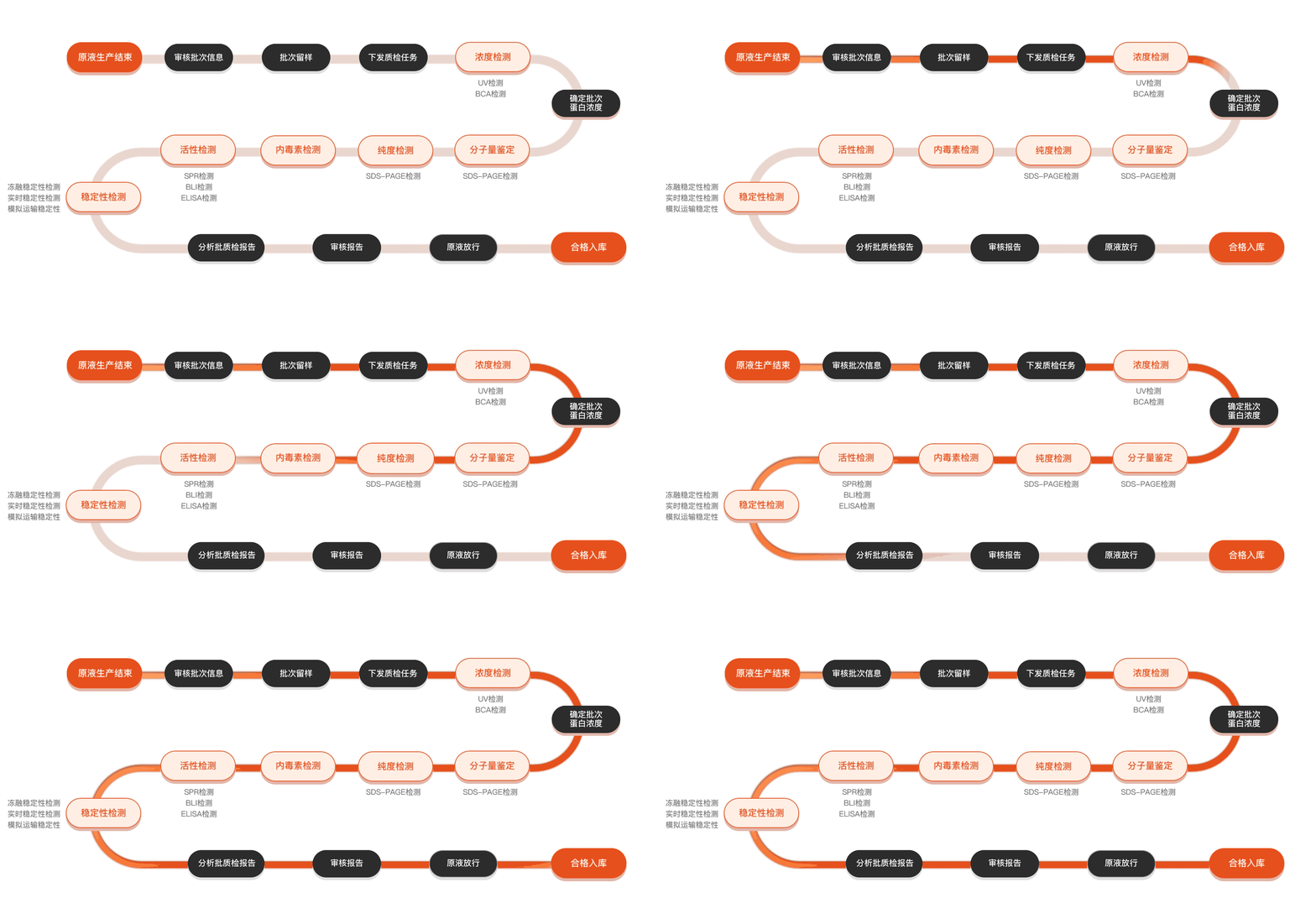
Quality inspection process
Related Products
Protein Description
CD1B is a member of the CD1 family of glycoproteins that play a crucial role in the immune system by presenting lipid antigens to T cells. Unlike classical MHC (Major Histocompatibility Complex) molecules, CD1B is specialized in the presentation of non-peptide antigens, including lipids and glycolipids derived from various pathogens. This ability is particularly important for the immune response against certain bacteria, such as Mycobacterium tuberculosis, which has unique lipid components that evade detection by conventional T cells. Research into recombinant CD1B proteins has gained momentum due to their potential applications in vaccine development and immunotherapy, particularly for diseases where conventional peptide-based vaccines are less effective. By studying CD1B and its interactions with T cell receptors, researchers aim to understand its unique antigen-presentation mechanisms and leverage this knowledge to develop innovative strategies for enhancing immune responses against specific pathogens. Furthermore, recombinant CD1B proteins can serve as valuable tools for elucidating the role of lipid antigens in immune responses, ultimately contributing to the design of targeted immunotherapies for infectious diseases and cancer. These insights may also extend to the understanding of autoimmune diseases, where lipid dysregulation may play a role. The ongoing exploration of CD1B emphasizes its importance in the intersection of lipid biology and immunology, marking it as a significant focus area for future research and therapeutic development.