Analytical Data
-
Gene name
Nidogen-1/Entactin
-
简介
Nidogen-1 (also entactin) is a secreted, monomeric glycoprotein that serves as a major linking component of basement membranes. The multiple extracellular matrix-binding sites of Nidogen-1 are well positioned to serve as anchor sites for basement membrane molecules. Nidogen-1/Entactin Protein, Human (HEK293, His) is the recombinant human-derived Nidogen-1/Entactin protein, expressed by HEK293 , with N-10*His labeled tag.
- Application
-
Alternative Names
enactin; Entactin; Entactin-1; NID1; NID-1; NIDentactin; nidogen 1; Nidogen1; Nidogen-1
-
Species
Human
-
Source
HEK293
-
Tag
N-10*His
-
Purity
Greater than 90% as determined by SDS-PAGE.
-
Uniprot
AAH45606
-
Expression Region
L29-K1114, Q1113R
-
AA Sequence
LSRQELFPFGPGQGDLELEDGDDFVSPALELRGALRFYDRSDIDAVYVTTNGIIATSEPPAKESHPGLFPPTFGAVAPFLADLDTTDGLGKVYYREDLSPSITQRAAECVHRGFPEISFQPSSAVVVTWESVAPYQGPSRDPDQKGKRNTFQAVLASSDSSSYAIFLYPEDGLQFHTTFSKKENNQVPAVVAFSQGSVGFLWKSNGAYNIFANDRESIENLAKSSNSGQQGVWVFEIGSPATTNGVVPADVILGTEDGAEYDDEDEDYDLATTRLGLEDVGTTPFSYKALRRGGADTYSVPSVLSPRRAATERPLGPPTERTRSFQLAVETFHQQHPQVIDVDEVEETGVVFSYNTDSRQTCANNRHQCSVHAECRDYATGFCCSCVAGYTGNGRQCVAEGSPQRVNGKVKGRIFVGSSQVPIVFENTDLHSYVVMNHGRSYTAISTIPETVGYSLLPLAPVGGIIGWMFAVEQDGFKNGFSITGGEFTRQAEVTFVGHPGNLVIKQRFSGIDEHGHLTIDTELEGRVPQIPFGSSVHIEPYTELYHYSTSVITSSSTREYTVTEPERDGASPSRIYTYQWRQTITFQECVHDDSRPALPSTQQLSVDSVFVLYNQEEKILRYALSNSIGPVREGSPDALQNPCYIGTHGCDTNAACRPGPRTQFTCECSIGFRGDGRTCYEVEKTRCQHEREHILGAAGATDPQRPIPPGLFVPECDAHGHYAPTQCHGSTGYCWCVDRDGREVEGTRTRPGMTPPCLSTVAPPIHQGPAVPTAVIPLPPGTHLLFAQTGKIERLPLEGNTMRKTEAKAFLHVPAKVIIGLAFDCVDKMVYWTDITEPSIGRASLHGGEPTTIIRQDLGSPEGIAVDHLGRNIFWTDSNLDRIEVAKLDGTQRRVLFETDLVNPRGIVTDSVRGNLYWTDWNRDNPKIETSYMDGTNRRILVQDDLGLPNGLTFDAFSSQLCWVDAGTNRAECLNPSQPSRRKALEGLQYPFAVTSYGKNLYFTDWKMNSVVALDLAISKETDAFQPHKQTRLYGITTALSQCPQGHNYCSVNNGGCTHLCLATPGSRTCRCPDNTLGVDCIERK
-
Protein Length
Partial
-
Molecular Weight
120-128 kDa.
-
Endotoxin
< 1.0 EU per μg protein as determined by the LAL method.
-
Form
Freeze-dried powder
-
Buffer formulation
PBS, pH7.4, containing 0.01% SKL, 1mM DTT, 5% Trehalose and Proclin300.
-
Reconstitution
Reconstitute in ddH2O to a concentration of 0.1-0.5 mg/mL. Do not vortex.
- Customization
-
Stability Test
The thermal stability is described by the loss rate. The loss rate was determined by accelerated thermal degradation test, that is, incubate the protein at 37℃ for 48h, and no obvious degradation and precipitation were observed. The loss rate isless than 8% within the expiration date under appropriate storage condition.
-
Storage & Shelf Life
Samples are stable for up to twelve months from date of receipt at -20℃ to -80℃. Store it under sterile conditions at -20℃ to -80℃. It is recommended that the protein be aliquoted for optimal storage. Avoid repeated freeze-thaw cycles.
-
Shipping
In general, recombinant proteins are supplied as lyophilized powder and shipped at ambient temperature. For bulk packages, the proteins are provided as frozen liquid and shipped with blue ice, unless otherwise requested by the customer.
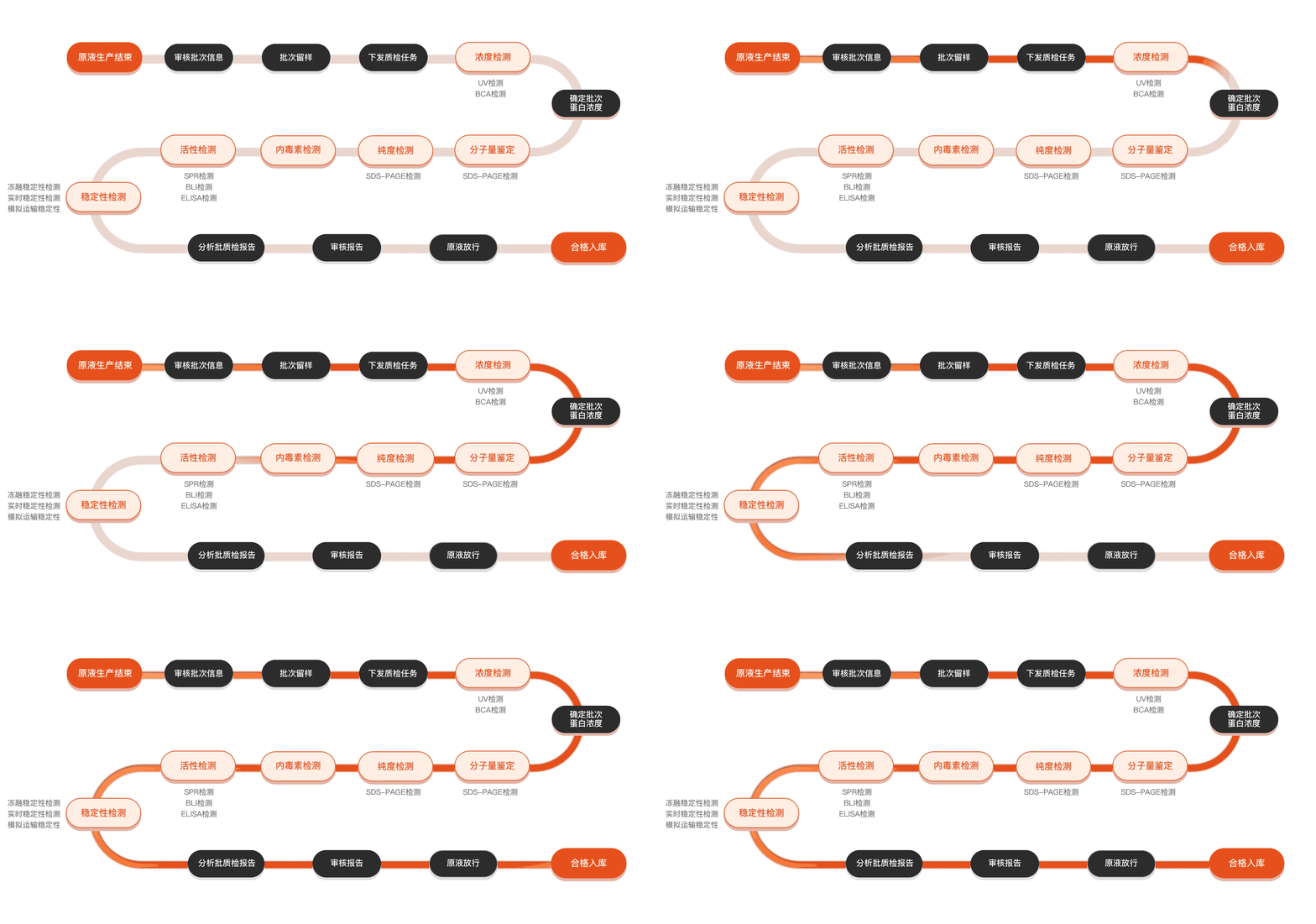
Quality inspection process
Related Products
Protein Description
Nidogen-1, also known as entactin, is a critical component of the extracellular matrix (ECM) that plays a vital role in cell-matrix interactions and the structural integrity of tissues. It is a glycoprotein that serves as a bridge between various ECM components, such as laminin and collagen, facilitating the organization and stability of basal membranes. The study of Nidogen-1/entactin has garnered attention due to its significance in various biological processes, including tissue development, repair, and the pathogenesis of diseases such as cancer and fibrotic disorders. Research has shown that alterations in the expression or function of Nidogen-1 can impact cell motility, proliferation, and differentiation, making it a potential biomarker and therapeutic target. The recombinant production of Nidogen-1 allows for detailed functional studies and the exploration of its interactions with other ECM proteins. By understanding its molecular mechanisms, researchers hope to elucidate the role of this protein in normal physiology and disease states, ultimately contributing to the development of novel therapeutic strategies aimed at modulating ECM interactions for improved tissue engineering and regenerative medicine applications.