Analytical Data
-
Gene name
TGF beta 1/TGFB1
-
简介
TGF beta 1/TGFB1 is a polypeptide member of the transforming growth factor beta superfamily of cytokines. TGF beta 1 is a secreted protein that performs many cellular functions, including the control of cell growth, cell proliferation, cell differentiation, apoptosis, and can regulate the expression and activation of other growth factors, including interferon gamma and tumor necrosis factor alpha. TGF beta 1/TGFB1 LAP Protein, Human (HEK293) is the recombinant human-derived TGF beta 1/TGFB1 LAP protein, expressed by HEK293 , with tag free. and C33S mutation.
- Application
-
Biological Activity
1.Measured by its ability to inhibit TGF-β1 activity on HT-2 mouse T cells. The ED50 this effect is 20-100 ng/mL in the presence of 1 ng/mL TGF-β1. 2.Measured by its ability to inhibit the IL-4-dependent proliferation of HT-2 mouse T cells.The ED50 for this effect is 0.01185 ng/ml, corresponding to a specific activity is 8.43×10⁴ units/mg. Measured by its ability to inhibit TGF-β1 activity on HT-2 mouse T cells. The ED50 this effect is 22.78 ng/mL in the presence of 1 ng/mL TGF-β1, corresponding to a specific activity is 4.39×10⁴ units/mg.
-
Alternative Names
Transforming Growth Factor Beta-1; TGF-Beta-1; Latency-Associated Peptide; LAP; TGFB1; TGFB
-
Species
Human
-
Source
HEK293
-
Tag
Tag Free
-
Purity
Greater than 95% as determined by reducing SDS-PAGE.
-
Uniprot
P01137
-
Expression Region
L30-R278, C33S
-
AA Sequence
LSTSKTIDMELVKRKRIEAIRGQILSKLRLASPPSQGEVPPGPLPEAVLALYNSTRDRVAGESAEPEPEPEADYYAKEVTRVLMVETHNEIYDKFKQSTHSIYMFFNTSELREAVPEPVLLSRAELRLLRLKLKVEQHVELYQKYSNNSWRYLSNRLLAPSDSPEWLSFDVTGVVRQWLSRGGEIEGFRLSAHCSCDSRDNTLQVDINGFTTGRRGDLATIHGMNRPFLLLMATPLERAQHLQSSRHRR
-
Protein Length
Full Length of Latency-associated Peptide
-
Molecular Weight
20-45 kDa
-
Endotoxin
< 1.0 EU per μg protein as determined by the LAL method.
-
Form
Freeze-dried powder
-
Buffer formulation
PBS, pH7.4, containing 0.01% SKL, 1mM DTT, 5% Trehalose and Proclin300.
-
Reconstitution
Reconstitute in ddH2O to a concentration of 0.1-0.5 mg/mL. Do not vortex.
- Customization
-
Stability Test
The thermal stability is described by the loss rate. The loss rate was determined by accelerated thermal degradation test, that is, incubate the protein at 37℃ for 48h, and no obvious degradation and precipitation were observed. The loss rate isless than 8% within the expiration date under appropriate storage condition.
-
Storage & Shelf Life
Samples are stable for up to twelve months from date of receipt at -20℃ to -80℃. Store it under sterile conditions at -20℃ to -80℃. It is recommended that the protein be aliquoted for optimal storage. Avoid repeated freeze-thaw cycles.
-
Shipping
In general, recombinant proteins are supplied as lyophilized powder and shipped at ambient temperature. For bulk packages, the proteins are provided as frozen liquid and shipped with blue ice, unless otherwise requested by the customer.
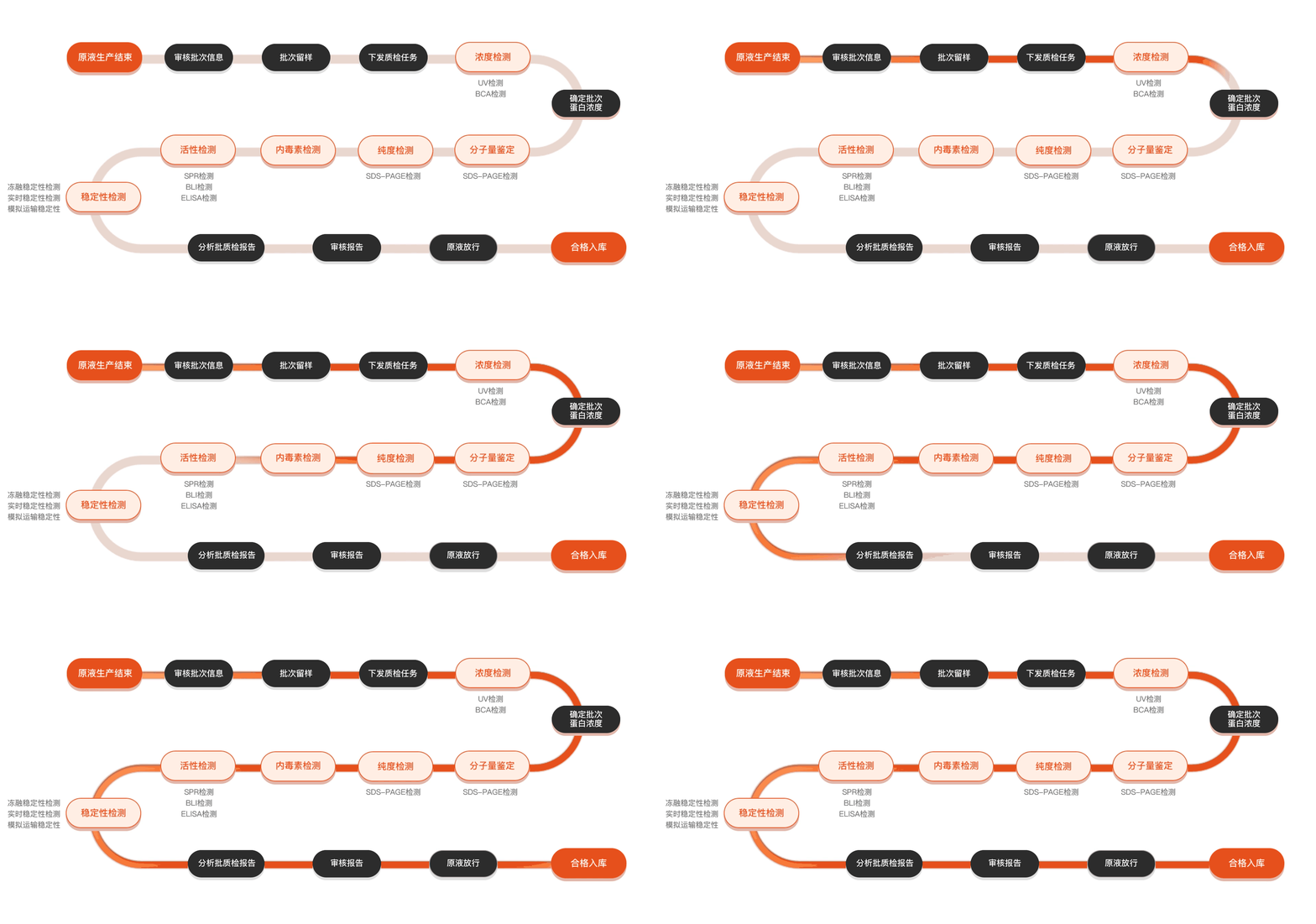
Quality inspection process
Related Products
Protein Description
Transforming Growth Factor Beta 1 (TGF-β1) is a multifunctional cytokine that plays a critical role in various cellular processes, including proliferation, differentiation, and immune response regulation. Dysregulation of TGF-β1 signaling is implicated in numerous diseases, including cancer, fibrosis, and autoimmune disorders. Research on recombinant TGF-β1 (rTGF-β1) has gained significant attention due to its potential therapeutic applications. By using recombinant DNA technology, researchers can produce high-purity rTGF-β1 for in vitro and in vivo studies. These studies not only help elucidate the molecular mechanisms underlying TGF-β1-mediated pathways but also provide insights into its role in pathological conditions. Furthermore, rTGF-β1 has been explored as a therapeutic agent in tissue engineering and regenerative medicine, particularly in promoting wound healing and tissue repair. However, challenges such as controlling TGF-β1's pleiotropic effects and ensuring tissue-specific responses still need to be addressed. Overall, the characterization and application of rTGF-β1 represent a promising area of research with significant implications for understanding TGF-β1's role in health and disease, as well as opening avenues for novel therapeutic interventions.