Analytical Data
-
Gene name
NAD(P)H-flavin reductase
-
简介
The NAD(P)H-flavin reductase protein plays a key role in cellular redox processes by catalyzing the reduction of soluble flavins using reduced pyridine nucleotides. This enzyme activity reflects its ability to transfer electrons from NAD(P)H to flavin, participating in important intracellular redox reactions. NAD (P) H-flavin reductase Protein, E.coli (His) is the recombinant E. coli-derived NAD(P)H-flavin reductase protein, expressed by E. coli , with N-His labeled tag.
- Application
-
Alternative Names
fre; fadI; flrD; fsrC; ubiB; b3844; FMN reductase; Ferrisiderophore reductase C
-
Species
E.coli
-
Source
E. coli
-
Tag
N-His
-
Purity
Greater than 90% as determined by SDS-PAGE.
-
Uniprot
P0AEN1
-
Expression Region
T2-I233
-
AA Sequence
TTLSCKVTSVEAITDTVYRVRIVPDAAFSFRAGQYLMVVMDERDKRPFSMASTPDEKGFIELHIGASEINLYAKAVMDRILKDHQIVVDIPHGEAWLRDDEERPMILIAGGTGFSYARSILLTALARNPNRDITIYWGGREEQHLYDLCELEALSLKHPGLQVVPVVEQPEAGWRGRTGTVLTAVLQDHGTLAEHDIYIAGRFEMAKIARDLFCSERNAREDRLFGDAFAFI
-
Protein Length
Full Length of Mature Protein
-
Endotoxin
< 1.0 EU per μg protein as determined by the LAL method.
-
Form
Freeze-dried powder
-
Buffer formulation
PBS, pH7.4, containing 0.01% SKL, 1mM DTT, 5% Trehalose and Proclin300.
-
Reconstitution
Reconstitute in ddH2O to a concentration of 0.1-0.5 mg/mL. Do not vortex.
- Customization
-
Stability Test
The thermal stability is described by the loss rate. The loss rate was determined by accelerated thermal degradation test, that is, incubate the protein at 37℃ for 48h, and no obvious degradation and precipitation were observed. The loss rate isless than 8% within the expiration date under appropriate storage condition.
-
Storage & Shelf Life
Samples are stable for up to twelve months from date of receipt at -20℃ to -80℃. Store it under sterile conditions at -20℃ to -80℃. It is recommended that the protein be aliquoted for optimal storage. Avoid repeated freeze-thaw cycles.
-
Shipping
In general, recombinant proteins are supplied as lyophilized powder and shipped at ambient temperature. For bulk packages, the proteins are provided as frozen liquid and shipped with blue ice, unless otherwise requested by the customer.
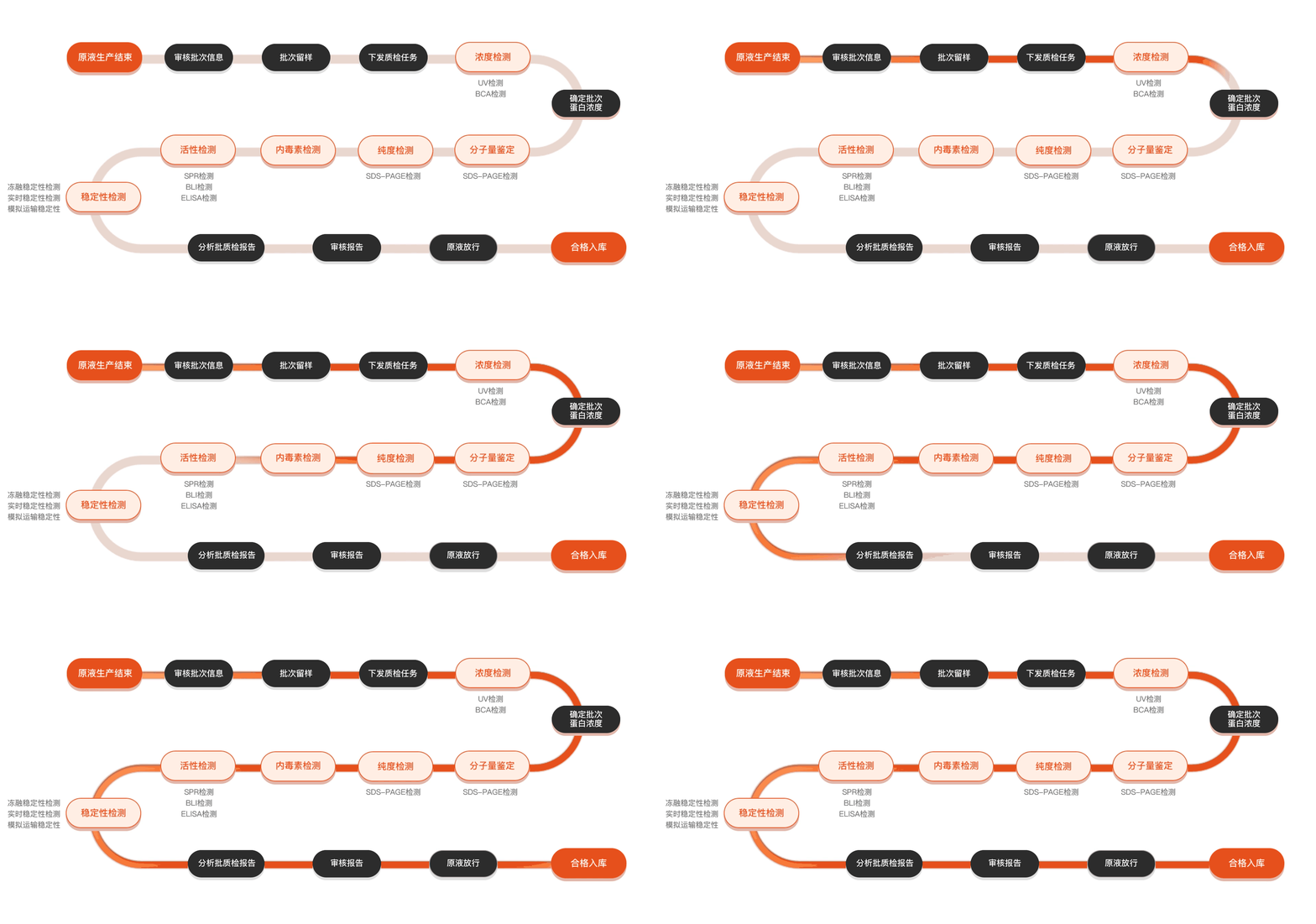
Quality inspection process
Related Products
Protein Description
NAD(P)H-flavin reductases are integral enzymes that facilitate electron transfer in various biochemical processes, playing a crucial role in cellular redox reactions. These enzymes are particularly essential in the regeneration of flavin mononucleotide (FMN) and flavin adenine dinucleotide (FAD), which are vital cofactors in numerous metabolic pathways, including those involved in the catabolism of sugars and the degradation of toxic compounds. Understanding and characterizing the structure and function of recombinant NAD(P)H-flavin reductases can reveal insights into their mechanisms, potential applications in biocatalysis, and their roles in bioenergetics. Recent studies have utilized recombinant DNA technology to produce these enzymes in microbial systems, enhancing their availability for detailed biochemical analysis and potential industrial applications. The ability to engineer these proteins allows for modifications that could improve their stability, substrate specificity, and overall catalytic efficiency. This research thus aims to explore the biophysical and kinetic properties of recombinant NAD(P)H-flavin reductases, providing foundational knowledge that could be leveraged in the development of novel biotechnological applications, such as biofuels, pharmaceuticals, and environmental remediation strategies. Additionally, understanding these enzymes may contribute to therapeutic advancements, particularly in addressing diseases linked to oxidative stress and metabolic dysregulation. With the ongoing interest in sustainable and green chemistry, the study of recombinant flavin reductases holds promise for advancing both fundamental science and applied technologies that align with ecological sustainability goals.