Analytical Data
-
Gene name
Serum amyloid A
-
简介
Serum amyloid A is a major acute phase reactant, plays a dynamic role in the acute phase response and serves as an essential apolipoprotein in high-density lipoprotein (HDL) complexes. Enhanced expression during the acute phase response reflects its overall involvement in the body's adaptive response to different challenges. Serum amyloid A protein, Cat (P.pastoris, His) is the recombinant cat-derived Serum amyloid A protein, expressed by P. pastoris , with N-His labeled tag.
- Application
-
Alternative Names
SAA1; Serum amyloid A protein
-
Species
Cat
-
Source
P. pastoris
-
Tag
N-His
-
Purity
Greater than 90% as determined by SDS-PAGE.
-
Uniprot
P19707
-
Expression Region
E1-G90
-
Protein Length
Partial
-
Endotoxin
< 1.0 EU per μg protein as determined by the LAL method.
-
Form
Freeze-dried powder
-
Buffer formulation
PBS, pH7.4, containing 0.01% SKL, 1mM DTT, 5% Trehalose and Proclin300.
-
Reconstitution
Reconstitute in ddH2O to a concentration of 0.1-0.5 mg/mL. Do not vortex.
- Customization
-
Stability Test
The thermal stability is described by the loss rate. The loss rate was determined by accelerated thermal degradation test, that is, incubate the protein at 37℃ for 48h, and no obvious degradation and precipitation were observed. The loss rate isless than 8% within the expiration date under appropriate storage condition.
-
Storage & Shelf Life
Samples are stable for up to twelve months from date of receipt at -20℃ to -80℃. Store it under sterile conditions at -20℃ to -80℃. It is recommended that the protein be aliquoted for optimal storage. Avoid repeated freeze-thaw cycles.
-
Shipping
In general, recombinant proteins are supplied as lyophilized powder and shipped at ambient temperature. For bulk packages, the proteins are provided as frozen liquid and shipped with blue ice, unless otherwise requested by the customer.
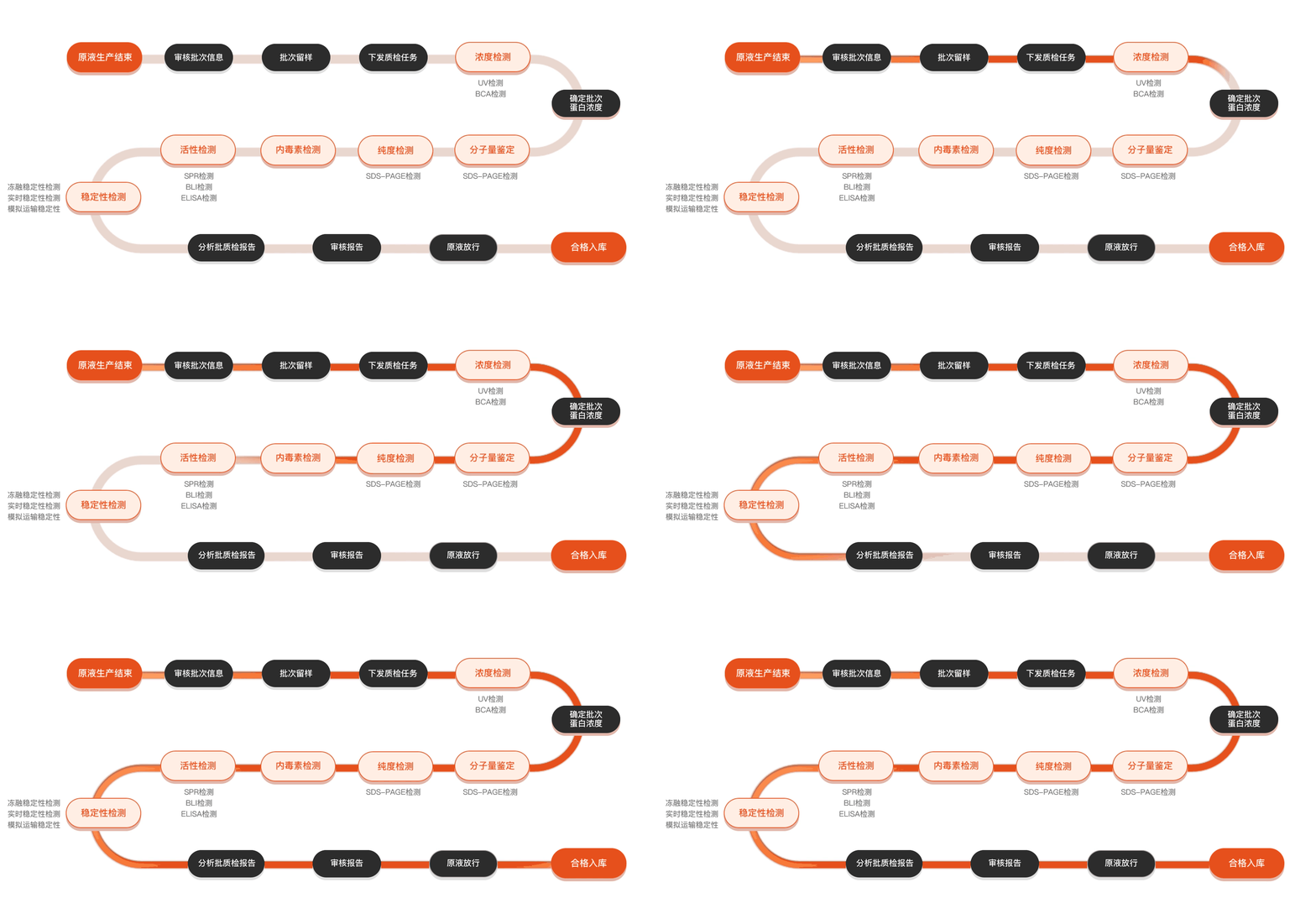
Quality inspection process
Related Products
Protein Description
Serum amyloid A (SAA) is an acute-phase protein that plays a critical role in inflammation and immune response. Elevated levels of SAA are associated with various inflammatory conditions, including infections, autoimmune diseases, and chronic inflammatory disorders, and are considered a biomarker for disease activity. The interest in recombinant SAA protein stems from its potential therapeutic applications and its role in understanding the pathophysiology of amyloidosis, a condition characterized by abnormal protein aggregation. Researchers aim to produce recombinant SAA to study its structure-function relationship, investigate its biological activities, and explore its interaction with lipoproteins and immune cells. This research could lead to novel diagnostic tools and therapeutic strategies for diseases linked with SAA dysregulation. Moreover, recombinant SAA provides an opportunity to dissect its role in amyloid formation and to develop interventions that may inhibit or modify this process. As the understanding of SAA’s mechanisms evolves, it may pave the way for innovative treatments that target inflammation and its sequelae, enhancing patient outcomes in various diseases driven by chronic inflammatory processes.