Analytical Data
-
Gene name
SSB
-
简介
The SSB protein critically binds to the 3' poly(U) terminus of RNA polymerase III transcripts, preventing exonuclease digestion and aiding in correct folding. In coxsackievirus B3 infection, SSB binds to the viral internal ribosome entry site (IRES) and enhances IRES-mediated translation. SSB Protein, Human (His) is the recombinant human-derived SSB protein, expressed by E. coli , with N-His labeled tag.
- Application
-
Alternative Names
Lupus La protein; Sjoegren syndrome type B antigen; SS-B
-
Species
Human
-
Source
E. coli
-
Tag
N-His
-
Purity
Greater than 90% as determined by SDS-PAGE.
-
Uniprot
P05455
-
Expression Region
M1-Q408
-
Protein Length
Full Length
-
Endotoxin
< 1.0 EU per μg protein as determined by the LAL method.
-
Form
Freeze-dried powder
-
Buffer formulation
PBS, pH7.4, containing 0.01% SKL, 1mM DTT, 5% Trehalose and Proclin300.
-
Reconstitution
Reconstitute in ddH2O to a concentration of 0.1-0.5 mg/mL. Do not vortex.
- Customization
-
Stability Test
The thermal stability is described by the loss rate. The loss rate was determined by accelerated thermal degradation test, that is, incubate the protein at 37℃ for 48h, and no obvious degradation and precipitation were observed. The loss rate isless than 8% within the expiration date under appropriate storage condition.
-
Storage & Shelf Life
Samples are stable for up to twelve months from date of receipt at -20℃ to -80℃. Store it under sterile conditions at -20℃ to -80℃. It is recommended that the protein be aliquoted for optimal storage. Avoid repeated freeze-thaw cycles.
-
Shipping
In general, recombinant proteins are supplied as lyophilized powder and shipped at ambient temperature. For bulk packages, the proteins are provided as frozen liquid and shipped with blue ice, unless otherwise requested by the customer.
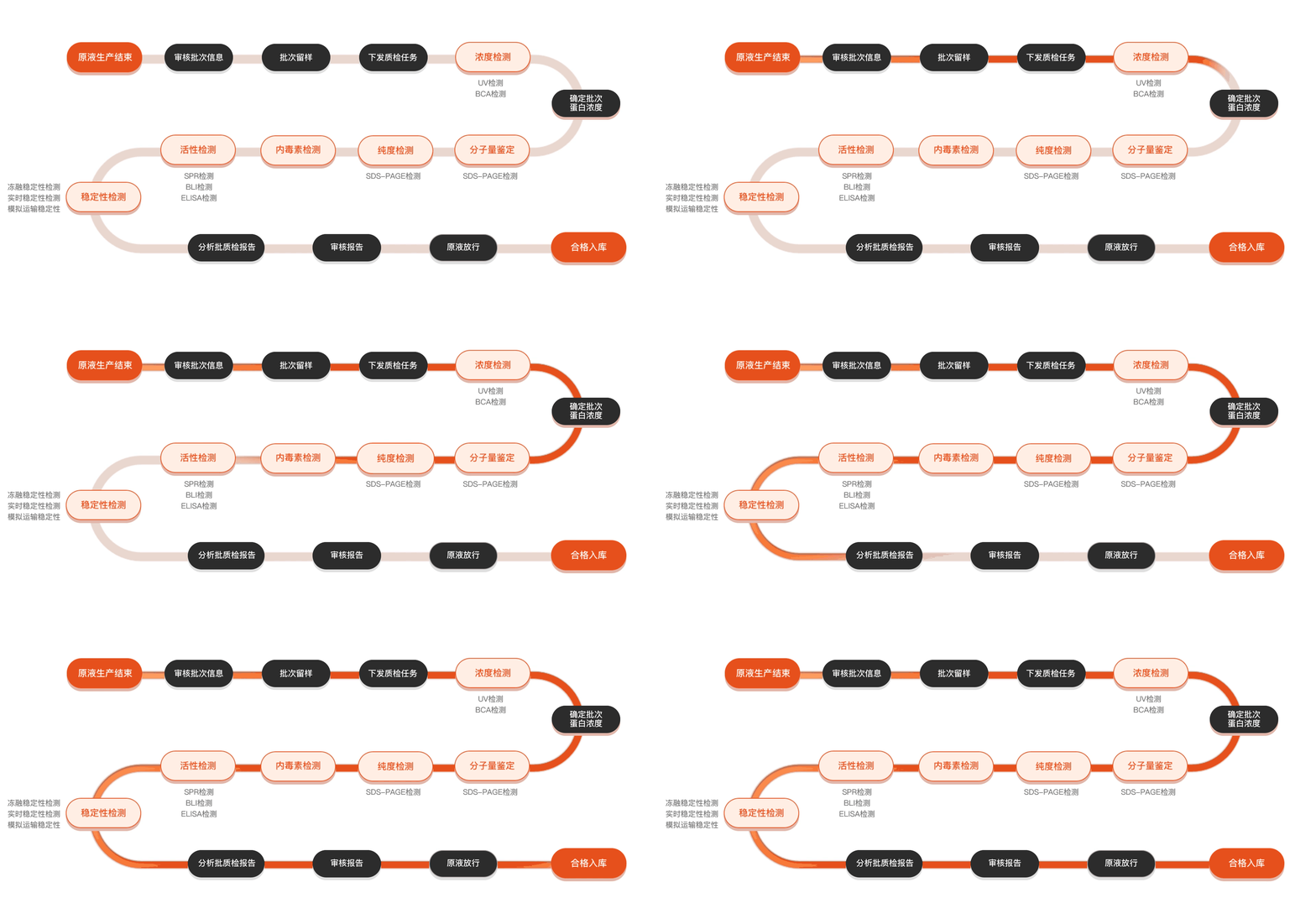
Quality inspection process
Related Products
Protein Description
SSB (Single-Stranded DNA-Binding) proteins are crucial in various cellular processes, particularly in DNA replication, repair, and recombination. These proteins bind to single-stranded DNA (ssDNA) to stabilize it and prevent secondary structures that can impede replication and transcription processes. The study of SSB proteins has gained significant attention due to their essential roles in maintaining genomic integrity, especially in organisms exposed to environmental stress and DNA-damaging agents. Research into SSB proteins not only enhances our understanding of fundamental biological mechanisms but also has implications for cancer research and therapy, as the pathways involving these proteins can be targets for novel treatments. Furthermore, SSB proteins are also being explored for their potential applications in biotechnology and synthetic biology, where their ability to bind ssDNA can be harnessed for gene editing and other genomic technologies. The ongoing research into the structural and functional characterization of SSB proteins aims to unravel their complex interactions with DNA and other molecular partners, providing insights that could lead to innovative approaches in both medicine and applied sciences.