Analytical Data
-
Gene name
ADAM15
-
简介
ADAM15 is an active metalloprotease that plays a crucial role in physiological processes and has gelatin-solubilizing and collagen-solubilizing activities. Notably, it affects wound healing, mediates intraepithelial cell/T cell interactions, and inhibits β-1 integrin-mediated cell adhesion and migration in airway smooth muscle cells. ADAM15 Protein, Mouse (HEK293, His) is the recombinant mouse-derived ADAM15 protein, expressed by HEK293 , with C-His labeled tag.
- Application
-
Biological Activity
Measured by its ability of the immobilized protein to support the adhesion of Jurkat human acute T cell leukemia cells. The ED50 for this effect is 4.53 μg/mL, corresponding to a specific activity is 2.21×10² units/mg. Measured by its ability of the immobilized protein to support the adhesion of Jurkat human acute T cell leukemia cells. The ED50 for this effect is 4.53 μg/mL, corresponding to a specific activity is 2.21×10² units/mg.
-
Alternative Names
Disintegrin and metalloproteinase domain-containing protein 15; ADAM 15; MDC-15; Metargidin
-
Species
Mouse
-
Source
HEK293
-
Tag
C-10*His
-
Purity
Greater than 95% as determined by SDS-PAGE.
-
Uniprot
O88839
-
Expression Region
R18-T697
-
AA Sequence
RPSPPLPNIGGTEEEQQASPERTLSGSMESRVVQDSPPMSLADVLQTGLPEALRISLELDSESHVLELLQNRDLIPGRPTLVWYQPDGTRMVSEGYSLENCCYRGRVQGHPSSWVSLCACSGIRGLIVLSPERGYTLELGPGDLQRPVISRIQDHLLLGHTCAPSWHASVPTRAGPDLLLEQHHAHRLKRDVVTETKIVELVIVADNSEVRKYPDFQQLLNRTLEAALLLDTFFQPLNVRVALVGLEAWTQHNLIEMSSNPAVLLDNFLRWRRTDLLPRLPHDSAQLVTVTSFSGPMVGMAIQNSICSPDFSGGVNMDHSTSILGVASSIAHELGHSLGLDHDSPGHSCPCPGPAPAKSCIMEASTDFLPGLNFSNCSRQALEKALLEGMGSCLFERQPSLAPMSSLCGNMFVDPGEQCDCGFPDECTDPCCDHFTCQLRPGAQCASDGPCCQNCKLHPAGWLCRPPTDDCDLPEFCPGDSSQCPSDIRLGDGEPCASGEAVCMHGRCASYARQCQSLWGPGAQPAAPLCLQTANTRGNAFGSCGRSPGGSYMPCAPRDVMCGQLQCQWGRSQPLLGSVQDRLSEVLEANGTQLNCSWVDLDLGNDVAQPLLALPGTACGPGLVCIGHRCQPVDLLGAQECRRKCHGHGVCDSSGHCRCEEGWAPPDCMTQLKATSSLTT
-
Protein Length
Extracellular Domain (with Propeptide)
-
Molecular Weight
75-110 kDa.
-
Endotoxin
< 1.0 EU per μg protein as determined by the LAL method.
-
Form
Freeze-dried powder
-
Buffer formulation
PBS, pH7.4, containing 0.01% SKL, 1mM DTT, 5% Trehalose and Proclin300.
-
Reconstitution
Reconstitute in ddH2O to a concentration of 0.1-0.5 mg/mL. Do not vortex.
- Customization
-
Stability Test
The thermal stability is described by the loss rate. The loss rate was determined by accelerated thermal degradation test, that is, incubate the protein at 37℃ for 48h, and no obvious degradation and precipitation were observed. The loss rate isless than 8% within the expiration date under appropriate storage condition.
-
Storage & Shelf Life
Samples are stable for up to twelve months from date of receipt at -20℃ to -80℃. Store it under sterile conditions at -20℃ to -80℃. It is recommended that the protein be aliquoted for optimal storage. Avoid repeated freeze-thaw cycles.
-
Shipping
In general, recombinant proteins are supplied as lyophilized powder and shipped at ambient temperature. For bulk packages, the proteins are provided as frozen liquid and shipped with blue ice, unless otherwise requested by the customer.
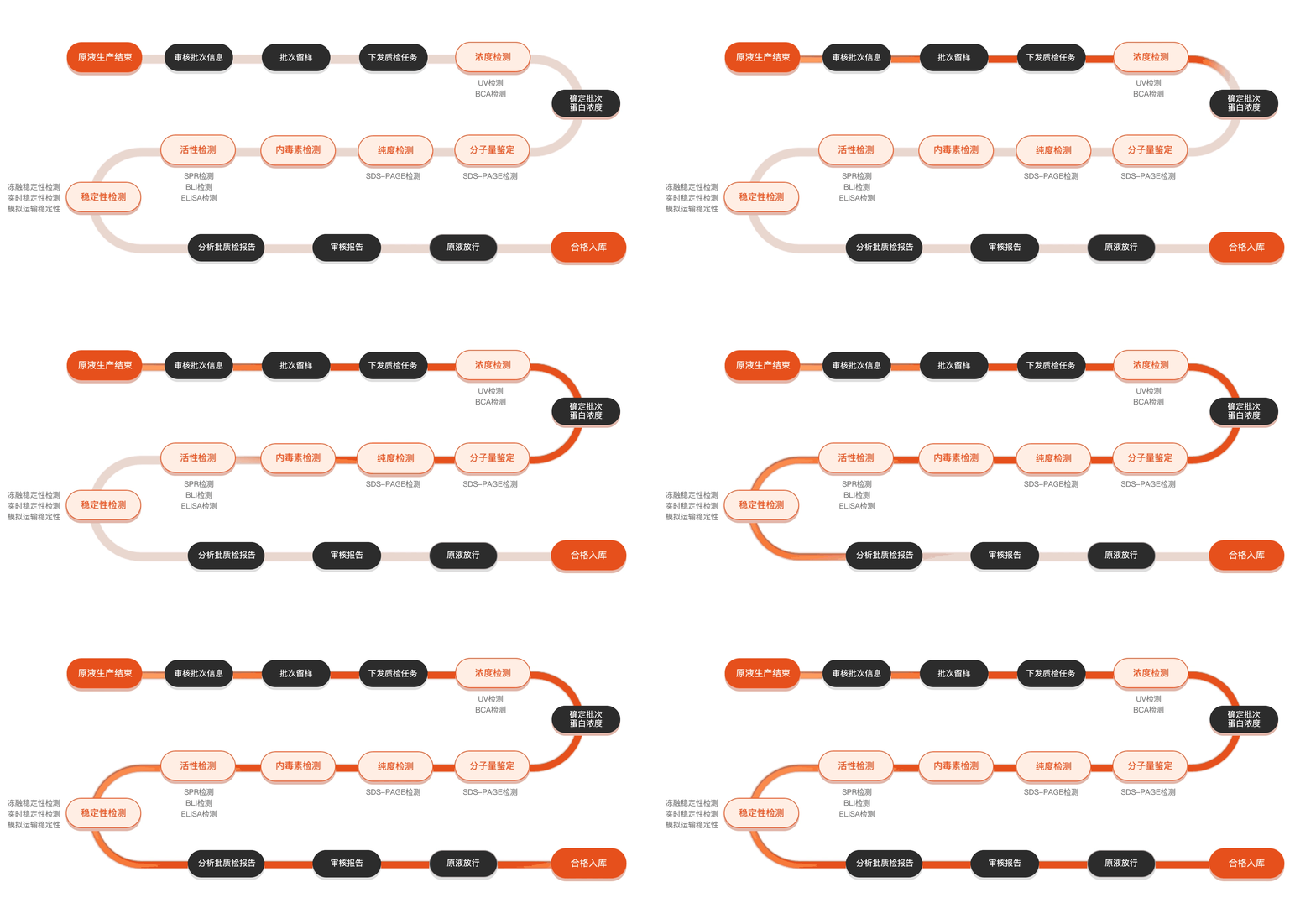
Quality inspection process
Related Products
Protein Description
ADAM15, a member of the ADAM (A Disintegrin and Metalloproteinase) family, plays a critical role in various biological processes, including cell adhesion, migration, and proteolytic activity. This protein is characterized by its ability to shed membrane-bound proteins, influencing signaling pathways and modulating interactions between cells and their microenvironment. Research has highlighted ADAM15's involvement in pathological conditions such as cancer metastasis, inflammation, and cardiovascular diseases, making it a potential therapeutic target. The need for recombinant ADAM15 protein arises from the necessity to study its structure-function relationships, discover its interacting partners, and elucidate its molecular mechanisms in various cellular contexts. Moreover, recombinant ADAM15 can serve as a valuable tool for drug development and the exploration of its role in disease progression. By generating a stable, functional form of this protein, researchers aim to investigate ADAM15's enzymatic activity, structural properties, and its regulatory effects on key signaling pathways, paving the way for novel therapeutic interventions in diseases associated with dysregulated ADAM15 activity. This research underscores the importance of understanding the multifaceted roles of ADAM15 in health and disease, facilitating the development of targeted therapies that can modulate its function for clinical benefit.