Analytical Data
-
Gene name
IL-31R alpha
- Application
-
Alternative Names
GLM-R (mGLM-R) (Gp130-like monocyte receptor) (Gp130-like receptor) (Novel cytokine receptor 10) (NR10) (ZcytoR17) (Glmr)
-
Species
Mouse
-
Source
E. coli
-
Tag
N- His
-
Purity
Greater than 90% as determined by SDS-PAGE.
-
Uniprot
Q8K5B1
-
Expression Region
19-499aa
-
Molecular Weight
59.2
-
Endotoxin
< 1.0 EU per μg protein as determined by the LAL method.
-
Form
Freeze-dried powder
-
Buffer formulation
PBS, pH7.4, containing 0.01% SKL, 1mM DTT, 5% Trehalose and Proclin300.
-
Reconstitution
Reconstitute in ddH2O to a concentration of 0.1-0.5 mg/mL. Do not vortex.
- Customization
-
Stability Test
The thermal stability is described by the loss rate. The loss rate was determined by accelerated thermal degradation test, that is, incubate the protein at 37℃ for 48h, and no obvious degradation and precipitation were observed. The loss rate isless than 8% within the expiration date under appropriate storage condition.
-
Storage & Shelf Life
Samples are stable for up to twelve months from date of receipt at -20℃ to -80℃. Store it under sterile conditions at -20℃ to -80℃. It is recommended that the protein be aliquoted for optimal storage. Avoid repeated freeze-thaw cycles.
-
Shipping
In general, recombinant proteins are supplied as lyophilized powder and shipped at ambient temperature. For bulk packages, the proteins are provided as frozen liquid and shipped with blue ice, unless otherwise requested by the customer.
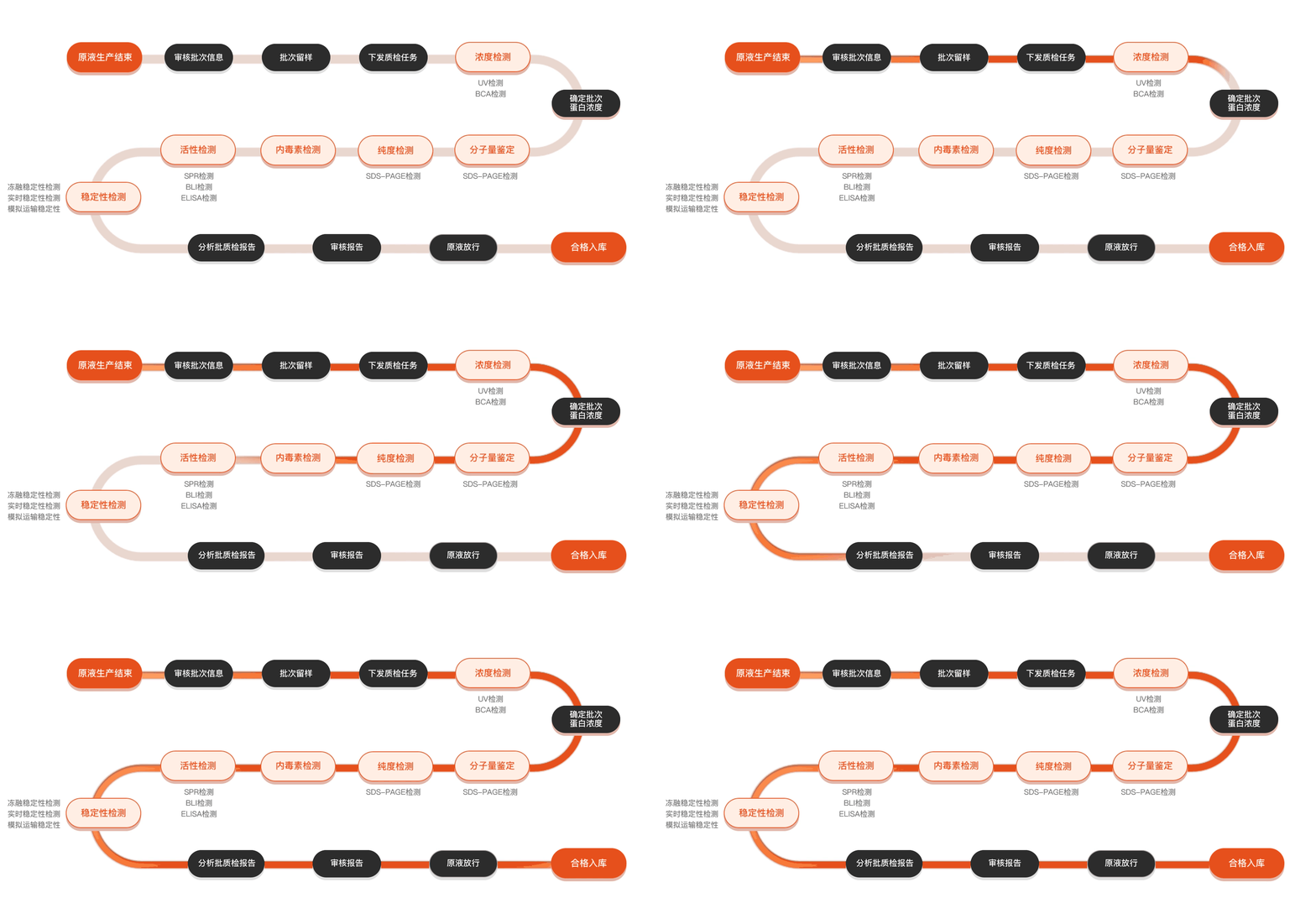
Quality inspection process
Related Products
Protein Description
IL-31R alpha, a crucial receptor component for interleukin-31 (IL-31), is integral to understanding various inflammatory and allergic conditions, particularly in atopic dermatitis and asthma. IL-31, a cytokine produced primarily by T-helper 2 (Th2) cells, is implicated in mediating itch and promoting inflammation in these diseases. The interaction between IL-31 and its receptor, IL-31R alpha, initiates intracellular signaling pathways that lead to the activation of multiple pro-inflammatory factors. Recent studies have highlighted the overexpression of IL-31 and its receptor in skin lesions and in the serum of patients suffering from atopic dermatitis, establishing their role in the pathophysiology of the disease. Given the association of IL-31 with chronic pruritus and skin inflammation, the development of IL-31R alpha recombinant proteins holds therapeutic potential. These proteins can be utilized both as research tools to elucidate the signaling mechanisms involved and as potential biotherapeutics for blocking the IL-31/IL-31R alpha pathway, aiming to alleviate symptoms and improve patient outcomes in inflammatory skin disorders. With the increasing prevalence of allergic diseases, understanding the role of IL-31R alpha offers promising avenues for targeted therapies that could significantly impact the quality of life of affected individuals.