Analytical Data
-
Gene name
USP15
-
简介
USP15 is a hydrolase that complexly regulates cellular processes by deubiquitinating various target proteins in pathways such as TGF-β receptor, NF-κ-B, and RNF41/NRDP1-PRKN. In TGF-β signaling, it promotes R-SMAD deubiquitination or stabilizes TGFBR1, thereby enhancing pathway activity. USP15 Protein, Human (sf9, GST) is the recombinant human-derived USP15 protein, expressed by Sf9 insect cells , with N-GST labeled tag.
- Application
-
Biological Activity
The fundamental role of USP15 is specific removal of ubiquitin from substrates. USP15 catalyses the ubiquitin from the substrate Ub-Rho110 to release fluorophores. Rho110 will release 535nM emission light under the excitation condition of 485nM. The signal of which can be quickly and reliably captured using a microplate reader. The concentration of USP15 used is 0.2 nM, and the reaction lasts for 30 minutes. Under these conditions, the signal-to-noise ratio (S/N) of the signal box is greater than or equal to 10.
-
Alternative Names
USP15; Ubiquitin carboxyl-terminal hydrolase 15; Deubiquitinating enzyme 15; Ubiquitin thioesterase 15; Ubiquitin-specific-processing protease 15; Unph-2; Unph4
-
Species
Human
-
Source
Baculovirus
-
Tag
N-GST
-
Purity
Greater than 90% as determined by SDS-PAGE.
-
Uniprot
Q9Y4E8
-
Expression Region
M1-N981
-
Protein Length
Full Length
-
Molecular Weight
138.9 KDa
-
Endotoxin
< 1.0 EU per μg protein as determined by the LAL method.
-
Form
Freeze-dried powder
-
Buffer formulation
PBS, pH7.4, containing 0.01% SKL, 1mM DTT, 5% Trehalose and Proclin300.
-
Reconstitution
Reconstitute in ddH2O to a concentration of 0.1-0.5 mg/mL. Do not vortex.
- Customization
-
Stability Test
The thermal stability is described by the loss rate. The loss rate was determined by accelerated thermal degradation test, that is, incubate the protein at 37℃ for 48h, and no obvious degradation and precipitation were observed. The loss rate isless than 8% within the expiration date under appropriate storage condition.
-
Storage & Shelf Life
Samples are stable for up to twelve months from date of receipt at -20℃ to -80℃. Store it under sterile conditions at -20℃ to -80℃. It is recommended that the protein be aliquoted for optimal storage. Avoid repeated freeze-thaw cycles.
-
Shipping
In general, recombinant proteins are supplied as lyophilized powder and shipped at ambient temperature. For bulk packages, the proteins are provided as frozen liquid and shipped with blue ice, unless otherwise requested by the customer.
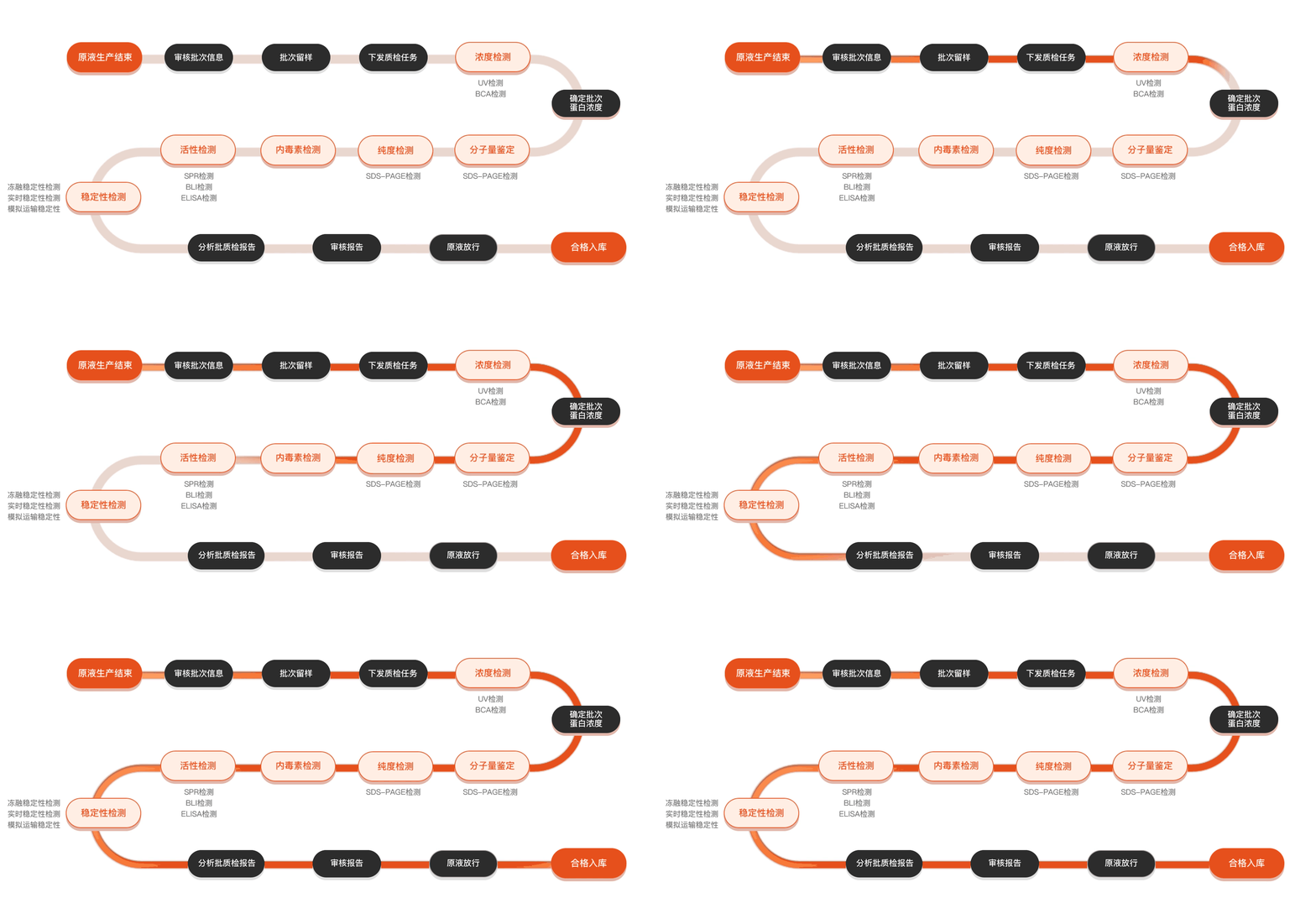
Quality inspection process
Related Products
Protein Description
USP15 (Ubiquitin-specific protease 15) is a deubiquitinating enzyme that plays a crucial role in regulating protein homeostasis and cellular signaling pathways by removing ubiquitin moieties from substrate proteins. Dysregulation of USP15 has been implicated in various diseases, including cancer and neurodegenerative disorders, making it an attractive target for therapeutic intervention. Recent studies have highlighted its involvement in key cellular processes such as immune response modulation, DNA repair, and apoptosis regulation. Furthermore, USP15 has been shown to interact with multiple signaling pathways, including the NF-κB and Wnt/β-catenin pathways, underscoring its importance in both cell proliferation and survival. Given its functional significance and potential as a drug target, the production and characterization of recombinant USP15 protein have garnered substantial interest in the research community. This enables researchers to elucidate its biochemical properties, substrate specificity, and regulatory mechanisms, ultimately paving the way for the development of novel therapeutic strategies aimed at modulating USP15 activity. Understanding the structure and function of USP15 through recombinant protein studies is essential for unraveling its role in disease mechanisms and for identifying small molecules that can either inhibit or enhance its function in specific contexts.