Analytical Data
-
Gene name
VEGF121
-
简介
VEGF121 Protein is a subtype of Vascular Endothelial Growth Factor A (VEGF-A). VEGF-A is a key member of the VEGF family of cytokines that can promote neovascularization and increase vascular permeability. VEGF121 Protein, Human (HEK293) is the recombinant human-derived VEGF121 protein, expressed by HEK293 , with tag free. The total length of VEGF121 Protein, Human (HEK293) is 147 a.a., with molecular weight of ~19.9 & 17.0 kDa, respectively.
- Application
-
Alternative Names
VEGF-AA; MVCD1; VAS; Vascular endothelial growth factor A; VEGF; VPF
-
Species
Human
-
Source
HEK293
-
Tag
Tag Free
-
Purity
Greater than 90% as determined by SDS-PAGE.
-
Uniprot
P15692-9
-
Expression Region
M1-R147
-
Protein Length
Full Length of Isoform-9
-
Molecular Weight
20 kDa & 17 kDa
-
Endotoxin
< 1.0 EU per μg protein as determined by the LAL method.
-
Form
Freeze-dried powder
-
Buffer formulation
PBS, pH7.4, containing 0.01% SKL, 1mM DTT, 5% Trehalose and Proclin300.
-
Reconstitution
Reconstitute in ddH2O to a concentration of 0.1-0.5 mg/mL. Do not vortex.
- Customization
-
Stability Test
The thermal stability is described by the loss rate. The loss rate was determined by accelerated thermal degradation test, that is, incubate the protein at 37℃ for 48h, and no obvious degradation and precipitation were observed. The loss rate isless than 8% within the expiration date under appropriate storage condition.
-
Storage & Shelf Life
Samples are stable for up to twelve months from date of receipt at -20℃ to -80℃. Store it under sterile conditions at -20℃ to -80℃. It is recommended that the protein be aliquoted for optimal storage. Avoid repeated freeze-thaw cycles.
-
Shipping
In general, recombinant proteins are supplied as lyophilized powder and shipped at ambient temperature. For bulk packages, the proteins are provided as frozen liquid and shipped with blue ice, unless otherwise requested by the customer.
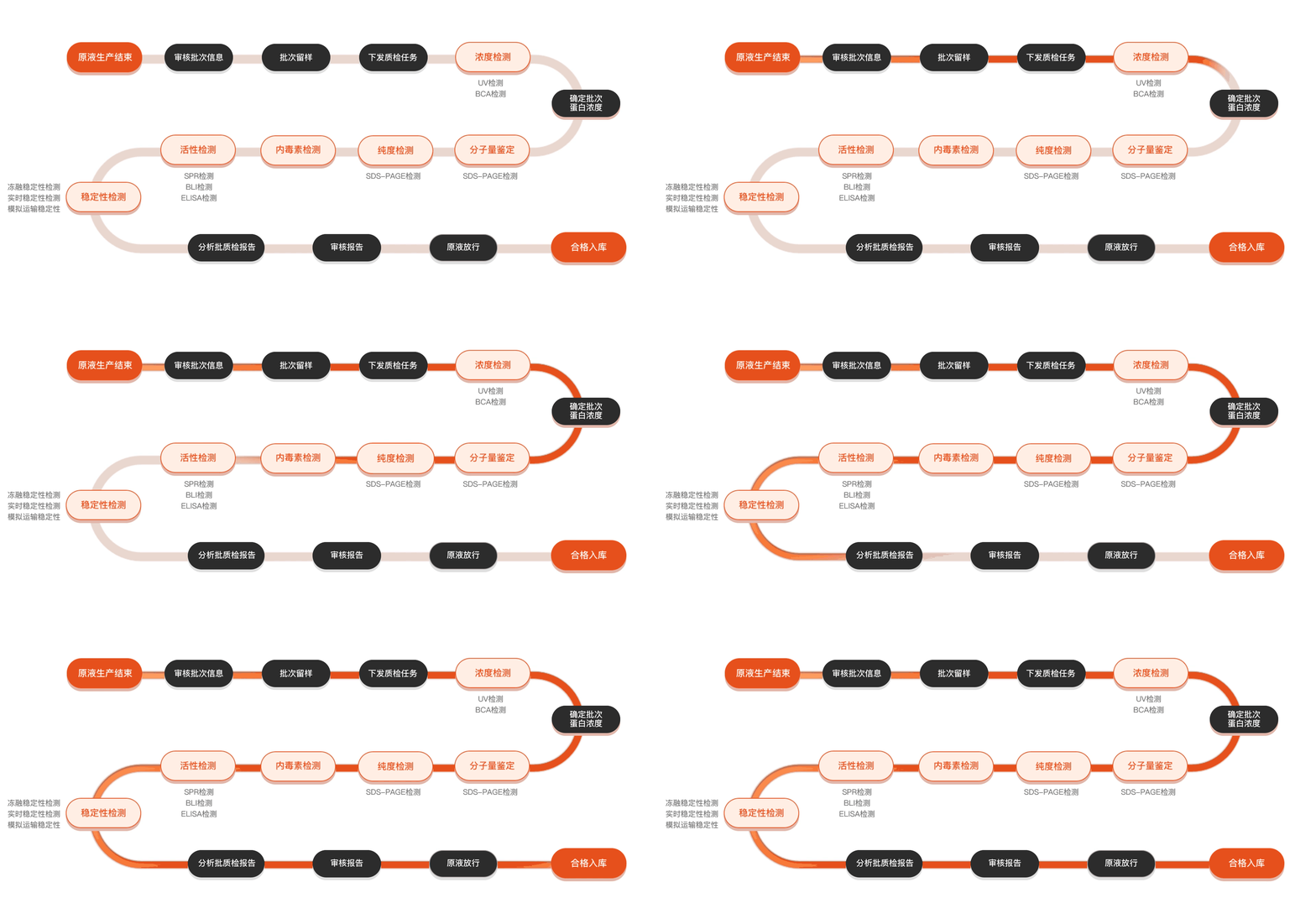
Quality inspection process
Related Products
Protein Description
Vascular Endothelial Growth Factor (VEGF) plays a critical role in angiogenesis, the process of new blood vessel formation, which is essential for both normal physiology and pathological conditions such as cancer. Among its various isoforms, VEGF121 is a particularly interesting recombinant protein due to its unique biological properties. Unlike other VEGF isoforms, VEGF121 lacks a heparin-binding domain, allowing it to diffuse freely and exert its effects over a longer range, making it a prime candidate for targeted therapies aimed at enhancing angiogenesis in ischemic diseases or promoting tissue regeneration. Research has shown that VEGF121 can stimulate endothelial cell proliferation and migration, thus paving the way for improved vascularization. Furthermore, its application in therapeutic contexts has been investigated, including gene therapy and protein replacement strategies for conditions characterized by insufficient blood supply, such as peripheral artery disease and heart ischemia. Understanding the precise mechanisms by which VEGF121 operates and optimizing its delivery systems are pivotal for developing effective treatments that harness its angiogenic potential while minimizing the risk of tumor growth associated with excessive angiogenesis. Overall, studying VEGF121 not only provides insights into the fundamental processes of vascular development but also holds great promise for innovative therapeutic approaches in regenerative medicine and oncology.