Analytical Data
-
Gene name
VEGF164
-
简介
The VEGF164 protein is a growth factor critical for vasculogenesis, vasculogenesis, and endothelial cell growth, inducing proliferation, promoting migration, inhibiting apoptosis, and enhancing vascular permeability. It binds to FLT1/VEGFR1, KDR/VEGFR2, heparan sulfate, heparin, NRP1 and DEAR/FBXW7-AS1 receptors. VEGF164 Protein, Rat (sf9) is the recombinant rat-derived VEGF164 protein, expressed by Sf9 insect cells , with tag free.
- Application
-
Alternative Names
VEGF-AA; Vascular endothelial growth factor A; Vascular permeability factor; VPF; VEGFA; VEGFA164; VEGF164
-
Species
Rat
-
Source
Baculovirus
-
Tag
Tag Free
-
Purity
Greater than 90% as determined by SDS-PAGE.
-
Uniprot
P16612-2
-
Expression Region
A27-R190
-
Protein Length
Partial
-
Molecular Weight
25 kDa
-
Endotoxin
< 1.0 EU per μg protein as determined by the LAL method.
-
Form
Freeze-dried powder
-
Buffer formulation
PBS, pH7.4, containing 0.01% SKL, 1mM DTT, 5% Trehalose and Proclin300.
-
Reconstitution
Reconstitute in ddH2O to a concentration of 0.1-0.5 mg/mL. Do not vortex.
- Customization
-
Stability Test
The thermal stability is described by the loss rate. The loss rate was determined by accelerated thermal degradation test, that is, incubate the protein at 37℃ for 48h, and no obvious degradation and precipitation were observed. The loss rate isless than 8% within the expiration date under appropriate storage condition.
-
Storage & Shelf Life
Samples are stable for up to twelve months from date of receipt at -20℃ to -80℃. Store it under sterile conditions at -20℃ to -80℃. It is recommended that the protein be aliquoted for optimal storage. Avoid repeated freeze-thaw cycles.
-
Shipping
In general, recombinant proteins are supplied as lyophilized powder and shipped at ambient temperature. For bulk packages, the proteins are provided as frozen liquid and shipped with blue ice, unless otherwise requested by the customer.
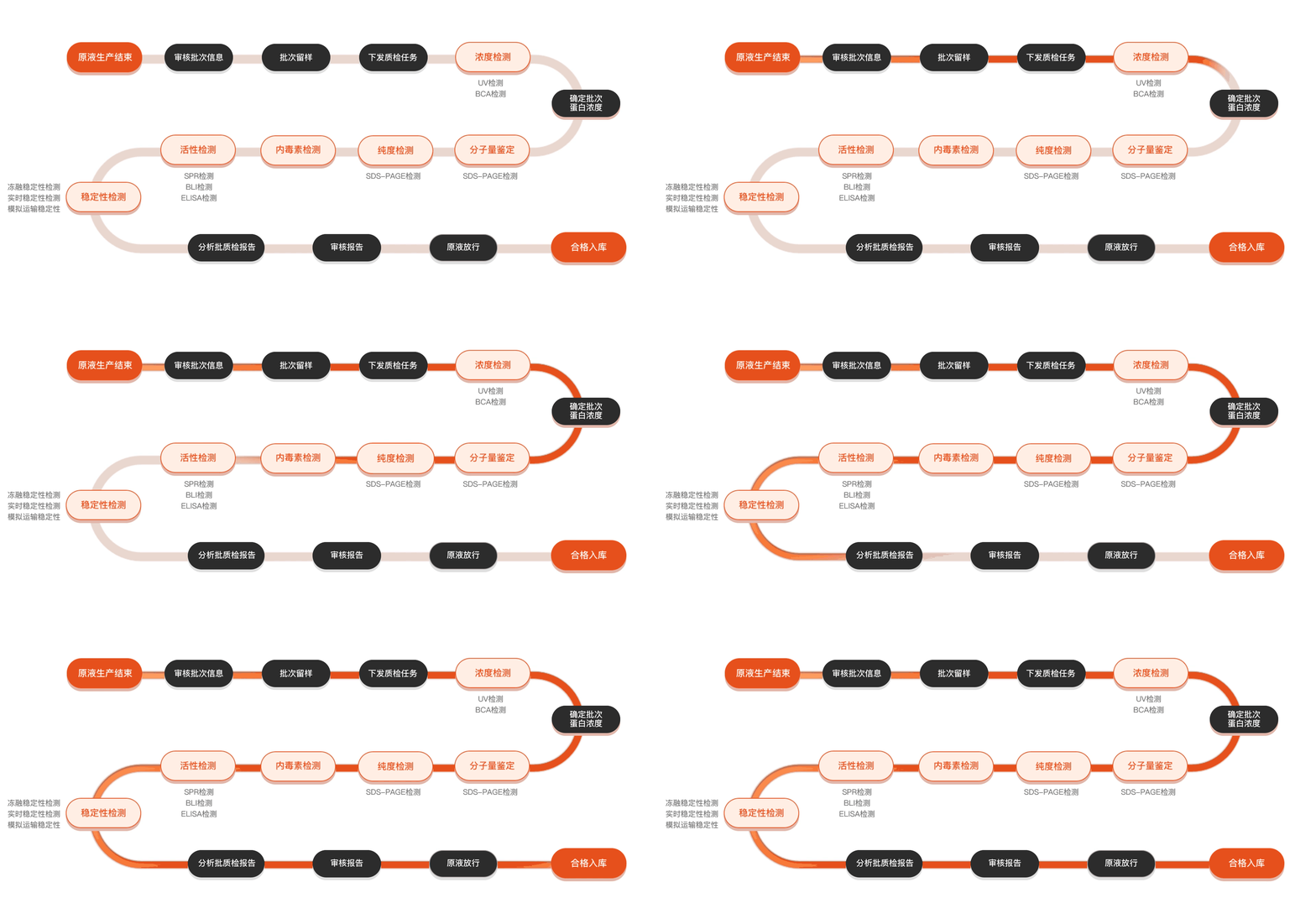
Quality inspection process
Related Products
Protein Description
Vascular endothelial growth factor (VEGF) is a crucial signaling protein involved in vasculogenesis and angiogenesis, playing a significant role in both normal physiological processes and pathological conditions such as cancer, diabetic retinopathy, and age-related macular degeneration. Among various isoforms of VEGF, VEGF164, particularly in humans, has garnered considerable attention due to its potent ability to stimulate endothelial cell proliferation and migration, thereby promoting the formation of new blood vessels. The significance of VEGF164 in tumor progression and inflammation has prompted researchers to investigate its molecular mechanisms and therapeutic potential. Generating recombinant VEGF164 protein enables studies on its structure-function relationship, receptor interactions, and downstream signaling pathways at a molecular level. Furthermore, recombinant VEGF164 serves as a valuable tool in drug development and bioengineering, with applications ranging from wound healing to tissue engineering. Understanding the properties and functionalities of VEGF164 from a biological perspective is essential for creating targeted therapies that can mitigate diseases associated with abnormal angiogenesis. As research progresses, VEGF164's role in regenerative medicine and targeted cancer therapies continues to evolve, making it an important focus for ongoing scientific investigations.