Analytical Data
-
Gene name
Citrate Synthase/CS
- Application
-
Alternative Names
Citrate (Si)-synthase, mitochondrial
-
Species
Rat
-
Source
E. coli
-
Tag
N-His
-
Purity
Greater than 95% as determined by SDS-PAGE.
-
Uniprot
Q8VHF5
-
Expression Region
Gly56~Leu312
-
Molecular Weight
32kDa
-
Endotoxin
< 1.0 EU per μg protein as determined by the LAL method.
-
Form
Freeze-dried powder
-
Buffer formulation
PBS, pH7.4, containing 0.01% SKL, 1mM DTT, 5% Trehalose and Proclin300.
-
Reconstitution
Reconstitute in ddH2O to a concentration of 0.1-0.5 mg/mL. Do not vortex.
- Customization
-
Stability Test
The thermal stability is described by the loss rate. The loss rate was determined by accelerated thermal degradation test, that is, incubate the protein at 37℃ for 48h, and no obvious degradation and precipitation were observed. The loss rate isless than 8% within the expiration date under appropriate storage condition.
-
Storage & Shelf Life
Samples are stable for up to twelve months from date of receipt at -20℃ to -80℃. Store it under sterile conditions at -20℃ to -80℃. It is recommended that the protein be aliquoted for optimal storage. Avoid repeated freeze-thaw cycles.
-
Shipping
In general, recombinant proteins are supplied as lyophilized powder and shipped at ambient temperature. For bulk packages, the proteins are provided as frozen liquid and shipped with blue ice, unless otherwise requested by the customer.
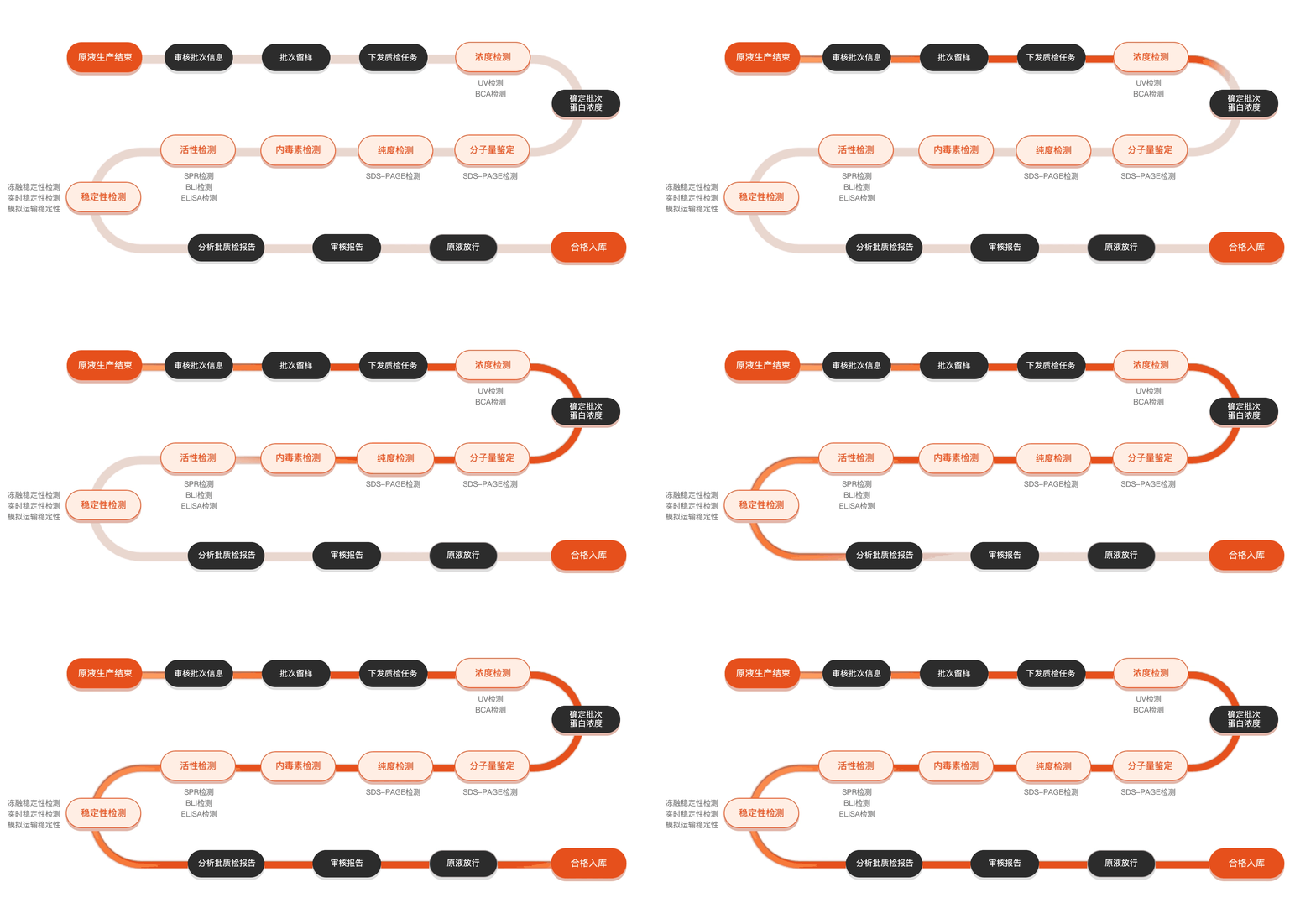
Quality inspection process
Related Products
Protein Description
Citrate synthase (CS) is a crucial enzyme in the citric acid cycle, catalyzing the condensation of acetyl-CoA and oxaloacetate to form citrate, a pivotal intermediate for aerobic metabolism. The study of recombinant Citrate Synthase has gained prominence in recent years due to its implications in various metabolic disorders, including obesity and diabetes, as well as its potential role in bioengineering applications, such as the production of biodegradable plastics and biofuels. Advances in genetic engineering have allowed for the production of CS in systems like bacteria and yeast, facilitating its purification and characterization. By using recombinant DNA technology, researchers can modify the enzyme to enhance its stability, substrate specificity, and catalytic efficiency. These modifications not only provide insights into enzyme kinetics and regulation but also pave the way for innovative biotechnological applications. Understanding CS at the molecular level offers a deeper insight into metabolic pathways and energy production, contributing to the advancement of metabolic engineering strategies aimed at optimizing cellular processes for improved industrial yields. The ongoing research on recombinant CS continues to elucidate its structure-function relationships and expands its potential applications in health and industry, making it a focal point in metabolic research and biocatalysis.