Analytical Data
-
Gene name
IL-2Rg
- Application
-
Alternative Names
CD132; IL2R-g; IL2-RG; CD132; IMD4; p64; SCIDX; SCIDX1; Cytokine Receptor Common Gamma Chain; Severe Combined Immunodeficiency
-
Species
Human
-
Source
E. coli
-
Tag
N-His
-
Purity
> 97% as determined by SDS-PAGE.
-
Uniprot
P31785
-
Expression Region
Leu23~Ala262
-
Protein Length
Partial
-
Molecular Weight
29kDa
-
Endotoxin
< 1.0 EU per μg protein as determined by the LAL method.
-
Form
Freeze-dried powder
-
Buffer formulation
PBS, pH7.4, containing 0.01% SKL, 1mM DTT, 5% Trehalose and Proclin300.
-
Reconstitution
Reconstitute in ddH2O to a concentration of 0.1-0.5 mg/mL. Do not vortex.
- Customization
-
Stability Test
The thermal stability is described by the loss rate. The loss rate was determined by accelerated thermal degradation test, that is, incubate the protein at 37℃ for 48h, and no obvious degradation and precipitation were observed. The loss rate isless than 8% within the expiration date under appropriate storage condition.
-
Storage & Shelf Life
Samples are stable for up to twelve months from date of receipt at -20℃ to -80℃. Store it under sterile conditions at -20℃ to -80℃. It is recommended that the protein be aliquoted for optimal storage. Avoid repeated freeze-thaw cycles.
-
Shipping
In general, recombinant proteins are supplied as lyophilized powder and shipped at ambient temperature. For bulk packages, the proteins are provided as frozen liquid and shipped with blue ice, unless otherwise requested by the customer.
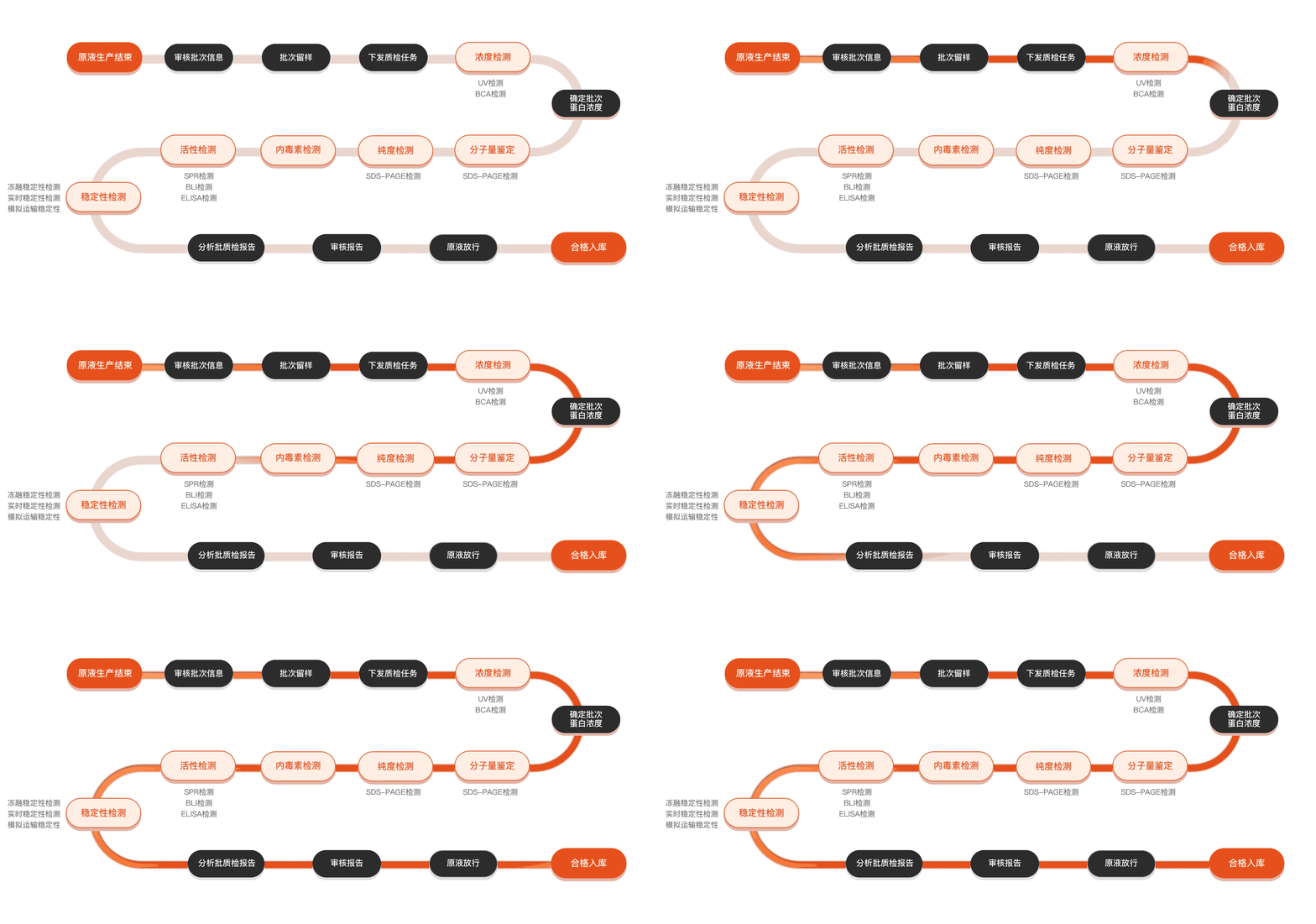
Quality inspection process
Related Products
Protein Description
Interleukin-2 receptor gamma chain (IL-2Rg) plays a critical role in the immune system by serving as a shared component of several cytokine receptors, including those for interleukin-2 (IL-2), interleukin-4 (IL-4), interleukin-7 (IL-7), interleukin-9 (IL-9), interleukin-15 (IL-15), and interleukin-21 (IL-21). Its importance is underscored by the severe immunodeficiency observed in individuals with IL-2Rg mutations, known as X-linked severe combined immunodeficiency (X-SCID). The inability to produce functional T and natural killer (NK) cells leads to heightened vulnerability to infections. Research into IL-2Rg recombinant proteins has gained traction as scientists seek to better understand its structure, function, and interactions within the immune signaling pathways. Additionally, recombinant IL-2Rg is being explored for therapeutic applications, such as enhanced immunotherapy strategies for cancer and improved outcomes in gene therapy for immunodeficiencies. By providing a clearer understanding of how IL-2Rg operates, researchers aim to develop more effective treatments for a variety of immune-related disorders. The continued study of IL-2Rg recombinant proteins represents a promising frontier in immunology, with potential implications for both basic science and clinical applications.