Analytical Data
-
Gene name
Igk
- Application
-
Alternative Names
IGKC; HCAK1; Km; Immunoglobulin Kappa Constant; IgA Kappa
-
Species
Mouse
-
Source
HEK293
-
Tag
N-His
-
Purity
Greater than 90% as determined by SDS-PAGE.
-
Uniprot
P01837
-
Expression Region
Arg1~Cys107
-
Molecular Weight
14kDa
-
Endotoxin
< 1.0 EU per μg protein as determined by the LAL method.
-
Form
Freeze-dried powder
-
Buffer formulation
PBS, pH7.4, containing 0.01% SKL, 1mM DTT, 5% Trehalose and Proclin300.
-
Reconstitution
Reconstitute in ddH2O to a concentration of 0.1-0.5 mg/mL. Do not vortex.
- Customization
-
Stability Test
The thermal stability is described by the loss rate. The loss rate was determined by accelerated thermal degradation test, that is, incubate the protein at 37℃ for 48h, and no obvious degradation and precipitation were observed. The loss rate isless than 8% within the expiration date under appropriate storage condition.
-
Storage & Shelf Life
Samples are stable for up to twelve months from date of receipt at -20℃ to -80℃. Store it under sterile conditions at -20℃ to -80℃. It is recommended that the protein be aliquoted for optimal storage. Avoid repeated freeze-thaw cycles.
-
Shipping
In general, recombinant proteins are supplied as lyophilized powder and shipped at ambient temperature. For bulk packages, the proteins are provided as frozen liquid and shipped with blue ice, unless otherwise requested by the customer.
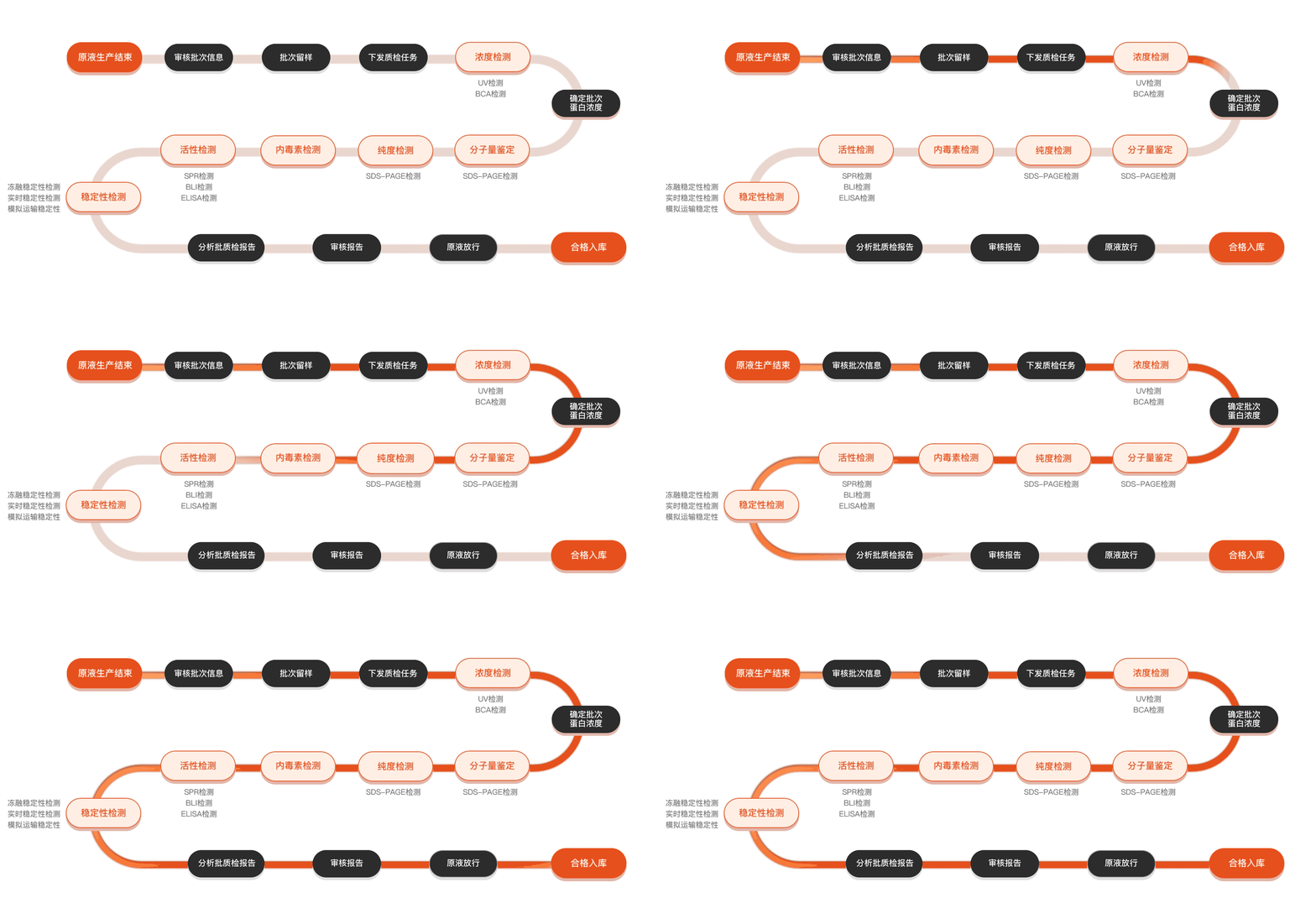
Quality inspection process
Related Products
Protein Description
Igk (Immunoglobulin kappa) recombinant proteins play a critical role in immunology and biotechnology due to their involvement in the immune response. The kappa light chain is one of the two types of light chains found in antibodies, which are essential for the adaptive immune system's ability to recognize and neutralize pathogens. The study of Igk recombinant proteins is vital for understanding antibody diversity, as they are produced through somatic recombination and gene rearrangement processes in B cells. Researchers utilize recombinant technology to express Igk proteins in various systems, enabling detailed analysis of their structure and function. This has significant implications for the development of therapeutic antibodies, vaccines, and diagnostic tools. Additionally, the production of Igk recombinant proteins allows for studies on antibody-antigen interactions and the design of engineered antibodies with enhanced specificity and affinity. With advancements in genetic engineering and protein expression systems, the manipulation and study of Igk recombinant proteins are paving the way for innovations in therapeutic strategies and our understanding of immune mechanisms. This research not only enhances our knowledge of antibody biology but also holds promise for breakthroughs in treating diseases, including cancers, autoimmune disorders, and infectious diseases. Overall, the exploration of Igk recombinant proteins is a dynamic field that intersects immunology and biotechnology, fostering advancements in both basic and applied sciences.