Analytical Data
-
Gene name
F9
- Application
-
Alternative Names
HEMB; FIX; GLA Domain; PTC; Anti Hemophilic Factor B; Christmas Factor; Plasma Thromboplastic Component; Christmas Disease; Hemophilia B
-
Species
Rabbit
-
Source
E. coli
-
Tag
N-His
-
Purity
Greater than 90% as determined by SDS-PAGE.
-
Uniprot
G1U9U2
-
Expression Region
Met1~Thr462
-
Molecular Weight
56kDa
-
Endotoxin
< 1.0 EU per μg protein as determined by the LAL method.
-
Form
Freeze-dried powder
-
Buffer formulation
PBS, pH7.4, containing 0.01% SKL, 1mM DTT, 5% Trehalose and Proclin300.
-
Reconstitution
Reconstitute in ddH2O to a concentration of 0.1-0.5 mg/mL. Do not vortex.
- Customization
-
Stability Test
The thermal stability is described by the loss rate. The loss rate was determined by accelerated thermal degradation test, that is, incubate the protein at 37℃ for 48h, and no obvious degradation and precipitation were observed. The loss rate isless than 8% within the expiration date under appropriate storage condition.
-
Storage & Shelf Life
Samples are stable for up to twelve months from date of receipt at -20℃ to -80℃. Store it under sterile conditions at -20℃ to -80℃. It is recommended that the protein be aliquoted for optimal storage. Avoid repeated freeze-thaw cycles.
-
Shipping
In general, recombinant proteins are supplied as lyophilized powder and shipped at ambient temperature. For bulk packages, the proteins are provided as frozen liquid and shipped with blue ice, unless otherwise requested by the customer.
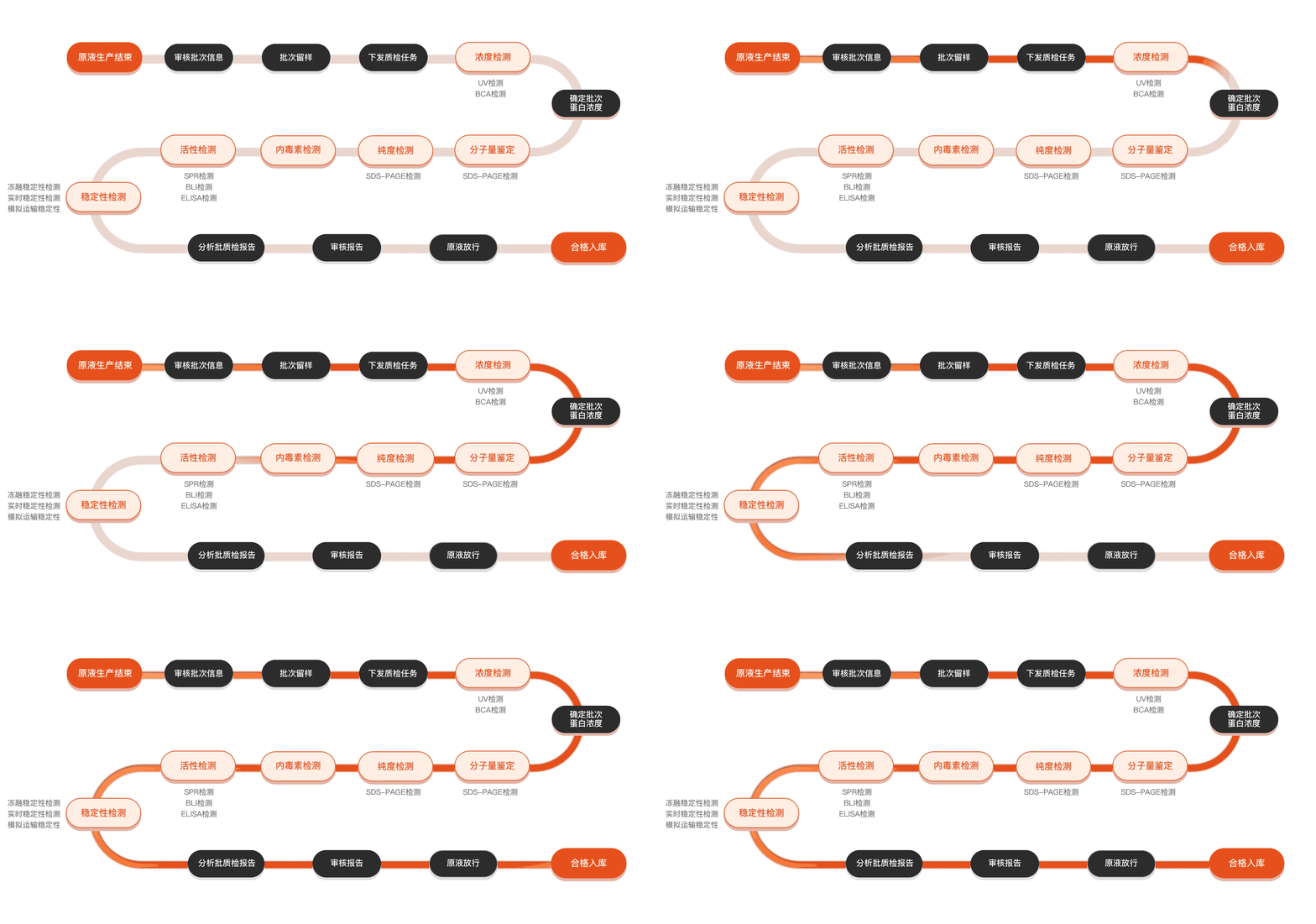
Quality inspection process
Related Products
Protein Description
F9 recombinant protein research has garnered significant attention due to its critical role in the study and treatment of hemophilia B, a genetic disorder characterized by deficiency in coagulation factor IX. The F9 gene, which encodes for this protein, is located on the X chromosome, and its mutations lead to varying degrees of bleeding tendencies in affected individuals. Traditional therapies, often involving plasma-derived factor IX, have limitations, including the risk of viral transmission and immune responses. The advent of recombinant DNA technology enables the production of F9 protein in host cells, providing a safer and more efficient therapeutic alternative. Recent advancements focus on optimizing the expression and purification processes of F9 to enhance its efficacy and stability. Additionally, novel strategies such as gene therapy are being explored to achieve long-term expression of functional F9, potentially offering a permanent solution for hemophilia B patients. Research in this area not only aims to improve therapeutic outcomes but also provides insights into the fundamental biology of coagulation and potential applications in other bleeding disorders. As scientific understanding of gene editing and protein engineering progresses, the potential for innovative treatments for hemophilia B becomes increasingly promising, ensuring a brighter future for those affected by this condition.