Analytical Data
-
Gene name
hydrolase
- Application
-
Alternative Names
Conjugase GH Gamma-Glu-X carboxypeptidase
-
Species
Glycine max
-
Source
E. coli
-
Tag
N- His-SUMO
-
Purity
Greater than 90% as determined by SDS-PAGE.
-
Uniprot
P93164
-
Expression Region
22-342aa
-
Molecular Weight
51.3 kDa
-
Endotoxin
< 1.0 EU per μg protein as determined by the LAL method.
-
Form
Freeze-dried powder
-
Buffer formulation
PBS, pH7.4, containing 0.01% SKL, 1mM DTT, 5% Trehalose and Proclin300.
-
Reconstitution
Reconstitute in ddH2O to a concentration of 0.1-0.5 mg/mL. Do not vortex.
- Customization
-
Stability Test
The thermal stability is described by the loss rate. The loss rate was determined by accelerated thermal degradation test, that is, incubate the protein at 37℃ for 48h, and no obvious degradation and precipitation were observed. The loss rate isless than 8% within the expiration date under appropriate storage condition.
-
Storage & Shelf Life
Samples are stable for up to twelve months from date of receipt at -20℃ to -80℃. Store it under sterile conditions at -20℃ to -80℃. It is recommended that the protein be aliquoted for optimal storage. Avoid repeated freeze-thaw cycles.
-
Shipping
In general, recombinant proteins are supplied as lyophilized powder and shipped at ambient temperature. For bulk packages, the proteins are provided as frozen liquid and shipped with blue ice, unless otherwise requested by the customer.
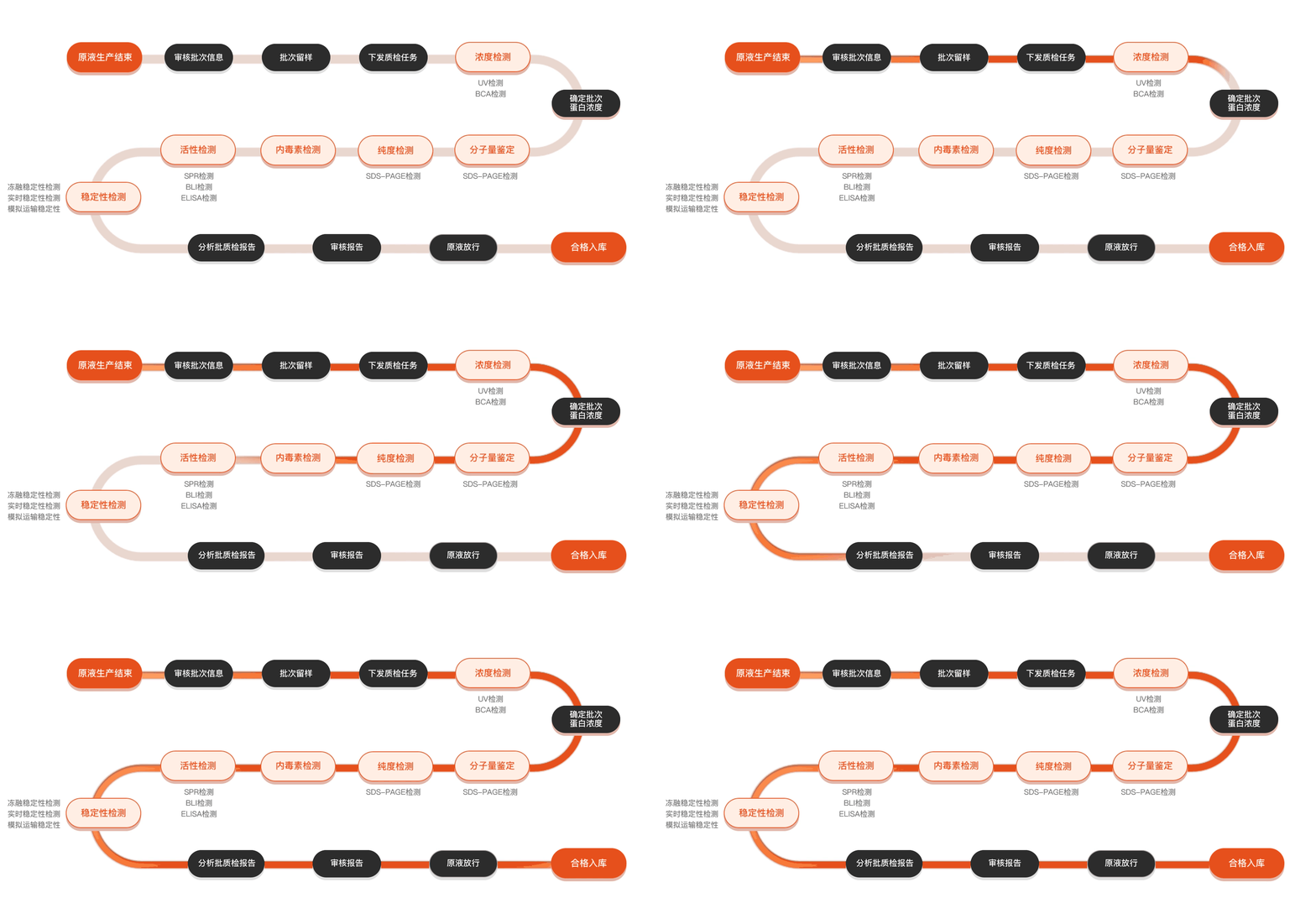
Quality inspection process
Related Products
Protein Description
Hydrolases are a diverse group of enzymes that catalyze the hydrolysis of various chemical bonds, playing a crucial role in numerous biological processes, including metabolism, digestion, and cellular signaling. Their ability to facilitate the breakdown of complex molecules into simpler units makes them essential in biotechnology and industrial applications, such as bioremediation, food processing, and the production of biofuels. The study of hydrolase recombinant proteins involves the cloning, expression, and purification of these enzymes in host organisms, typically bacteria or yeast, to better understand their structure-function relationships and enhance their performance. Advances in molecular biology techniques, including CRISPR gene editing and high-throughput screening, have accelerated the development of engineered variants with improved catalytic efficiency or altered specificity. The research surrounding hydrolase recombinant proteins not only aims to optimize existing enzymes for various applications but also seeks to uncover novel hydrolases from unexplored environmental sources, contributing to the expanding field of enzyme engineering and synthetic biology. This area of research holds significant promise for addressing global challenges such as waste management, environmental protection, and sustainable resource utilization.