Analytical Data
-
Gene name
SELENBP1
- Application
-
Alternative Names
SELENBP1;SBP;Methanethiol oxidase
-
Species
Human
-
Source
E. coli
-
Tag
His tag N-Terminus
-
Purity
Greater than 90% as determined by SDS-PAGE.
-
Uniprot
Q13228
-
Expression Region
2-472aa
-
AA Sequence
ATKCGNCGP GYSTPLEAMK GPREEIVYLP CIYRNTGTEA PDYLATVDVD PKSPQYCQVI HRLPMPNLKD ELHHSGWNTC SSCFGDSTKS RTKLVLPSLI SSRIYVVDVG SEPRAPKLHK VIEPKDIHAK CELAFLHTSH CLASGEVMIS SLGDVKGNGK GGFVLLDGET FEVKGTWERP GGAAPLGYDF WYQPRHNVMI STEWAAPNVL RDGFNPADVE AGLYGSHLYV WDWQRHEIVQ TLSLKDGLIP LEIRFLHNPD AAQGFVGCAL SSTIQRFYKN EGGTWSVEKV IQVPPKKVKG WLLPEMPGLI TDILLSLDDR FLYFSNWLHG DLRQYDISDP QRPRLTGQLF LGGSIVKGGP VQVLEDEELK SQPEPLVVKG KRVAGGPQMI QLSLDGKRLY ITTSLYSAWD KQFYPDLIRE GSVMLQVDVD TVKGGLKLNP NFLVDFGKEP LGPALAHELR YPGGDCSSDI WI
-
Endotoxin
< 1.0 EU per μg protein as determined by the LAL method.
-
Form
Freeze-dried powder
-
Buffer formulation
PBS, pH7.4, containing 0.01% SKL, 1mM DTT, 5% Trehalose and Proclin300.
-
Reconstitution
Reconstitute in ddH2O to a concentration of 0.1-0.5 mg/mL. Do not vortex.
- Customization
-
Stability Test
The thermal stability is described by the loss rate. The loss rate was determined by accelerated thermal degradation test, that is, incubate the protein at 37℃ for 48h, and no obvious degradation and precipitation were observed. The loss rate isless than 8% within the expiration date under appropriate storage condition.
-
Storage & Shelf Life
Samples are stable for up to twelve months from date of receipt at -20℃ to -80℃. Store it under sterile conditions at -20℃ to -80℃. It is recommended that the protein be aliquoted for optimal storage. Avoid repeated freeze-thaw cycles.
-
Shipping
In general, recombinant proteins are supplied as lyophilized powder and shipped at ambient temperature. For bulk packages, the proteins are provided as frozen liquid and shipped with blue ice, unless otherwise requested by the customer.
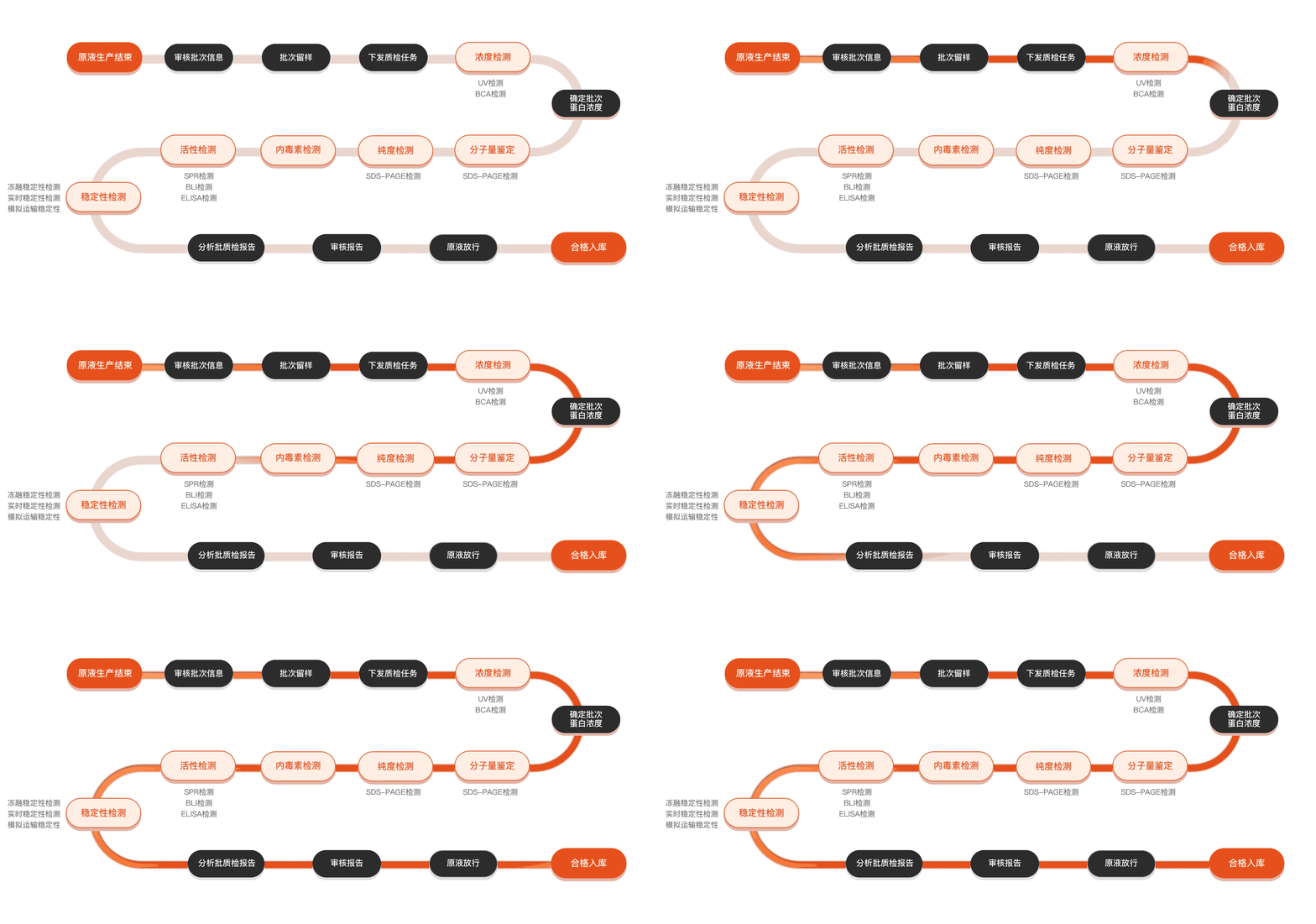
Quality inspection process
Related Products
Protein Description
SELENBP1 (Selenium-Binding Protein 1) is a protein that has garnered significant interest in recent years due to its potential roles in various biological processes, including selenium metabolism, antioxidant defense, and regulation of cell signaling pathways. Researchers have discovered that SELENBP1 is involved in cellular responses to oxidative stress and inflammation, suggesting its relevance in diseases characterized by these conditions, such as cancer and neurodegenerative disorders. Notably, SELENBP1 is thought to be a key player in selenium homeostasis, aiding in the transport and utilization of selenium in the body. Given the importance of selenium in human health, studies exploring the functional properties of recombinant SELENBP1 have become increasingly vital. Recombinant protein studies allow for detailed analysis of SELENBP1's structure and function, particularly in understanding its interactions with other biomolecules and its role in cellular processes. The elucidation of SELENBP1's mechanisms may provide insights into therapeutic approaches for selenium-related diseases and contribute to a broader understanding of the protein's physiological significance. As research progresses, SELENBP1 is positioned as an important candidate for future investigations, with the potential to unveil new targets for intervention in disease prevention and treatment.