Analytical Data
-
Gene name
FGFR-3
-
简介
FGFR-3 is a member of the fibroblast growth factor receptor family and is expressed in tissues such as cartilage, brain, intestine and kidney. FGFR-3 regulates chondrocyte differentiation and proliferation by activating the MAPK/STAT signaling pathway. FGFR-3 is a tumor marker. FGFR-3 Protein, Cynomolgus/Rhesus Macaque (HEK293, His) is the recombinant cynomolgus-derived FGFR-3 protein, expressed by HEK293 , with C-His labeled tag.
- Application
-
Biological Activity
Measured by its ability to inhibit FGF-acidic dependent proliferation of Balb/c 3T3 mouse fibroblasts, the ED50 for this effect is typically 3.693 ng/mL, corresponding to a specific activity is 2.71×10⁵ units/mg. Measured by its ability to inhibit FGF-acidic dependent proliferation of Balb/c 3T3 mouse fibroblasts, the ED50 for this effect is typically 3.693 ng/mL, corresponding to a specific activity is 2.71×10⁵ units/mg.
-
Alternative Names
Fibroblast growth factor receptor 3; FGFR-3; CD333; Mfr3; Sam3
-
Species
Rhesus Macaque
-
Source
HEK293
-
Tag
C-6*His
-
Purity
Greater than 95% as determined by reducing SDS-PAGE.
-
Uniprot
F7FZR9
-
Expression Region
E23-G375
-
AA Sequence
ESLGTEQRVVGRVAEVSGPEPSQQEQLVFGSGDAVELSCPPPGGGPMGPTVWVKDGAGLVPSERVLVGPQRLQVLNASHEDSGAYSCRQRLTQLVLCHFSVRVTDAPSSGDDEDGEDEAEDTGVDTGAPYWTRPERMDKKLLAVPAANTVRFRCPAAGNPTPSISWLKNGKEFRGEHRIGGIKLRHQQWSLVMESVVPSDRGNYTCVVENKFGSIRQTYTLDVLERSPHRPILQAGLPANQTAVLGSDVEFHCKVYSDAQPHIQWLKHVEVNGSKVGPDGTPYVTVLKTAGANTTDKELEVLSLHNVTFEDAGEYTCLAGNSIGFSHHSAWLVVLPAEEELVEADEAGSVYAG
-
Protein Length
Partial
-
Molecular Weight
55-77 kDa.
-
Endotoxin
< 1.0 EU per μg protein as determined by the LAL method.
-
Form
Freeze-dried powder
-
Buffer formulation
PBS, pH7.4, containing 0.01% SKL, 1mM DTT, 5% Trehalose and Proclin300.
-
Reconstitution
Reconstitute in ddH2O to a concentration of 0.1-0.5 mg/mL. Do not vortex.
- Customization
-
Stability Test
The thermal stability is described by the loss rate. The loss rate was determined by accelerated thermal degradation test, that is, incubate the protein at 37℃ for 48h, and no obvious degradation and precipitation were observed. The loss rate isless than 8% within the expiration date under appropriate storage condition.
-
Storage & Shelf Life
Samples are stable for up to twelve months from date of receipt at -20℃ to -80℃. Store it under sterile conditions at -20℃ to -80℃. It is recommended that the protein be aliquoted for optimal storage. Avoid repeated freeze-thaw cycles.
-
Shipping
In general, recombinant proteins are supplied as lyophilized powder and shipped at ambient temperature. For bulk packages, the proteins are provided as frozen liquid and shipped with blue ice, unless otherwise requested by the customer.
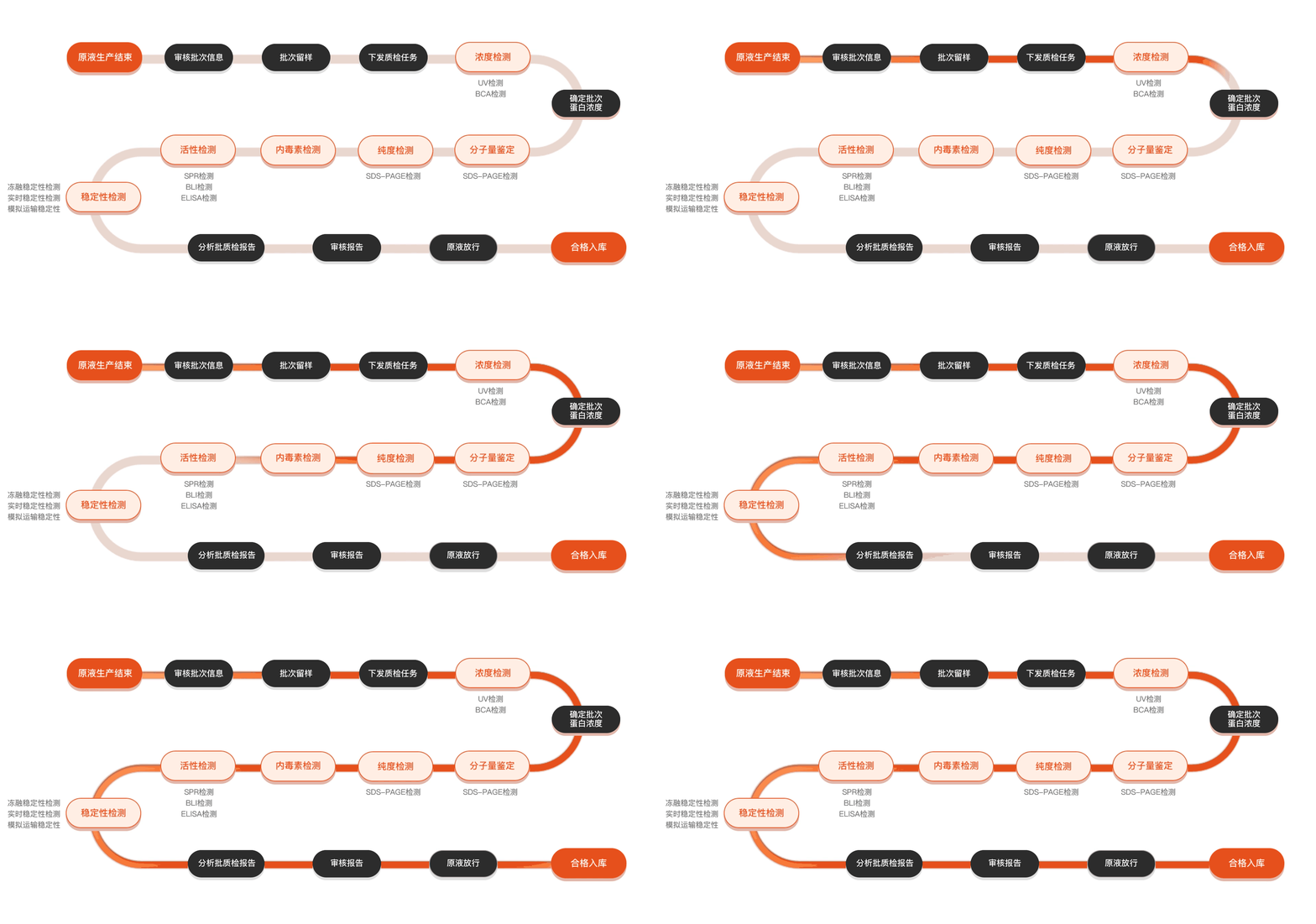
Quality inspection process
Related Products
Protein Description
Fibroblast Growth Factor Receptor 3 (FGFR3) is a critical receptor involved in various developmental processes, particularly in bone growth and differentiation. Mutations in the FGFR3 gene are associated with several skeletal disorders, including achondroplasia and hypochondroplasia, which lead to disproportionate short stature. In cancer research, aberrant FGFR3 signaling has been implicated in the progression of certain tumors, notably bladder cancer and multiple myeloma, making FGFR3 a potential therapeutic target. Recombinant FGFR3 proteins have become increasingly important for understanding the receptor's biological functions, interactions with ligands, and its role in disease mechanisms. The production of these recombinant proteins facilitates the study of FGFR3's structure-function relationships, helps to identify small molecules or antibodies that can modulate its activity, and supports the development of novel therapeutic strategies aimed at treating FGFR3-related disorders. Advances in molecular cloning and expression systems have enabled researchers to produce high-purity FGFR3 proteins, allowing for detailed functional assays and structural analyses. Such studies are essential not only for elucidating the pathways regulated by FGFR3 but also for the design of targeted drugs that can effectively inhibit or activate this receptor, thereby offering hope for improved treatment options for patients with FGFR3-associated conditions.