Analytical Data
-
Gene name
ATG4B
- Application
-
Alternative Names
ATG4B;APG4B;AUTL1;KIAA0943;Cysteine protease ATG4B
-
Species
Human
-
Source
E. coli
-
Tag
His tag N-Terminus
-
Purity
Greater than 90% as determined by SDS-PAGE.
-
Uniprot
Q9Y4P1
-
Expression Region
1-393aa
-
AA Sequence
MDAATLTYDT LRFAEFEDFP ETSEPVWILG RKYSIFTEKD EILSDVASRL WFTYRKNFPA IGGTGPTSDT GWGCMLRCGQ MIFAQALVCR HLGRDWRWTQ RKRQPDSYFS VLNAFIDRKD SYYSIHQIAQ MGVGEGKSIG QWYGPNTVAQ VLKKLAVFDT WSSLAVHIAM DNTVVMEEIR RLCRTSVPCA GATAFPADSD RHCNGFPAGA EVTNRPSPWR PLVLLIPLRL GLTDINEAYV ETLKHCFMMP QSLGVIGGKP NSAHYFIGYV GEELIYLDPH TTQPAVEPTD GCFIPDESFH CQHPPCRMSI AELDPSIAVG FFCKTEDDFN DWCQQVKKLS LLGGALPMFE LVEQQPSHLA CPDVLNLSLD SSDVERLERF FDSEDEDFEI LSLLEHHHHH H
-
Molecular Weight
45 kDa
-
Endotoxin
< 1.0 EU per μg protein as determined by the LAL method.
-
Form
Freeze-dried powder
-
Buffer formulation
PBS, pH7.4, containing 0.01% SKL, 1mM DTT, 5% Trehalose and Proclin300.
-
Reconstitution
Reconstitute in ddH2O to a concentration of 0.1-0.5 mg/mL. Do not vortex.
- Customization
-
Stability Test
The thermal stability is described by the loss rate. The loss rate was determined by accelerated thermal degradation test, that is, incubate the protein at 37℃ for 48h, and no obvious degradation and precipitation were observed. The loss rate isless than 8% within the expiration date under appropriate storage condition.
-
Storage & Shelf Life
Samples are stable for up to twelve months from date of receipt at -20℃ to -80℃. Store it under sterile conditions at -20℃ to -80℃. It is recommended that the protein be aliquoted for optimal storage. Avoid repeated freeze-thaw cycles.
-
Shipping
In general, recombinant proteins are supplied as lyophilized powder and shipped at ambient temperature. For bulk packages, the proteins are provided as frozen liquid and shipped with blue ice, unless otherwise requested by the customer.
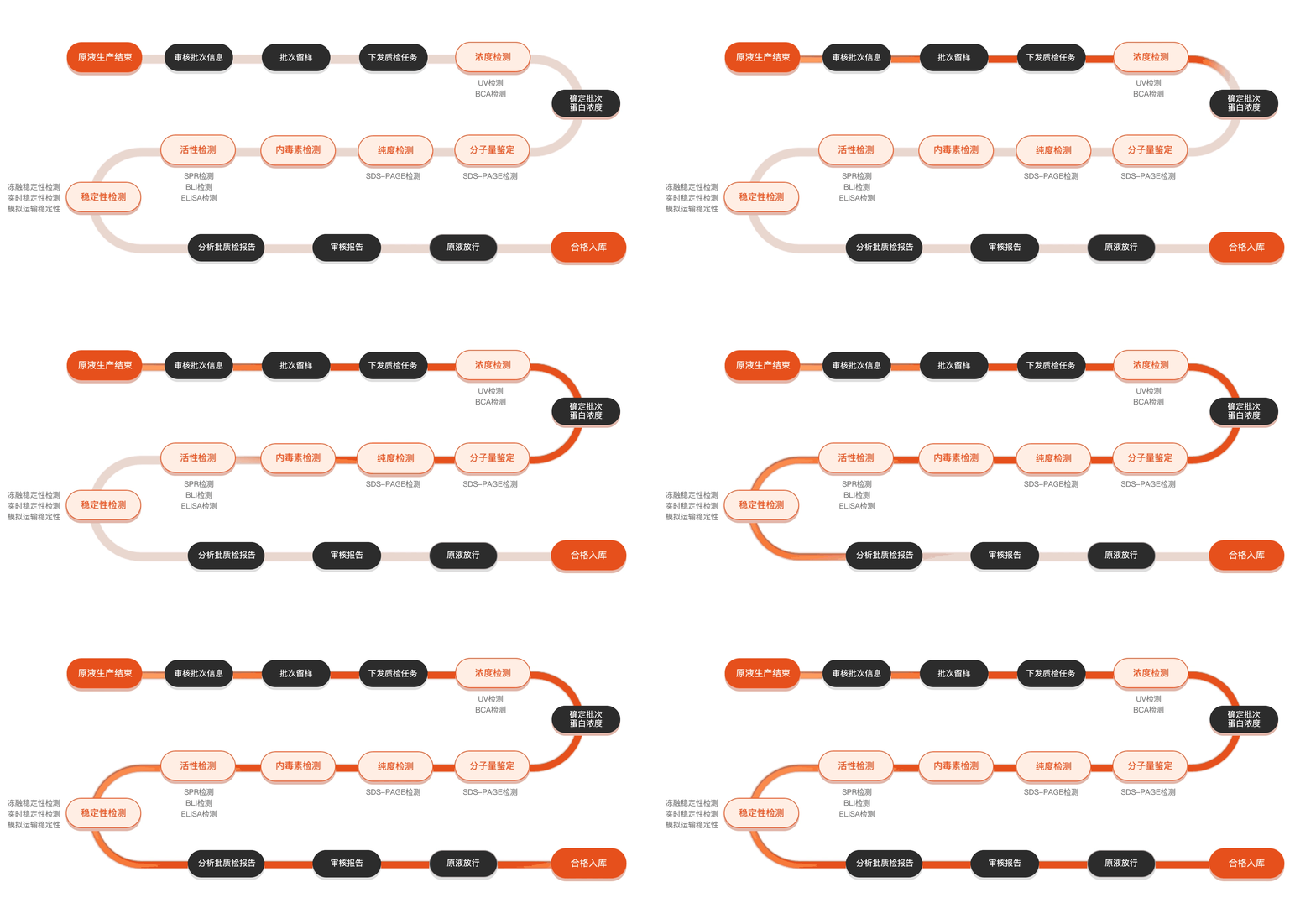
Quality inspection process
Related Products
Protein Description
ATG4B, a member of the autophagy-related protein 4 (ATG4) family, plays a crucial role in the process of autophagy, a cellular mechanism responsible for degrading and recycling cellular components. This protein is particularly important for the post-translational modification of microtubule-associated proteins and for the processing of LC3 (microtubule-associated protein 1A/1B-light chain 3), which are essential for forming autophagosomes. Dysregulation of autophagy has been implicated in various diseases, including cancer, neurodegenerative disorders, and infections, making ATG4B a potential therapeutic target. Research efforts have focused on the structural and functional characterization of recombinant ATG4B protein to elucidate its enzymatic activity and interaction with other autophagy-related proteins. By producing and studying recombinant ATG4B, scientists aim to uncover the detailed mechanisms by which this protein regulates autophagic processes and its role in cellular homeostasis. Understanding these mechanisms is crucial for developing novel strategies to manipulate autophagy in disease contexts, thus highlighting the significance of ATG4B in biomedical research and its potential impact on therapeutic interventions.