Analytical Data
-
Gene name
CANT1
- Application
-
Alternative Names
CANT1;SHAPY;Soluble calcium-activated nucleotidase 1
-
Species
Human
-
Source
E. coli
-
Tag
His tag N-Terminus
-
Purity
Greater than 90% as determined by SDS-PAGE.
-
Uniprot
Q8WVQ1
-
Expression Region
63-401aa
-
AA Sequence
MGSSHHHHHH SSGLVPRGSH MGSHMRPAPG RPPTHNAHNW RLGQAPANWY NDTYPLSPPQ RTPAGIRYRI AVIADLDTES RAQEENTWFS YLKKGYLTLS DSGDKVAVEW DKDHGVLESH LAEKGRGMEL SDLIVFNGKL YSVDDRTGVV YQIEGSKAVP WVILSDGDGT VEKGFKAEWL AVKDERLYVG GLGKEWTTTT GDVVNENPEW VKVVGYKGSV DHENWVSNYN ALRAAAGIQP PGYLIHESAC WSDTLQRWFF LPRRASQERY SEKDDERKGA NLLLSASPDF GDIAVSHVGA VVPTHGFSSF KFIPNTDDQI IVALKSEEDS GRVASYIMAF TLDGRFLLPE TKIGSVKYEG IEFI
-
Molecular Weight
41 kDa
-
Endotoxin
< 1.0 EU per μg protein as determined by the LAL method.
-
Form
Freeze-dried powder
-
Buffer formulation
PBS, pH7.4, containing 0.01% SKL, 1mM DTT, 5% Trehalose and Proclin300.
-
Reconstitution
Reconstitute in ddH2O to a concentration of 0.1-0.5 mg/mL. Do not vortex.
- Customization
-
Stability Test
The thermal stability is described by the loss rate. The loss rate was determined by accelerated thermal degradation test, that is, incubate the protein at 37℃ for 48h, and no obvious degradation and precipitation were observed. The loss rate isless than 8% within the expiration date under appropriate storage condition.
-
Storage & Shelf Life
Samples are stable for up to twelve months from date of receipt at -20℃ to -80℃. Store it under sterile conditions at -20℃ to -80℃. It is recommended that the protein be aliquoted for optimal storage. Avoid repeated freeze-thaw cycles.
-
Shipping
In general, recombinant proteins are supplied as lyophilized powder and shipped at ambient temperature. For bulk packages, the proteins are provided as frozen liquid and shipped with blue ice, unless otherwise requested by the customer.
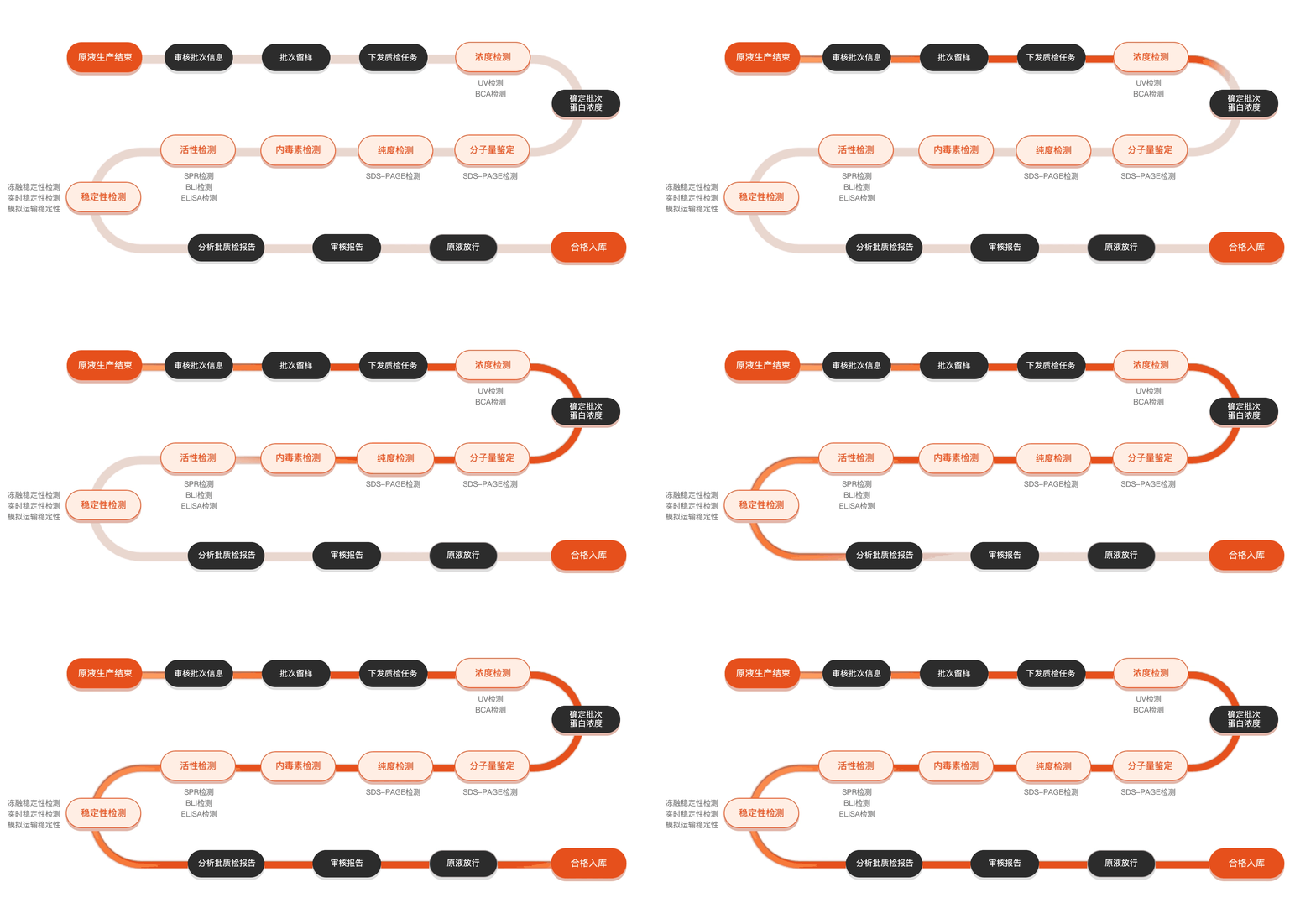
Quality inspection process
Related Products
Protein Description
CANT1, or calcium-activated nucleotidase 1, is an enzyme implicated in nucleotide metabolism, particularly in the hydrolysis of nucleotides like ATP and ADP. Its enzymatic activity is essential for various cellular processes, including energy metabolism and signal transduction. Mutations in the CANT1 gene have been linked to a rare genetic disorder known as "CANT1-related disease," characterized by developmental delays, movement disorders, and skeletal abnormalities. Understanding the function and regulatory mechanisms of CANT1 is critical for elucidating its role in cellular physiology and its contribution to disease pathology. Recent studies have focused on the expression and functional characterization of recombinant CANT1 protein to provide insights into its enzymatic properties and substrate specificity. By producing CANT1 in a recombinant system, researchers can investigate the effects of specific mutations on its enzymatic activity, as well as explore potential therapeutic targets. This research is not only significant for understanding CANT1-related disorders but also has broader implications for understanding nucleotide metabolism and its impact on human health. By employing advanced techniques such as X-ray crystallography and biophysical assays, scientists aim to map the structural basis of CANT1's function and its interactions with other cellular components. Ultimately, characterizing recombinant CANT1 protein holds promise for developing novel diagnostic and therapeutic strategies for managing CANT1-related diseases and enhancing our overall understanding of nucleotide metabolism.